
Planting
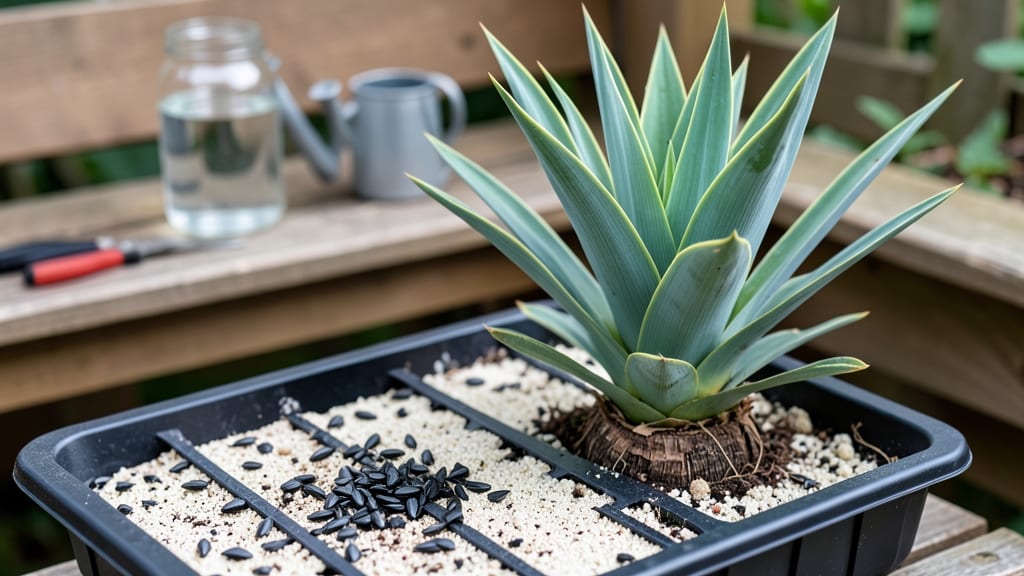
Yucca plant seeds look like tiny, firm bean pods measuring about 0.25–0.5 inches long, with a smooth, glossy brown or black shell and a slightly fibrous interior. These oval-shaped seeds grow in clusters inside dried seed pods after the plant blooms.
Yucca seeds are often mistaken for bulbs because of their hard exterior, but their bean-like shape and clustered growth pattern set them apart. 🌱 Unlike bulbs—which are round and fleshy—yucca seeds have a dry, papery texture when mature, almost like a dried pea pod.
The glossy shell helps protect the seed during germination, while their small size makes them easy to overlook in the garden unless you're specifically looking for them.
These seeds typically appear after the plant's yellow-green flower stalks fade, leaving behind dried pods that split open when fully mature. If you're growing yucca from seed, timing is key—collect them when the pods turn completely brown and begin cracking naturally.
Storing them in a cool, dry place preserves their viability for up to a year.
💡 In This Article
- Yucca Seed Identification: Key Visual and Textural Traits
- How to Harvest and Store Yucca Plant Seeds for Germination
Yucca seed identification: key visual and textural traits
Yucca seeds stand out from bulbs or roots because of their distinct bean-like shape and dry, papery texture. Unlike round, fleshy bulbs, these seeds resemble tiny, elongated ovals—about the size of a peanut kernel—measuring roughly 0.25–0.5 inches in length.
Their glossy brown or black exterior feels smooth to the touch, almost like polished river stones, but with a subtle fibrous quality when gently rubbed. This texture helps them resist moisture loss during germination.
The seeds grow in clusters inside dried seed pods that form after the yucca’s striking yellow-green flower stalks wither. These pods start green but mature into a dry, papery brown as they split open naturally.
Inside, you’ll find 5–10 seeds nestled together, each encased in a thin, translucent membrane that protects the embryo. The contrast between the seeds’ hard exterior and the soft, fibrous interior is a dead giveaway—they’re not bulbs or roots but true dry seeds.
Color variations help distinguish yucca seeds from other plant parts. While most are dark brown or black, some varieties produce seeds with a tan or light beige hue, especially when exposed to sunlight.
This variation is due to the seed coat’s melanin content, which protects against UV damage. Unlike bulbs, which store nutrients in their fleshy layers, yucca seeds rely on their hard shell and fibrous interior to survive harsh conditions until germination.
One common mistake is confusing yucca seeds with yucca bulbils—small bulb-like structures that form in leaf axils. Bulbils are rounder, softer, and lack the glossy finish of seeds. To test, press a seed between your fingers: if it feels hard and dry, it’s a seed.
If it’s slightly squishy, it’s likely a bulbil. This distinction matters because seeds require stratification (cold treatment) to germinate, while bulbils can sprout more easily in warm conditions.
Under a magnifying glass, you’ll notice tiny ridges or striations along the seed’s length, aiding in water absorption during germination. These details are often overlooked but are critical for identifying yucca seeds in the wild or garden.
For example, Yucca filamentosa seeds have a slightly rougher texture than Yucca gloriosa, which are smoother and darker. This variation helps gardeners match seeds to specific yucca species.
If you’re still unsure, compare the seed to a dried kidney bean—the shape and size are nearly identical. The key difference? Yucca seeds lack the hollow center of legume seeds and instead contain a dense, fibrous interior packed with nutrients for the developing plant.
This structure ensures the seed can withstand long periods of dormancy, a survival trait shared with desert-adapted plants like agave.