
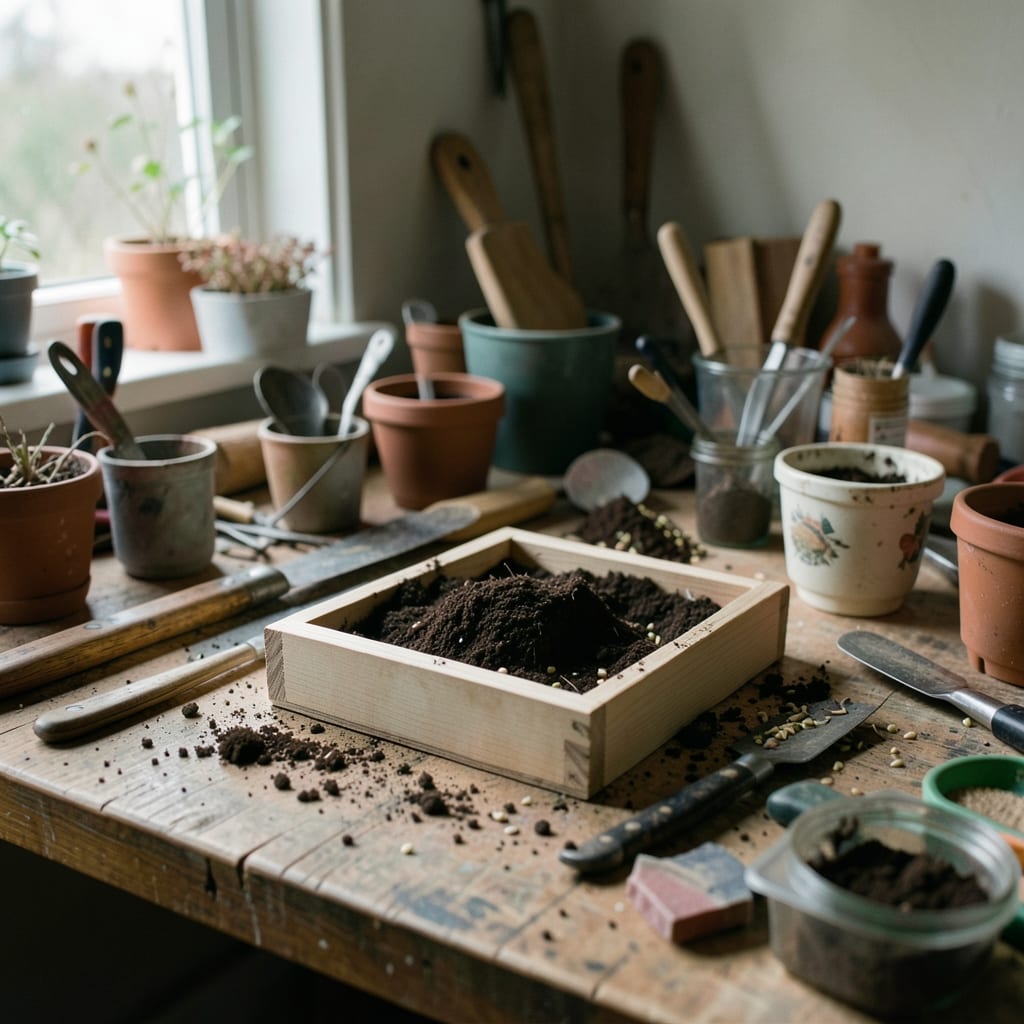
What this work is made with
This page is a list of things, not a story. A gardening site depends on more than words—it lives in the hands that dig, the tools that shape the soil, and the wear that tells their truth. Here, we name what holds the work together.
This is *Seed Loop*, a place for seedlings stretching toward the first true light. Every post here is built on the same four things—no more, no less—and the person who tends them.
The things that do the work
Four objects turn the dirt, shape the rows, and judge the harvest. They are worn, unremarkable, and never wrong—just honest.
The trowel
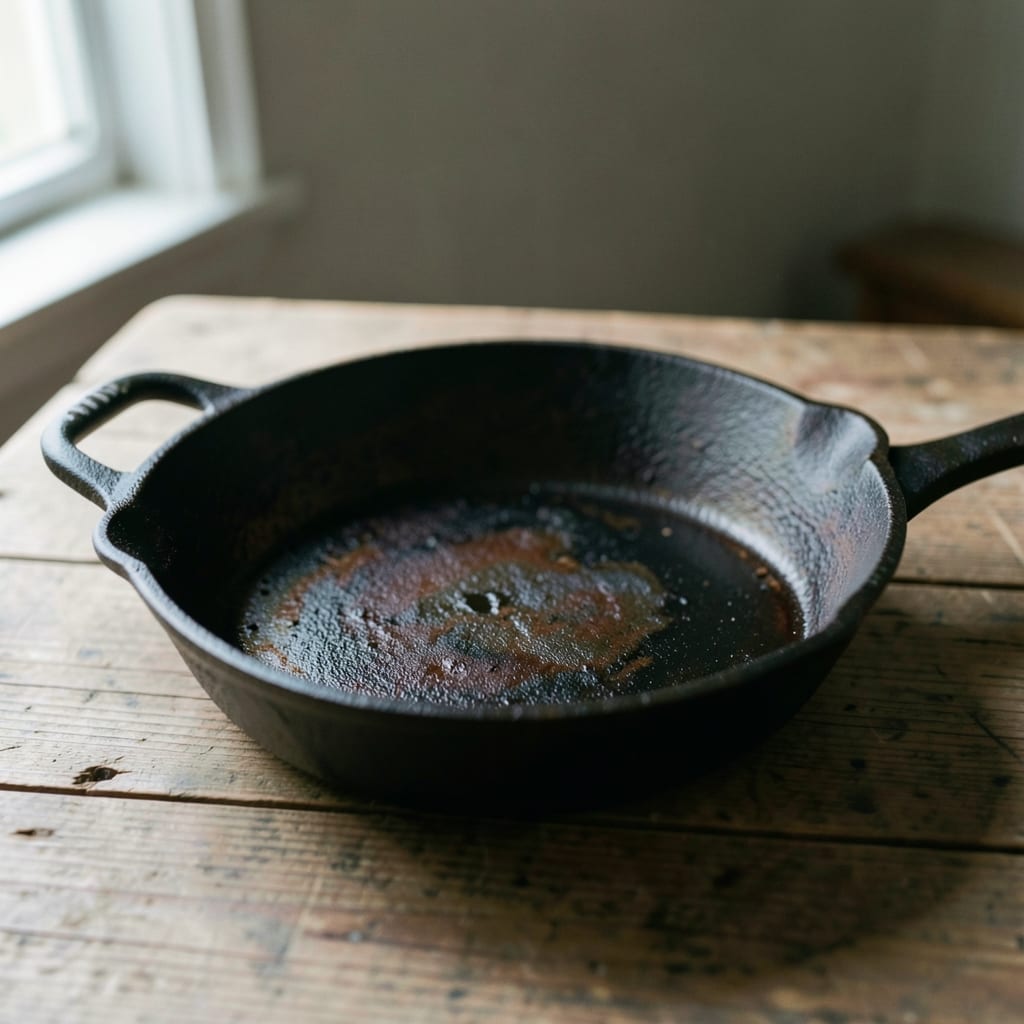
A bent, three-inch blade with a wooden handle split at the grain. It’s been here since the first raised bed, its steel edge nicked from years of prying out stubborn weeds.
It taught us that every seedling deserves the same careful lift, even the ones that won’t make it. The bend in the blade is deliberate now—it’s easier on the knees.
The stone
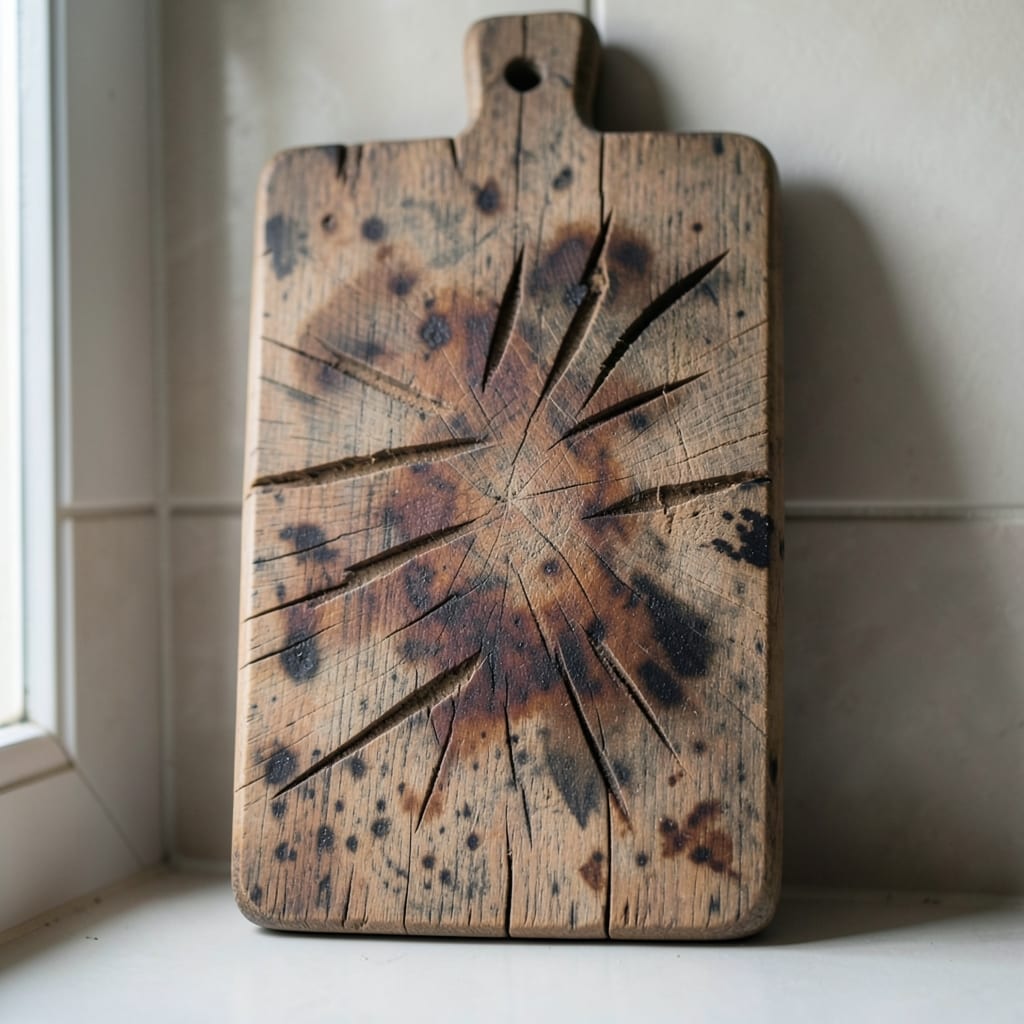
A flat river rock, smooth on one side, rough on the other. It’s been here since the first compost pile, its weight used to crush egg shells and coffee grounds into the soil.
It changed how we think about mulch: the rough side scrapes the bark into finer pieces, the smooth side lets the worms drag it down. We keep it in the shed because it’s the only tool that never needs sharpening.
The watering can
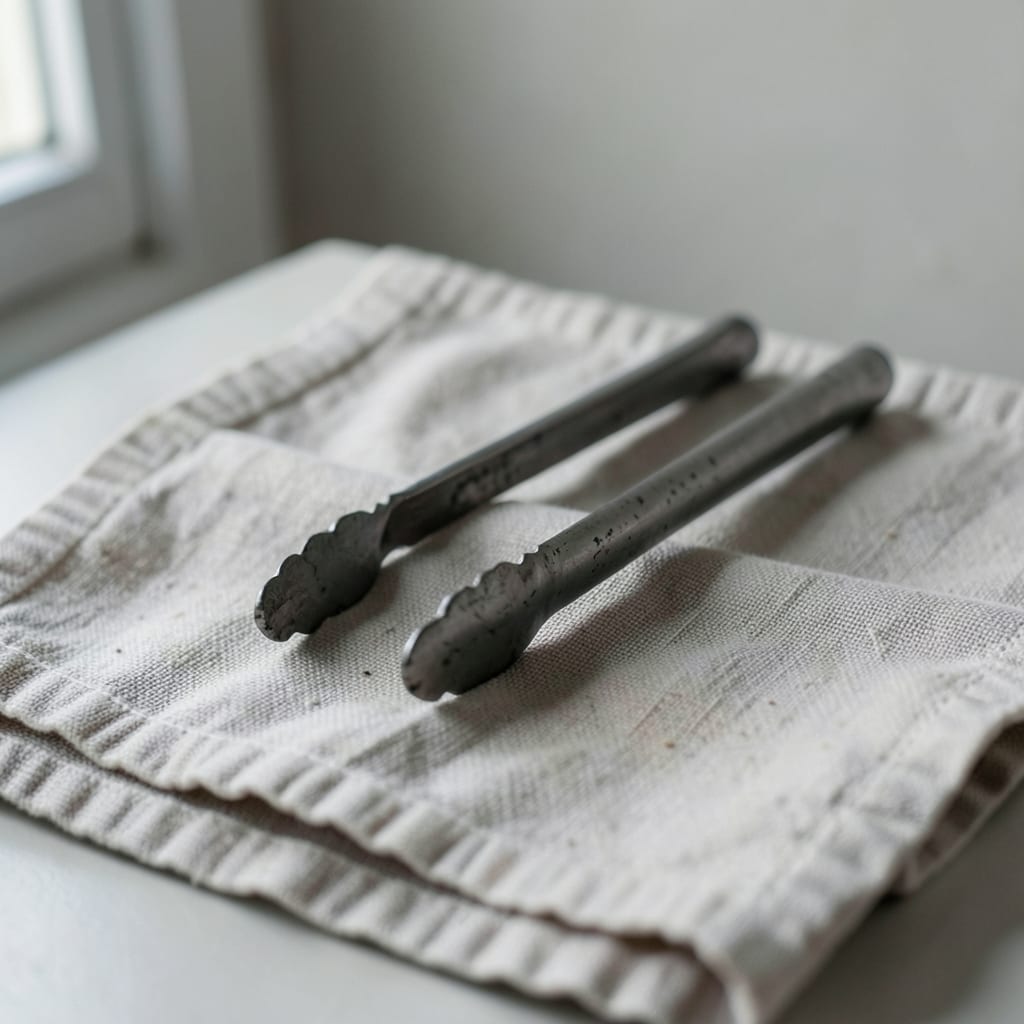
A chipped, enamel can with a rusted spout, bought secondhand for two dollars. It’s been here since the first windowsill herbs, its handle cracked where it was dropped too often.
It taught us that watering is a rhythm, not a task. The rusted spout leaks exactly three drops per second—just enough to coax a seedling awake without drowning it.
The pruning shears
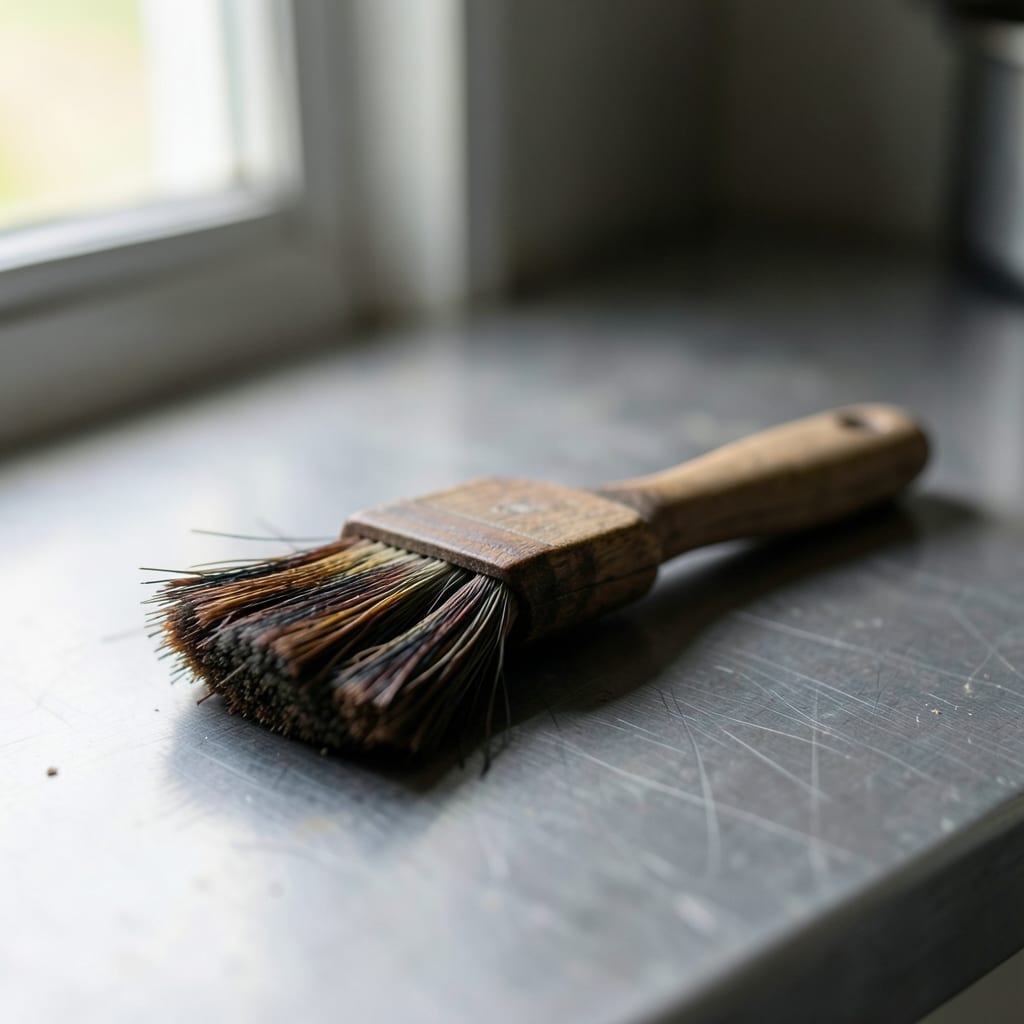
A pair of cheap, spring-loaded shears with a broken thumb screw. They’ve been here since the first tomato plant, their blades dulled from snipping back dead growth.
They forced us to stop guessing which stems to cut. Now, every snip is measured: if the blade resists, the stem stays. The broken thumb screw means we can’t close them fully, but that’s fine—they’re still sharp enough.
What is not in the drawer
This work does without the things that complicate the soil. No electric tillers, no chemical amendments, no branded seed packets with promises of ‘perfect blooms.’
Deliberately absent
- A soil test kit—we trust our fingers.
- A greenhouse—we start seeds in egg cartons.
- A spray bottle—watering cans do the job.
- A notebook—every lesson is learned in the dirt.
Behind the scenes

I am Nina Thibodeaux, the founder and editor. I’m here to turn seeds into stories, one row at a time.
I’ve always had a green thumb—my earliest memories are of sneaking seeds from my grandmother’s garden to plant in the dirt behind our house. Now, I’m here to turn that childhood curiosity into something useful for anyone willing to get their hands dirty.
Nina Thibodeaux
Behind the scenes
I came to this from a life of city parks and balcony pots, where the soil was always borrowed. My grandmother handed me the trowel when I was ten, and I’ve been digging ever since.
Behind the scenes
This work has given me a permanent ache in my right wrist from years of snapping photos of seedlings with a phone held too long.
I now notice how other gardeners hold their tools—some grip like they’re afraid the soil will steal the plants, others let the tools do the work.
Behind the scenes
I’m here to make sure every post feels like a conversation in the garden, not a lecture. The photos are taken in the same light as the growing season—the early-morning glow that makes leaves look like they’re made of glass.
Why any of this matters to you
These things—the trowel, the stone, the can, the shears—are why the posts here feel like they’re written by someone who’s actually grown something. They’re why the advice is never abstract, never tied to a perfect day in a catalog.
Every post here is built on the same four hands-on lessons: what grows, what doesn’t, how to tell the difference, and how to fix it. The language is plain, the photos are real, and the mistakes are ours.
If you’ve got a seedling stretching toward the light—or just a windowsill and a question—come find us on the contact page.
The guides are grouped by category: Advice, Aphids, Blooming, Companion Plants, Container Gardens and Diseases.