
Flowers
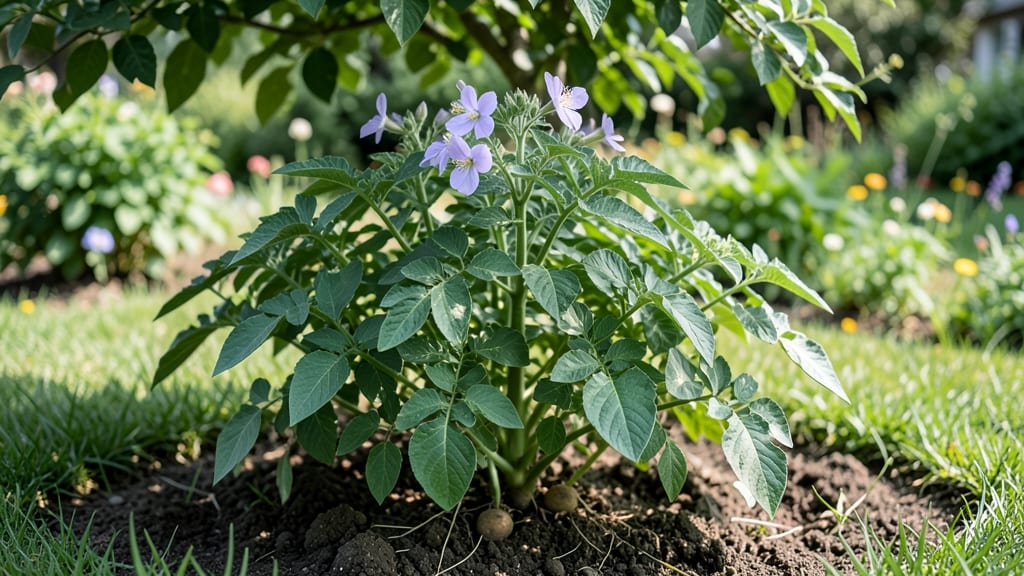
Potato flowers rarely produce seeds because most commercial varieties are grown from tubers rather than true seeds, making their blooms sterile. Only heirloom or seed potatoes—when properly cross-pollinated—can develop edible seeds, though success depends on specific growing conditions.
Most gardeners never see potato seeds because commercial potatoes are asexually propagated through tubers, not seeds. 🌱 The flowers you admire on grocery-store potatoes are essentially decorative—they're bred to focus energy on producing tubers rather than viable seeds.
Even when flowers appear, they rarely set fruit unless you're working with rare heirloom varieties grown specifically for seed production. The process requires careful hand-pollination and patience, as seed pods take months to mature and often yield just a handful of tiny, irregularly shaped seeds.
For those curious about growing potatoes from seeds, the journey starts with selecting certified seed potatoes from specialty nurseries. These aren't your typical grocery-store potatoes—they're bred to produce true seeds when cross-pollinated.
The real challenge lies in the pollination process, which requires transferring pollen between flowers using a small brush, and then waiting for the seed pods to develop. Even then, the seeds need careful drying and storage before planting, making this method far more labor-intensive than propagating from tubers.
💡 In This Article
- Why Commercial Potatoes Skip Seed Production
- How to Grow Potatoes from Seeds: A Step-by-Step Guide
Why commercial potatoes skip seed production
The reason most potato flowers fail to produce seeds lies in their genetic blueprint. Commercial potatoes are clones of parent plants, grown from tubers rather than seeds—a process called asexual reproduction. This method ensures uniformity in size, shape, and disease resistance, which is crucial for grocery stores and farmers.
The trade-off? Their flowers are often sterile or produce non-viable seeds because the plants haven't undergone sexual reproduction. 🌱
Selective breeding plays a major role here. Potato breeders prioritize traits like yield, storage life, and pest resistance over seed production. Many modern varieties have flowers that either lack pollen or produce seeds that don't develop properly.
For example, the popular Russet Burbank variety—common in french fries—rarely sets seeds because its energy is directed toward tuber growth. Even if flowers appear, they often drop before forming seed pods, making seed production a rare event in commercial fields.
Contrast this with heirloom or seed potatoes, which are grown specifically for their ability to produce true seeds. These varieties, like Yukon Gold or Red Pontiac, have been bred to maintain fertility in their flowers. The key difference?
Seed potatoes undergo cross-pollination—pollen must transfer between flowers of different plants (or even different varieties) to trigger seed development. This process mimics nature but requires human intervention, as potato flowers are self-incompatible and won't pollinate themselves.
Another critical factor is the hormonal shift in potato plants. When a plant focuses on tuber development, it suppresses flower fertility. Commercial growers often use growth regulators to enhance tuber size, which further reduces seed production.
Even in ideal conditions, the seed pods that do form are tiny—often no larger than a pea—and contain just a few irregularly shaped seeds.
These seeds are also genetically diverse, meaning they won't produce identical tubers to the parent plant, which is why seed-grown potatoes are prized by breeders and collectors.
For gardeners, this means most potato flowers you see are decorative, not functional. The vibrant purple, white, or pink blooms are a side effect of the plant's primary goal: producing tubers.
Only under very specific conditions—like growing certified seed potatoes in a controlled environment with proper pollination—do these flowers yield seeds. Even then, the process is finicky, requiring patience and attention to detail that most home gardeners don't have. 💫
Understanding this helps explain why seed potatoes are so rare and valuable. While commercial potatoes are optimized for mass production, seed potatoes are a labor of love—requiring careful selection, cross-pollination, and nurturing to bring those tiny seeds to life.
It's a fascinating glimpse into how plant breeding shapes what we grow in our gardens and on our plates.