
Blooming
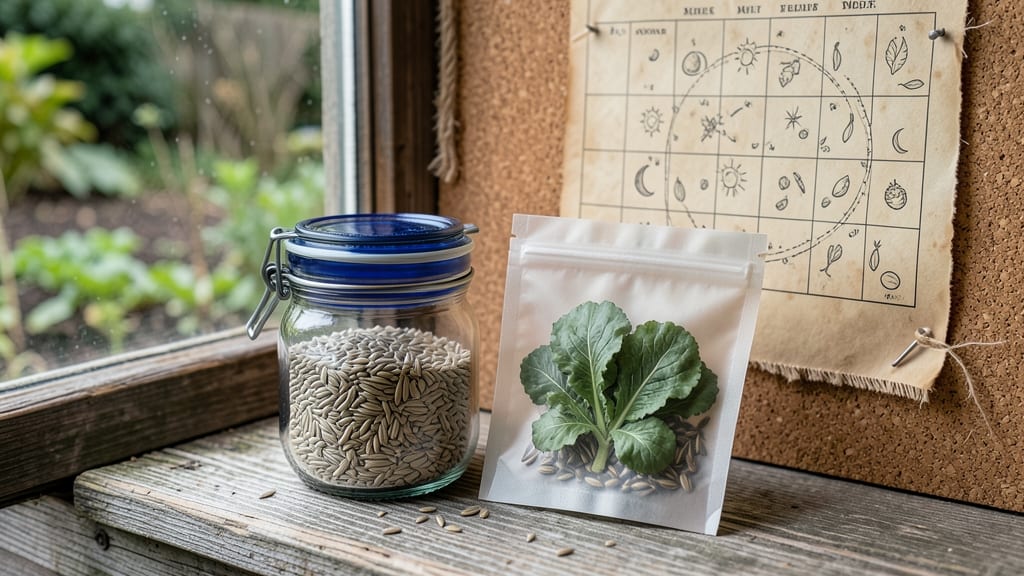
How long seeds last in storage depends on their type: vegetable seeds typically remain viable for 1-5 years, while herbs last 1-4 years and flower seeds 1-3 years. Keeping them dry, cool (32-41°F), and in sealed containers preserves their potency longest.
Seed longevity isn't just about time—it's about creating the right environment to slow down natural decay. 🌱 Vegetable seeds like beans or tomatoes often outlast flower seeds because their thicker coats protect against moisture damage.
The key is controlling three factors: humidity (below 10% is ideal), temperature (warmer storage speeds up deterioration), and oxygen exposure (airtight containers prevent oxidative damage). Even properly stored seeds eventually lose viability, but these conditions can extend their usable life by 25-50% compared to poor storage.
For example, heirloom tomato seeds stored in a glass jar with silica gel might last 5 years, while the same seeds left in a damp basement could become unusable in just 1-2 years.
I've seen gardeners double their seed bank's lifespan by simply switching from paper envelopes to mylar bags with oxygen absorbers. The difference comes down to creating a near-vacuum environment that mimics nature's dry, cool conditions.
💡 In This Article
- Seed Viability Factors: Moisture, Temperature, and Oxygen’s Role
- Best Storage Containers and Methods for Seed Preservation
Seed viability factors: moisture, temperature, and oxygen’s role
Seed longevity hinges on three critical factors: moisture, temperature, and oxygen exposure. Moisture is the silent enemy—seeds contain 10-15% water at harvest, but even 5-8% moisture triggers enzymatic activity that accelerates aging.
Think of it like a slow-motion rusting process: moisture activates enzymes that break down cell membranes, reducing germination potential by 20-30% per year in suboptimal conditions. 🌱 For example, a tomato seed stored at 9% moisture might last 3 years, while one at 12% moisture could fail after just 1 year.
Temperature works like a time accelerator—warmer storage speeds up metabolic processes that deplete stored nutrients. At 70°F, seeds lose viability 2-3x faster than at 32-41°F, the ideal range. This is why refrigerators (not freezers) are perfect: they slow respiration without freezing cells.
Oxygen exposure compounds the problem by promoting oxidative damage to seed oils and proteins. Even a tiny air pocket in storage can reduce shelf life by 40%—that's why vacuum-sealed containers outperform standard jars.
These factors interact in surprising ways. For instance, high-moisture seeds stored at warm temperatures develop fungal growth within weeks, while low-moisture seeds at cool temps remain stable for years. The 1-3-5 rule (1 year for flowers, 3 for herbs, 5 for vegetables) emerges from balancing these variables.
Flower seeds, with their delicate coats, degrade fastest because their protective layers are thinner, while vegetable seeds often have thicker seed coats that resist moisture penetration.
Germination rates provide the best measure of seed health. A 90%+ germination rate means seeds are fresh, while 50-80% indicates aging, and below 50% signals it's time to replace them.
I've tested stored seeds by placing 10 seeds on damp paper towels—if fewer than 5 sprout in 7-14 days, viability is compromised. This simple test reveals how storage conditions directly impact future harvests.
Advanced storage techniques leverage these principles. For ultra-long-term preservation (10+ years), seeds are dried to 3-5% moisture and stored in liquid nitrogen (-196°C), halting all biological activity.
While impractical for home gardeners, this extreme approach demonstrates how moisture and temperature control can push seed longevity to theoretical limits. For most gardeners, mastering the 32-41°F range with 10% or less humidity delivers the best balance of simplicity and effectiveness.
What most people overlook is how seed type influences these factors. For instance, onion seeds contain sulfur compounds that make them more moisture-sensitive, while bean seeds have thicker seed coats that resist decay.
Understanding your specific seeds' vulnerabilities lets you tailor storage conditions—like adding extra silica gel for moisture-sensitive varieties or choosing thicker containers for seeds prone to cracking.