
Planting
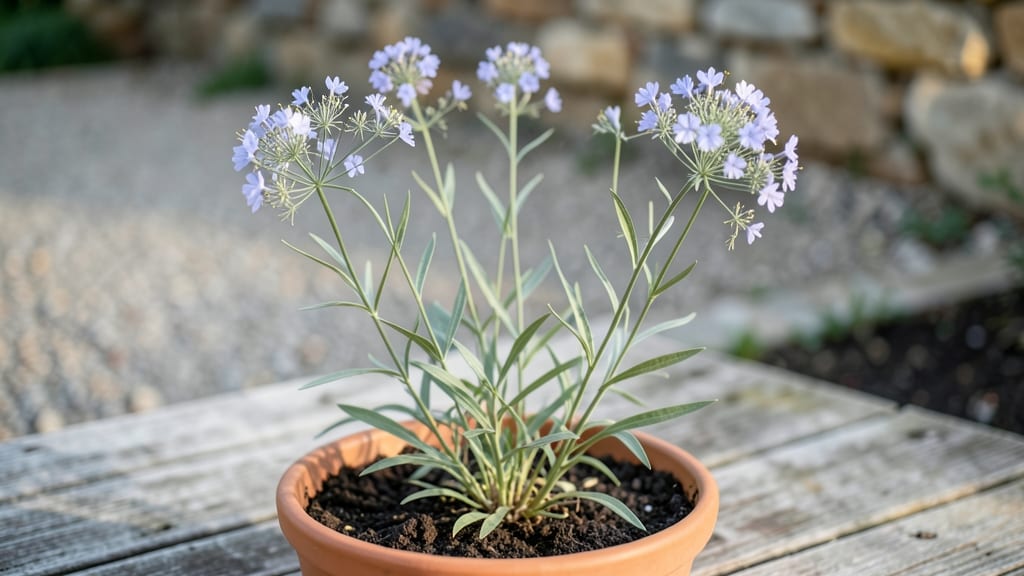
A flaxseed plant's striking appearance starts with its narrow, sword-like leaves that grow alternately along the stem, creating an elegant, arching silhouette. 🌱 The flowers—small but abundant—bloom in loose clusters, adding a soft lavender hue to gardens from late spring to early summer.
What makes them stand out is their five-petaled structure, each petal barely wider than a dime, with delicate stamens that catch morning dew. Once pollinated, the flowers give way to slender seed pods containing the prized flaxseeds.
This plant thrives in cooler climates, often reaching its full height by midsummer before setting seed. The waxy stems help distinguish it from weeds, while its vertical growth habit sets it apart from sprawling crops like sunflowers.
Gardeners frequently grow flaxseed for both its ornamental value and nutritional seeds, making it a dual-purpose addition to any plot.
💡 In This Article
- Flaxseed Plant Growth Stages and Botanical Features
- Identifying Flaxseed Plants in Gardens and Wild Habitats
Flaxseed plant growth stages and botanical features
The flaxseed plant begins its life as a delicate seedling with two tiny, oval cotyledons that emerge first. Within 10-14 days, the first true leaves appear—long, lance-shaped, and slightly serrated along the edges, resembling miniature versions of the mature plant's foliage.
These leaves grow alternately along the stem, creating a distinctive vertical pattern that sets flax apart from other crops like wheat or barley, which have broader, clustered leaves.
As the plant matures, its stems develop a characteristic waxy coating that gives them a subtle bluish-green sheen when sunlight hits them at certain angles. This waxy surface helps reduce water loss, allowing flax to thrive in cooler, drier climates where temperatures often range between 60-75°F during the growing season.
The leaves themselves can reach 4-8 inches long and 0.5-1 inch wide, tapering to a fine point—similar in shape to those of the unrelated linseed plant but with a smoother texture and less pronounced veins.
The flowering stage is where flaxseed plants truly shine, producing clusters of tiny, five-petaled blooms that resemble miniature wildflowers. Each flower measures just 0.5-1 inch across with petals in shades of pale blue, lavender, or white, depending on the variety.
The centers feature prominent stamens that release pollen, which is crucial for seed development. What's fascinating is how these flowers bloom sequentially along the stem—starting from the bottom and moving upward—creating a cascading effect that lasts 3-4 weeks in ideal conditions.
After pollination, the flowers transform into slender, cylindrical seed pods that grow 1-2 inches long. These pods contain 5-10 tiny brown seeds per pod, each packed with omega-3 fatty acids and fiber.
The pods remain attached to the stem until fully mature, at which point they dry out and split open, releasing seeds that can be harvested for culinary or industrial use.
This entire process from seedling to seed maturity typically takes 90-120 days, making flax a relatively fast-growing crop compared to many other oilseeds.
One key botanical feature that helps distinguish flax from similar plants is its taproot system. Unlike shallow-rooted weeds that spread horizontally, flax develops a deep primary root that anchors it firmly in the soil.
This root structure, combined with its upright growth habit, gives flax its signature "sword-like" appearance that gardeners often describe as elegant and structured.
The plant's entire life cycle is adapted to cool-season growing, which explains why it performs best in regions like Canada and Northern Europe where summer temperatures rarely exceed 80°F.
For those comparing flax to its close relative, the linseed plant, the main differences lie in the flower structure and seed yield. While both produce similar-looking leaves and stems, flax flowers are slightly larger and more vibrant, with seed pods that contain more seeds per pod.
Linseed, often cultivated for industrial purposes, tends to have paler flowers and smaller seed yields, making flax the preferred choice for both culinary and ornamental gardening.