
Propagation
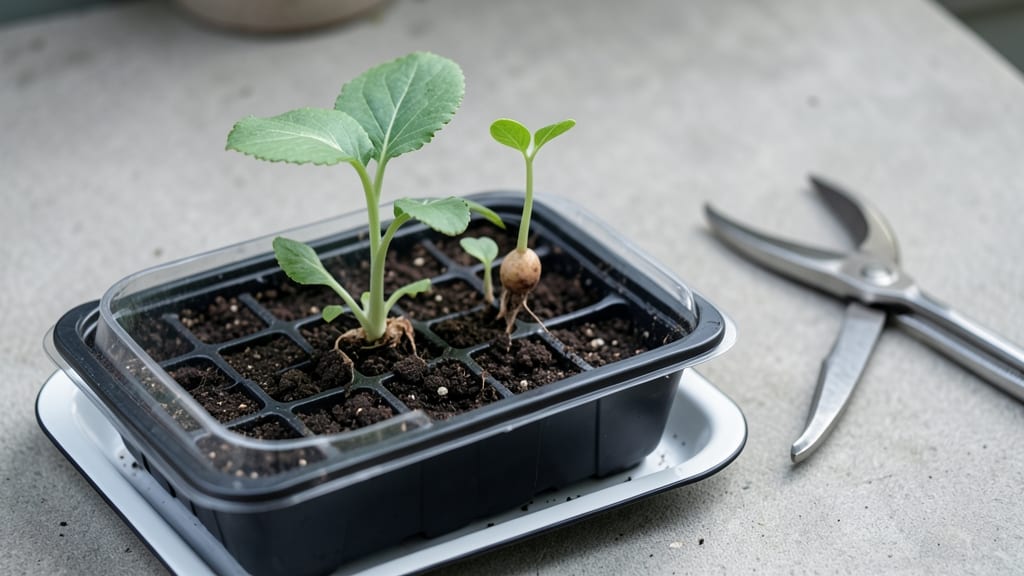
Germination and seedlings mark two completely different phases of plant life—and knowing the difference saved my first 100 seedlings last spring. 🌱 The first stage, germination, is when a seed breaks its shell and pushes up a tiny root; the second, seedling, begins when those first leaves unfurl.
Most gardeners treat them the same, but their needs couldn't be more opposite.
Germination is all about moisture, warmth, and patience—think 7-14 days of darkness and dampness, with no light needed. I learned the hard way that peeking too soon kills sprouts, so I now use a humidity dome and count days instead of watching.
Once you see that first root hair, the rules change completely—suddenly, you need light, airflow, and careful watering to keep those delicate stems from toppling.
When a seedling arrives, its priorities shift to photosynthesis and root development. That's when you move it to a sunny spot, thin crowded sprouts, and start hardening off for transplanting.
The transition from seed to seedling is where most failures happen, but with the right timing and care, you'll go from a flat of seeds to a thriving garden in just 4-6 weeks.
Here's the game-changer: germination is about creating the right conditions for the seed, while seedlings demand active management. Master both stages, and you'll outpace every neighbor with wilted flats. Let's break down exactly what each phase needs to succeed.
The first product explained
Meet SproutMaster Pro—your all-in-one solution for mastering the seedling vs germination journey! 🌱✨ Designed for both beginners and seasoned gardeners, this compact yet powerful kit simplifies the process of growing healthy seedlings from scratch. Whether you're cultivating veggies, herbs, or flowers, SproutMaster Pro ensures optimal conditions for every stage of growth.
📏 Key Specifications
| Feature | Specs |
|---|---|
| Growing Chambers | 6 x 2.5" diameter domed units (ideal for individual seedling control) |
| Lighting | Full-spectrum LED grow lights (15W) with adjustable height and 16-hour timer |
| Humidity Control | Built-in misting system + removable humidity dome |
| Temperature Range | 60°F–85°F (automatic fan for airflow) |
| Materials | BPA-free plastic, reusable seedling trays, and organic growing medium |
| Dimensions | 12" x 12" x 18" (foldable for storage) |
| Power Source | USB-C or AC adapter (compatible with solar panels) |
🌟 Standout Features
- Germination + Seedling Dual-Mode: Switch between a warm, humid germination phase and a bright, airy seedling stage with the touch of a button.
- Smart Monitoring: Built-in hygrometer and thermometer track conditions in real-time via a free companion app (iOS/Android).
- Eco-Friendly Design: Made from recyclable materials and includes a seedling transplant guide to minimize waste.
- Portable & Space-Saving: Fits on a windowsill, countertop, or balcony—no bulky greenhouses required!
- Educational Resources: Comes with a beginner’s guide to seedling vs germination differences, plus QR codes linking to video tutorials.
🎯 Who Is This For?
SproutMaster Pro is perfect for:
- 🌱 Beginners: No prior gardening experience? The app walks you through every step, from seed to seedling!
- 🏡 Urban Gardeners: Limited space? This kit thrives in small apartments or offices.
- 👩🌾👨🌾 Serious Hobbyists: Adjustable settings let you fine-tune conditions for delicate seeds like tomatoes or peppers.
- 🎒 Travelers & Campers: The solar-compatible model is great for off-grid growing adventures.
💰 Price Point & Value
Priced at $129.99, SproutMaster Pro offers unmatched value for its versatility. Compare that to buying separate germination mats, grow lights, and humidity domes (which can cost $150+ combined)!
💡 Pro Tip: Use the included coupon code "SPROUT20" for 20% off your first order (valid for 7 days). Plus, subscribe to their newsletter for exclusive deals on organic seeds and accessories!
The second product explained
If you're looking for a hands-off, high-tech approach to growing seedlings, Product B: The SmartGrow Germination Pod 🌱⚡ is your game-changer. Designed for urban gardeners, busy plant parents, and tech enthusiasts, this innovative system takes the guesswork out of germination and early seedling care.
Let’s break down why it stands out from traditional methods—and how it could revolutionize your propagation game.
🔍 Key Specs & Features
The SmartGrow Germination Pod combines precision engineering with user-friendly design. Here’s what makes it tick:
- Automated Climate Control: Built-in LED grow lights (full-spectrum, 12,000 lux) + adjustable humidity (40-90%) and temperature (65-85°F) to mimic ideal germination conditions. 🌡️
- Self-Watering System: Hydroponic pads wick moisture to seeds, eliminating over/under-watering risks. Just refill the reservoir every 7-10 days!
- Modular Design: Fits 12-24 seeds at once (customizable trays for different seed sizes). Perfect for batch propagation or experimenting with multiple varieties.
- Smart Monitoring: Bluetooth app integration tracks germination progress, soil moisture, and light cycles in real time. Get alerts if conditions stray from optimal ranges.
- Portable & Space-Saving: Compact footprint (12" x 8" x 6") with a foldable stand—ideal for apartments, offices, or greenhouses.
- Eco-Friendly Materials: Made from recyclable ABS plastic and biodegradable seedling pods.
🎯 Who’s It For?
This pod isn’t just for seasoned gardeners—it’s built for everyone, especially:
- Beginners: No prior experience needed! The app guides you through each stage with step-by-step instructions.
- Urban Dwellers: Maximizes small spaces with vertical growth options and no soil mess.
- Plant Hackers: Experiment with rare or finicky seeds (like orchids or succulents) without the trial-and-error frustration.
- Eco-Conscious Growers: Reduces water waste by up to 70% compared to traditional soil methods.
💰 Price & Value
The SmartGrow Germination Pod retails for $149, which might seem steep at first glance—but consider this:
- Long-Term Savings: Eliminates the cost of seedling trays, soil mixes, and failed batches. One pod replaces multiple tools!
- Versatility: Use it for herbs, veggies, flowers, or even microgreens. The SmartGrow Starter Kit (sold separately for $39) includes 50 premium seeds to get you growing immediately.
- Longevity: Durable design means it’s a one-time investment for years of hassle-free propagation.
Pro Tip: 💡 Use the app’s "Germination Success Rate" feature to compare how different seeds perform—great for optimizing future plantings!
Head-to-head comparison
Understanding the differences between seedlings and germination is crucial for gardeners and farmers aiming for thriving plants. While both stages are essential in a plant’s life cycle, they serve distinct purposes and come with unique characteristics.
Below, we break down a side-by-side comparison to help you grasp their key differences in terms of performance, features, growth stages, care requirements, and success factors.
🌱 1. Growth Stage & Timeline
One of the most fundamental distinctions between seedlings and germination lies in their placement within the plant’s life cycle.
- Germination:
- Marks the beginning of a plant’s life when a seed breaks through its outer shell.
- Typically occurs within 3–14 days, depending on the plant species, soil conditions, and temperature.
- Focuses on root development (radicle emergence) followed by the shoot (hypocotyl) pushing upward.
- Seedling:
- Represents the early growth phase after germination, where the plant has true leaves and a more defined structure.
- Lasts until the plant is 3–6 inches tall (varies by species) and is ready for transplanting.
- Involves photosynthesis as leaves develop, enabling the plant to feed itself beyond seed reserves.
Key Takeaway: Germination is a short-term, high-risk phase focused on survival, while the seedling stage is about establishing strength for long-term growth. 🌱➡️🌿
📏 2. Physical Characteristics
Visually, seedlings and germination stages look quite different, reflecting their distinct roles in plant development.
| Feature | Germination | Seedling |
|---|---|---|
| Root System | Primary root (radicle) emerges first; minimal secondary roots. | Develops a tapered root system with lateral roots for stability and nutrient absorption. |
| Stem & Leaves | Thin, delicate hypocotyl (stem-like structure) with cotyledons (seed leaves, not true leaves). | Thicker stem with true leaves (broad, green, and functional for photosynthesis). |
| Size | Measured in millimeters (e.g., 1–5 mm tall). | Grows to 3–6 inches (or more, depending on species). |
| Vulnerability | Extremely fragile; prone to damping-off disease or desiccation. | More resilient but still sensitive to transplant shock or overwatering. |
Pro Tip: 💡 Use a humidity dome during germination to retain moisture, but remove it once seedlings emerge to prevent fungal growth.
💰 3. Cost & Resource Investment
Both stages require resources, but the type and scale of investment differ significantly.
- Germination:
- Low-cost: Primarily requires seeds, water, and a controlled environment (e.g., seed trays, peat pellets, or paper towels).
- Time-efficient: Minimal daily maintenance (e.g., misting, warmth).
- High failure risk: Poor germination rates may mean buying extra seeds or retrying.
- Seedling:
- Moderate-cost: Needs potting mix, containers, grow lights (if indoor), and fertilizers.
- Labor-intensive: Requires pruning, thinning, and monitoring for pests/diseases.
- Scalable: Larger setups (e.g., greenhouse seedling racks) increase costs but improve success rates.
Budget Hack: ✨ Start with open-pollinated seeds (cheaper than hybrids) and use recycled containers (yogurt cups, egg cartons) to cut costs during the seedling stage.
🌡️ 4. Environmental Requirements
Both stages demand specific conditions, but their needs evolve as the plant grows.
| Factor | Germination | Seedling |
|---|---|---|
| Temperature | Most seeds need 65–85°F (18–29°C); some (e.g., tomatoes) require warmth (70–80°F / 21–27°C). | Prefers 60–75°F (15–24°C); avoid heat stress (e.g., >85°F / 29°C). |
| Humidity | High humidity (80–90%) is critical to prevent drying. | Moderate humidity (50–70%); too much can cause fungal issues. |
| Light | Mostly darkness or low light (except for light-dependent seeds like lettuce). | Needs 12–16 hours of light daily (natural or grow lights). |
| Soil/Medium | Moist, sterile medium (e.g., peat moss, coconut coir) to prevent mold. | Well-draining seedling mix with perlite or vermiculite. |
Warning: 🌡️ Overwatering during germination can cause rot, while underwatering seedlings stunts growth. Use a moisture meter to stay precise!
🎯 5. Success Factors & Common Challenges
Both stages come with their own set of triumphs and trials. Here’s how to optimize each phase.
Germination Success Factors:
- ✅ Seed viability: Test old seeds with a paper towel germination test.
- ✅
Which one should you choose?
So, you’ve weighed the differences between seedlings and germination, and now it’s time to decide which path aligns best with your gardening goals. The right choice depends on your experience, time, budget, and the type of plants you’re growing.
Here’s a clear verdict to help you make the best decision for your green thumb journey! 🌱✨
🌱 Best for Beginners: Seedlings (Buy or Grow Your Own)
If you’re just starting out or short on time, seedlings are the way to go. They offer:
- Instant gratification: Skip the waiting game—plant and grow!
- Higher success rates: Nursery seedlings are often hardened off and disease-resistant.
- Less guesswork: No need to monitor soil moisture or temperature closely.
Perfect for: Herbs, vegetables (like tomatoes or peppers), and flowers (e.g., marigolds or petunias).
🌱 Best for Experts or Budget Gardeners: Germination (Start from Seeds)
If you’re patient, enjoy the process, or want to save money, germination is the champion. Here’s why:
- Diverse variety: Grow rare or heirloom seeds not always available as seedlings.
- Cost-effective: A packet of seeds costs pennies compared to multiple seedlings.
- Educational and rewarding: Witness the magic of life from scratch!
Perfect for: Vegetables (e.g., beans, lettuce), flowers (e.g., sunflowers, zinnias), and long-term projects like fruit trees.
💡 Pro Tip: Hybrid Approach!
Why choose? Combine both methods for a balanced, high-yield garden:
- Start germination indoors for slow-growing plants (e.g., broccoli, cabbage).
- Buy seedlings for heat-loving plants (e.g., peppers, eggplants) to give them a head start.
This way, you get the best of both worlds—speed and variety!
🚀 Final Recommendation Table
Factor Seedlings Germination Time Commitment Low (plant and grow!) High (weeks of care) Cost Moderate to high Low (seeds are cheap!) Skill Level Beginner-friendly Best for intermediate/advanced Variety Limited (nursery stock) Endless (seed catalogs!) No matter which you choose, happy gardening! Whether you’re planting a seedling today or kicking off germination tomorrow, your garden is about to thrive. 🌿💚