
Lawn
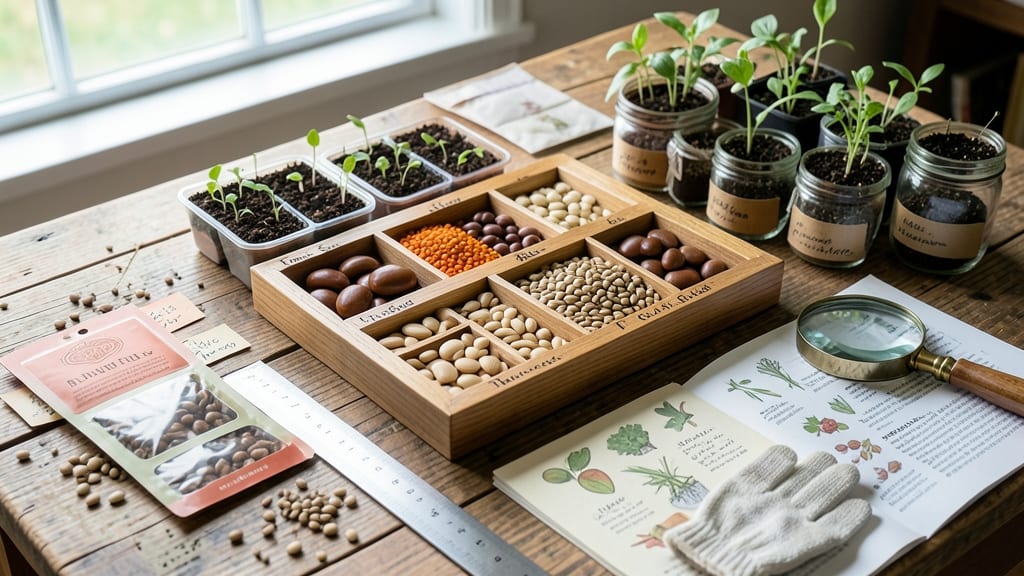
That tiny seed in your palm could grow into a towering sunflower or a pepper plant that produces 20 fruits. 🌱 A seed identification guide saves you from planting the wrong variety—and the frustration that comes with it.
I’ve spent years sorting through seed packets, and the differences between tomato, pepper, and bean seeds are easier to spot than you’d think once you know what to look for.
Shape, size, and texture are your best friends here. Tomato seeds are flat and oval, while pepper seeds are round and slightly raised. Bean seeds have a distinct eye pattern, and flower seeds often come in tiny, irregular shapes.
A magnifying glass helps when details matter, but even with the naked eye, you’ll start recognizing patterns after just a few comparisons.
Once you master identification, you’ll make smarter planting choices—like avoiding the wrong heirloom variety or accidentally sowing weeds instead of flowers. The right seeds mean better yields, fewer mistakes, and a garden that thrives exactly as you imagined.
This guide covers 50 of the most common seeds, with clear descriptions and side-by-side comparisons. Whether you’re a beginner or just want to refine your skills, you’ll never second-guess a seed packet again.
📚 In This Guide
- What you need
- Instructions
- Tips and common mistakes
- Wrapping up and next steps
What you need
- ● Magnifying glass (10x magnification) – For close-up inspection of seed textures, shapes, and details.
- ● Ruler or measuring tape – To record seed size (inches or millimeters).
- ● Notebook or digital note-taking app – For logging observations, sketches, and comparisons.
- ● Seed identification guidebook or printed reference sheets – A physical or digital copy of your Seed Identification Guide (e.g., Seed Identification: A Color Guide by C. Leo Horton).
- ● Small paintbrush or cotton swabs – Gently removes debris or dust from seeds for clearer viewing.
- ● White or light-colored tray or plate – Provides a clean, high-contrast background for photography or visual comparison.
- ○ Camera or smartphone with macro mode – Captures high-resolution images for later reference (optional but highly recommended!).
- ● Seed storage containers (small jars or envelopes) – Organizes seeds by type for easy access (5–10 containers, depending on variety).
- ● Dissecting microscope (40x–100x magnification) – For ultra-detailed analysis of seed structures.
- ● Moisture meter or spray bottle – Tests seed moisture content (useful for viability checks).
- ● Field guide apps (e.g., iNaturalist, PlantNet) – Digital tools for on-the-go seed ID assistance.
- ● Labeling system (color-coded tags or stickers) – Quickly categorizes seeds by family or region.
- ● Gloves (nitrile or latex) – Protects hands from irritants or allergens in some seeds.
How to identify common garden seeds visually
No seed packet? No problem. Learn these telltale traits to match seeds to plants.
🌱 Step 1: Examine Seed Shape and Size
Start by holding the seed between your thumb and forefinger. Flat, oval seeds like bean seeds are typically legumes, while round seeds like sunflower seeds often belong to annuals. Compare your seed to these common shapes: kidney-shaped (beans), winged (maple), or elongated (tomato). Size matters too—a pea seed is roughly ¼ inch long, while a pumpkin seed can reach ½ inch. I keep a ruler nearby to measure unknown seeds against known varieties.
Pay attention to surface texture next. Smooth, glossy seeds like corn kernels usually indicate grains, while rough or bumpy seeds often belong to vegetables. A magnifying glass helps reveal fine details—carrot seeds have tiny wings, and lettuce seeds look like tiny black specks with ridges. If your seed feels fibrous or stringy when pinched, it might be a flax or chia seed.
🌿 Step 2: Check Seed Color and Markings
Color is your first clue. Black seeds often belong to nightshades (tomato, pepper), while white seeds might be squash or okra. Brown seeds can range from beans to onions, so look deeper. Striped seeds like wheat berries or zucchini seeds are easy to spot, while speckled seeds (like beet seeds) hint at root vegetables. Hold the seed up to a bright light—some seeds, like radish, have a distinct U-shaped notch when viewed edge-on.
Don’t overlook subtle patterns. Sunflower seeds often have a white stripe down one side, while cucumber seeds appear flat and oval with a slight ridge. If your seed has a hard, shiny coat, it might be a pea or lentil. I’ve found that red or orange seeds often belong to peppers or chili varieties, while greenish seeds (like melon seeds) are less common but still identifiable by their glossy sheen.
✂️ Step 3: Test Seed Density and Weight
Grab a handful of similar-looking seeds and compare their weight. Heavy seeds like pumpkin or watermelon indicate large plants, while light, papery seeds (like dill or cilantro) suggest delicate herbs. Drop a few seeds into a glass of water—floating seeds (such as poppy or marigold) often belong to annuals, while sinking seeds (like bean or pea) are legumes. This simple float test saves time when sorting unknown seeds.
Next, press the seed between your fingers to gauge hardness. Soft, crushable seeds (like tomato or pepper) are usually from fleshy fruits, while hard, dense seeds (like corn or wheat) come from dry pods. A seed coat that cracks easily might belong to onion or garlic, whereas thick, woody seeds (like okra) are tougher. I keep a small notebook to jot down these traits—over time, you’ll spot patterns that narrow down possibilities.
🪴 Step 4: Compare to Known Seed Samples
If you’re still unsure, gather a reference collection of 10-15 common seeds (like tomato, bean, basil, and sunflower) in labeled envelopes. Lay your mystery seed beside them and compare size, shape, and texture. Seed catalogs or gardening books often include illustrations—flip through while holding your seed up to the page. I’ve used this method to identify wild mustard seeds (tiny, triangular) and wheat berries (long, tapered) that turned out to be perfect for sprouting.
For digital help, snap a photo of your seed against a white background and upload it to a seed identification app or forum. Include details like location (if wild-harvested) and any known growing conditions. Many gardeners share photos of their seeds in groups dedicated to seed saving—you’ll often get a match within hours. I once identified a forgotten packet of seeds as coriander after posting a photo and describing their oval, ridged shape and light brown color.
⏰ Step 5: Germinate a Test Batch
If all else fails, plant 3-5 seeds in a small pot with moist potting mix and cover lightly. Place the pot in a warm, sunny spot (like a south-facing windowsill) and check daily. The shape of the first leaves (called cotyledons) can reveal the plant family. Round cotyledons suggest beans or peas, while needle-like leaves point to brassicas (like cabbage or broccoli). I’ve used this trick to confirm wild radish seeds (which sprouted with lobed leaves) and mustard seeds (which grew into hairy seedlings).
Watch for growth speed too—fast germinators (like radish or lettuce) sprout in 3-7 days, while slow seeds (like tomato or pepper) may take 10-14 days. If seedlings emerge with hairy stems or unusual leaf patterns, cross-reference with a seedling identification chart. Keep a journal of your test batches—over time, you’ll recognize patterns that make future identifications faster. This method is foolproof, even for tiny, cryptic seeds like carrot or parsley.
Tips & tricks for mastering seed identification
Between us, I've spent years sorting through mystery seeds—and these tricks cut the guesswork in half.
Lighting Makes All the Difference: Natural daylight is your best friend for seed identification. Hold your seed near a window or use a bright LED lamp to reveal subtle details like ridges, notches, or color variations. I keep a small magnifying glass handy—it's amazing how much clearer those tiny wings on carrot seeds become when magnified. The key is consistency: always examine seeds under the same lighting conditions to avoid misjudging colors or textures.
Build Your Reference Collection: Start with a handful of known seeds—tomato, bean, sunflower, and basil are great starters—and store them in labeled envelopes. When you find a new seed, compare it directly to your collection. I've identified everything from wild mustard to forgotten heirloom varieties this way. Pro tip: Add a few seeds from your garden each season to expand your reference library naturally.
The Float Test is Underused: This simple trick separates seeds into two broad categories instantly. Drop a few seeds into a glass of water—floating seeds like poppy or marigold often belong to annuals, while sinking seeds like beans or peas are legumes. I've used this method to quickly sort through mixed batches of unknown seeds, saving hours of comparison. Just be gentle when removing seeds to avoid damaging them for future testing.
Document Your Findings: Keep a small notebook or digital file of seeds you've identified, including photos and key characteristics. Over time, you'll spot patterns that make new identifications faster. I've found that seeds from the same family often share similar textures or shapes—once you recognize these patterns, identification becomes intuitive. This habit also helps track which seeds perform best in your climate.
Pro Tips for Seed Identification Guide
- Between us, I've spent years sorting through mystery seeds—and these tricks cut the guesswork in half.
- Lighting Makes All the Difference: Natural daylight is your best friend for seed identification.
- Build Your Reference Collection: Start with a handful of known seeds—tomato, bean, sunflower, and basil are great starters—and store them in labeled envelopes.
Frequently asked questions
How do I tell the difference between grass seeds and weed seeds?
Grass seeds are usually uniform in shape and size, with smooth, elongated forms (like Kentucky Bluegrass or Fescue). Weed seeds, however, are often irregular, spiky, or tiny (e.g., crabgrass or dandelion). Check seed packets for labeled varieties—mismatches are a red flag! For tricky cases, use a seed identification app or consult a local nursery.
How soon can I identify seeds after planting?
Most seeds sprout within 7–14 days under ideal conditions (warmth, moisture, sunlight). If nothing emerges after 3 weeks, they may be dormant, damaged, or the wrong type. For slow germinators (like some wildflower mixes), wait up to 6 weeks. Keep soil consistently moist and avoid overwatering, which can suffocate seeds.
What’s the best tool for identifying unknown seeds?
A magnifying glass or seed identification key (like our guide!) is your best bet. For quick results, try:
- Apps: PictureThis or PlantNet (upload photos for AI analysis).
- Books: The Seed Identifier by William C. Martin.
- Local experts: Extension offices or gardening forums (e.g., Reddit’s r/lawncare).
Why did my seeds sprout into something I didn’t plant?
This happens when volunteer plants (unwanted seeds from nearby plants, wind, or animals) take root. To prevent it:
- Use seed-free mulch or landscape fabric.
- Remove weeds before they go to seed.
- Choose certified weed-free seed mixes.
Does temperature affect seed identification?
Yes! Some seeds (like cool-season grasses) germinate best in 50–70°F soil, while warm-season varieties (e.g., Bermuda grass) need 75–90°F. If your seeds aren’t sprouting, check soil temps with a moisture meter. Pro tip: Soak seeds overnight in warm water before planting if your climate is too cold.
Wrapping up and next steps
Mastering seed identification is your first step toward a thriving garden or lawn! 🌱 With this visual guide to 50 common varieties, you’re now equipped to spot, select, and nurture the perfect plants for your space.
Whether you're a beginner or a seasoned green thumb, confidence in seed recognition opens doors to healthier growth and smarter gardening choices.
Ready to take the next step? Start small:
- Bookmark this guide for quick reference.
- Grab a few seed packets and practice identifying them.
- Share your newfound knowledge with fellow gardeners—you might just inspire the next gardening adventure! 🌟