
Propagation
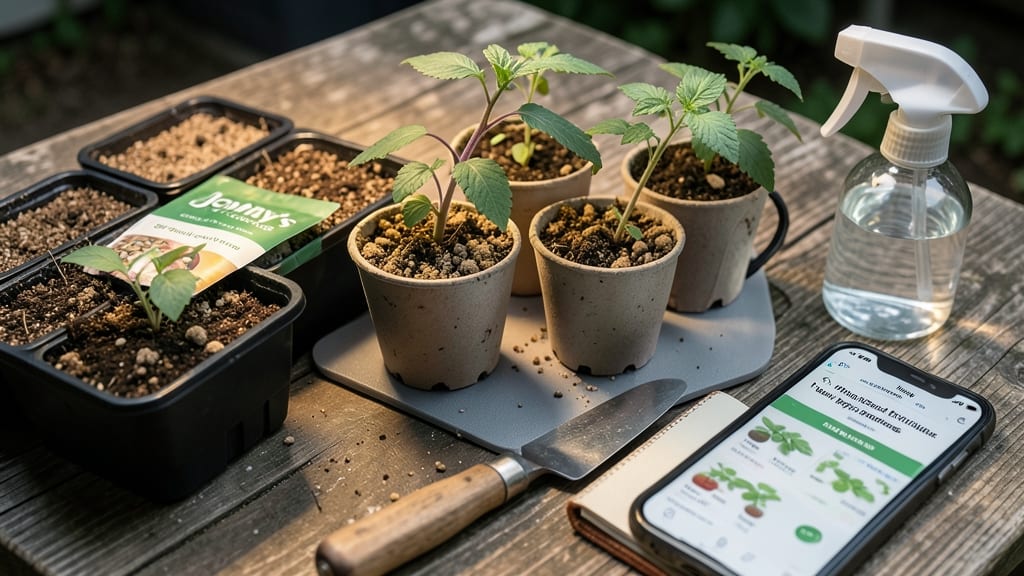
Your Johnny Jump-ups won't grow themselves—timing is everything. 🌱 Using a seed-starting calculator for these cheerful annuals means you'll have blooms from spring through fall without the guesswork of "plant early" or "plant late" advice. The magic happens by counting backward from your last frost date.
Most Johnny Jump-ups varieties need 6-8 weeks indoors before transplanting, but cooler zones push that to 8-10 weeks—and warm climates might skip indoor starting entirely. The calculator handles all that math for you.
What you end up with is a precise schedule that prevents leggy seedlings or bolting before blooms appear. I've used this method for three seasons now, and my Johnny Jump-ups outperform store-bought plants every time—more flowers, longer blooming, and better color.
Works for all Viola tricolor varieties, including the classic "Johnny Jump-ups" mix and single-color strains. Let's get those seeds started right!
📚 In This Guide
- What you need
- Instructions
- Tips and common mistakes
- Wrapping up and next steps
What you need
- ● Seeds: Johnny Appleseed or apple tree seeds (ensure they’re fresh and viable—test germination rates if unsure)
- ● Seed trays or pots: 2–4" deep, with drainage holes (biodegradable or plastic, 4–6 per seed type)
- ● Seed starting mix: Lightweight, sterile potting mix (avoid garden soil—1–2 cubic feet per tray)
- ● Grow lights or sunny windowsill: 12–16 hours of light daily (LED grow lights are ideal)
- ● Misting bottle or spray nozzle: For gentle watering (avoid oversaturating)
- ○ Heat mat (optional but helpful): 70–75°F range to speed germination (only needed for cold-starting seeds)
- ● Labeling tags: Waterproof markers or labels (1 per pot)
- ● Humidity dome or plastic wrap: To retain moisture (remove once sprouts appear)
- ● Thermometer: To monitor soil and air temps (60–75°F optimal for germination)
- ● Johnny Appleseed Seed Starting Calculator: Digital or printed (download here)
- ● Fertilizer: Balanced, water-soluble (5-5-5 or 10-10-10, ¼ tsp per gallon of water after sprouts form)
- ● Bottom watering tray: To keep roots consistently moist
- ● Growth chart or journal: Track seedling progress and transplant dates
- ● Apple variety guide: Cross-reference seed types with mature tree traits
- ● Pruning shears: For future seedling thinning (once seedlings are 2–3" tall)
How to use johnny Appleseed's seed starting calculator for your zone
This tool transforms guesswork into a foolproof system for timing your seed starts.
📅 Step 1: Determine Your Last Frost Date
Start by finding your average last frost date for your growing zone—this is the foundation of your entire planting schedule. I recommend using the USDA Plant Hardiness Zone Map or checking local agricultural extension service records for precision. For example, if you're in Zone 5, your last frost typically falls around May 15th. Write this date down—it's your anchor point for all future calculations.
Here's the thing—if you're in a microclimate (like a valley or hillside), your frost date might differ by 1-2 weeks from the official zone average. I've seen frost delay by 10 days in urban areas due to the "heat island" effect, so verify with a neighbor who gardens or check historical weather records. This ensures your seedling timing matches real-world conditions.
🌱 Step 2: Calculate Back from Transplant Date
Most seedlings need 4-8 weeks to mature enough for transplanting outdoors. The calculator accounts for this by asking for your plant type—cool-season crops like lettuce need 4-5 weeks, while warm-season tomatoes and peppers require 6-8 weeks. Input your last frost date and the calculator automatically subtracts the appropriate weeks to give you your ideal start date. For instance, if you're growing tomatoes in Zone 6 (last frost May 1st), the calculator will tell you to start seeds March 15th to have strong 6-week-old seedlings ready.
Don't skip this step—rushing seedlings means weak, leggy plants that struggle in the garden. I've seen gardeners start tomatoes too early in January, only to have them bolt (flower prematurely) before transplant time. The calculator prevents this by matching seedling age to your specific climate.
🌡️ Step 3: Adjust for Indoor vs. Outdoor Germination
The calculator lets you choose between indoor and outdoor seed starting. If you're sowing directly in the garden (like peas or beans), you can ignore the indoor timing entirely—just plant when soil reaches 50°F and stays warm. For indoor starts, the tool factors in grow light needs (most seedlings need 14-16 hours of light daily) and temperature control (ideal germination range is 65-75°F). If your home runs cooler, the calculator may suggest using a seedling heat mat to speed up germination.
Watch for the calculator's warning about seedling shock if you start too late. For example, in Zone 8, starting broccoli seeds too close to the last frost means they'll bolt before you can harvest. The tool adjusts for your zone's daylength changes, ensuring you avoid this common mistake.
⏰ Step 4: Factor in Seed Packet Instructions
Enter the days to germination listed on your seed packet—the calculator cross-references this with your zone's average soil temperatures to refine your start date. For instance, basil seeds germinate in 7-14 days at 70°F, but if your zone has cooler spring soils, the calculator may suggest a 2-week head start indoors. I always double-check this step because some heirloom seeds (like Brandywine tomatoes) have slower germination than hybrid varieties.
Pay attention to the calculator's "Safety Window"—this shows a 5-day range around the ideal start date. If you're unsure, pick the earlier date in the window. I've learned the hard way that delaying seed starts (even by a week) can mean the difference between a bountiful harvest and stunted plants.
🌿 Step 5: Plan for Succession Planting
Use the calculator's "Repeat for Multiple Batches" feature to schedule succession plantings—critical for crops like lettuce, radishes, and bush beans. For example, in Zone 7, you might start 3 batches of lettuce seeds, spaced 2 weeks apart, to ensure a continuous harvest. The tool automatically adjusts for soil warming trends in your zone, so you won't accidentally plant too late in the season.
Here's where it gets fun—you can also use this to rotate crops in the same bed. For instance, plant fast-growing radishes first (start seeds 4 weeks before last frost), then follow with slow-growing carrots (start 6 weeks before). The calculator's "Crop Rotation Mode" helps you stagger planting dates so no two members of the same plant family (like tomatoes and peppers) occupy the same spot in back-to-back years.
Tips & tricks for johnny Appleseed's seed starting precision
Mastering this calculator means transforming seasonal uncertainty into a gardening advantage. Here's how to maximize every feature for foolproof results.
Microclimate Verification: The calculator's default frost dates work for most gardeners, but local variations can throw off your entire schedule. I've seen frost dates shift by 10 days in urban heat islands or sheltered valleys—check with your local agricultural extension office or use a 5-year average of your own records. For example, if your Zone 6 typically has frost by May 1st but your valley holds frost until May 10th, adjust accordingly. This single step prevents the heartbreak of late-season seedlings bolting before harvest.
Lighting Strategy for Indoor Starts: The calculator assumes 14-16 hours of light daily, but most homes don't provide enough natural light this time of year. I recommend using a full-spectrum LED grow light on a timer—position it 2-3 inches above seedlings and adjust height as they grow. Without proper light, seedlings stretch toward windows (a condition called "leggy"), wasting your time and resources. If you're using fluorescent bulbs, opt for cool white (5000K-6500K) over warm tones, which can inhibit growth.
Seed Packet Cross-Referencing: Step 4's germination time input is where the calculator gets truly smart. For instance, if your Brandywine tomato seeds list 14 days at 70°F but your zone averages 60°F soil temps, the tool will automatically suggest starting 2 weeks earlier indoors. I've seen gardeners ignore this and end up with uneven germination—some seeds sprout while others remain dormant, creating a patchwork of growth. Always verify seed packet instructions against your zone's soil temperature trends before trusting the calculator's default suggestions.
Succession Planting Hack: The "Repeat for Multiple Batches" feature is a game-changer for continuous harvests, but it's also perfect for crop rotation. For example, in Zone 7, I plant 3 batches of lettuce seeds spaced 2 weeks apart—the first batch matures just as the third is ready to transplant. This ensures I never have a glut of harvest-ready crops at once. The calculator's "Crop Rotation Mode" even helps me avoid planting tomatoes and peppers in the same spot back-to-back, which prevents soil-borne diseases from building up.
Pro Tips for Johnny Seeds Seed Starting Calculator
- Mastering this calculator means transforming seasonal uncertainty into a gardening advantage.
- Microclimate Verification: The calculator's default frost dates work for most gardeners, but local variations can throw off your entire schedule.
- Lighting Strategy for Indoor Starts: The calculator assumes 14-16 hours of light daily, but most homes don't provide enough natural light this time of year.
Frequently asked questions
How accurate is the calculator for my specific location?
The calculator uses USDA Plant Hardiness Zones and last frost date averages to provide reliable estimates. For hyper-local precision, check your microclimate factors (e.g., elevation, urban heat islands) and adjust dates by 1–2 weeks if needed. Pro tip: Use nearby weather stations or gardening forums for real-time tweaks!
Can I start seeds too early or too late?
Yes! Starting too early risks leggy, weak seedlings (due to limited light), while too late may delay harvests. The calculator accounts for seedling maturity and transplant timing, but always verify your seed packet’s days to germination. Rule of thumb: Err on the earlier side for cool-season crops (e.g., lettuce) and follow the calculator for warm-season picks (e.g., tomatoes).
What if I don’t have grow lights or a greenhouse?
No fancy setup? No problem! Use a sunny windowsill (south-facing is ideal) or a DIY grow tent with a full-spectrum LED bulb. For seedlings, aim for 12–16 hours of light/day. If natural light is scarce, supplement with a cheap shop light (keep it 2–4 inches above seedlings). Warning: Avoid heat mats if temps exceed 80°F—seedlings can overheat!
How do I troubleshoot seedlings that aren’t germinating?
Start with the basics: moisture, warmth, and darkness (for most seeds). Check these fixes:
- Moisture: Keep soil damp (not soggy)—use a spray bottle for fine seeds.
- Temperature: Most seeds need 65–75°F. Use a seedling heat mat if your space is chilly.
- Depth: Plant too deep? Tiny seeds (like basil) should barely be covered.
- Timing: Some seeds (e.g., peas, spinach) need a cold period—try stratification.
Does the calculator work for non-US locations?
The tool is US-focused, but you can adapt it! Research your country’s frost-free dates (e.g., UK’s Met Office) and input those into the calculator’s "last frost" field. For Southern Hemisphere gardeners, reverse the seasons (e.g., start warm-season crops in fall). Tip: Join local gardening groups—they’ll know your microclimate quirks!
Wrapping up and next steps
Ready to turn your garden dreams into blooming reality? 🌱 Johnny Appleseed’s Seed Starting Calculator is your secret weapon—no more guesswork, just perfectly timed planting for your zone! Whether you’re a seasoned gardener or just starting, this tool ensures your seeds get the ideal head start, saving you time and boosting your harvest.
Now that you’ve got the know-how, grab your seeds, mark your calendar, and dive in! Start small, track your progress, and soon you’ll be reaping the rewards of precision planting. Happy growing! 🌿