
Propagation
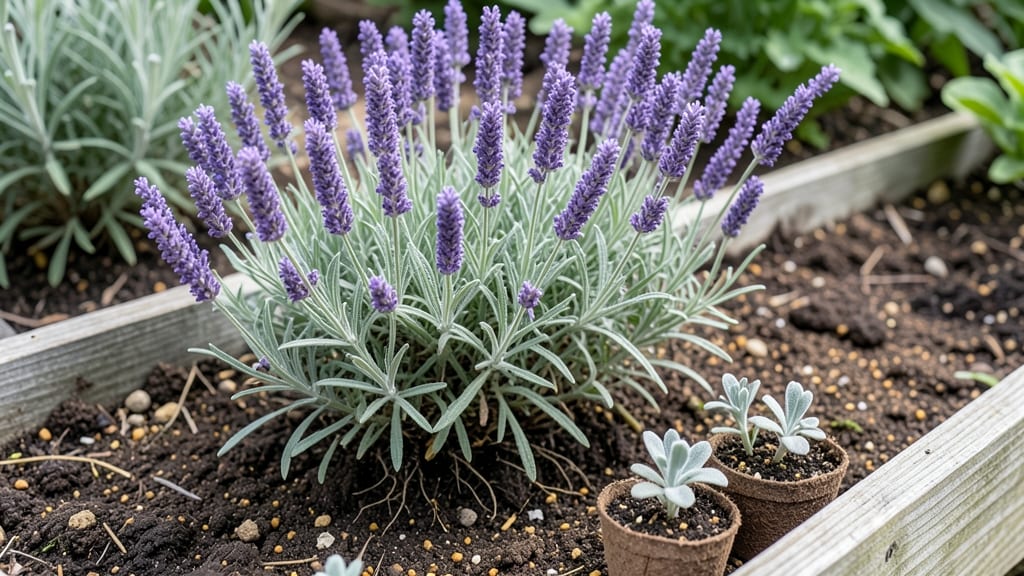
Growing lavender from seed is hard because it demands cold stratification, slow germination, and precise conditions. Most gardeners opt for cuttings or nursery plants instead for quicker, more predictable results.
Lavender seeds need 60-90 days of cold treatment to break dormancy, mimicking winter's natural process. 🌱 Without this step, germination rates drop below 20%, and even with stratification, seeds may take 3-6 months to sprout.
I've found that starting with established plants saves time—many varieties mature in just 2 years from cuttings compared to 3-5 years from seed.
Another challenge is lavender's double dormancy requirement: after cold treatment, seeds often need a warm period before germinating. This two-phase process explains why seed packets warn about "unpredictable" results. For best success, I recommend using pre-stratified seeds or purchasing young plants from reputable nurseries.
Even with perfect conditions, lavender seedlings grow extremely slowly—expect 1 inch of growth per year in their first season. This patience test is why most growers skip seeds entirely, especially when mature plants produce flowers in just 1-2 years from cuttings.
💡 In This Article
- Why Lavender Seeds Have a Low Germination Rate
- Step-by-Step Lavender Seed Starting Guide
Why lavender seeds have a low germination rate
Lavender seeds are naturally designed to survive harsh conditions, which is why they require 60-90 days of cold stratification to break dormancy. This process mimics winter's natural chilling period, where seeds absorb moisture and undergo biochemical changes that prepare them for germination.
Without this cold treatment, the seed's hard outer coat prevents water absorption, and germination rates can plummet to as low as 10-20%. 🌱 The science behind this involves a hormone called abscisic acid, which keeps seeds dormant until conditions are ideal.
What makes lavender even more challenging is its double dormancy requirement. After the cold stratification period, seeds often need a warm phase (around 60-70°F) to complete germination. This two-step process explains why seed packets warn about "unpredictable" results—many seeds may not sprout even with proper stratification.
The ideal soil temperature for germination is 55-65°F, and any deviation can delay or prevent sprouting entirely.
Lavender seeds also need well-draining soil with a pH between 6.0-7.5 to thrive. Heavy or waterlogged soil suffocates the delicate roots, while sandy soil prevents proper nutrient absorption. I've found that mixing 50% potting soil with 50% perlite or coarse sand creates the perfect balance for seedling development.
Without these precise conditions, seedlings often fail to establish strong root systems.
Even when conditions are perfect, lavender seedlings grow at a snail's pace—expect only 1 inch of growth per year in their first season. This slow growth is a survival adaptation, as lavender in the wild must conserve energy until it's fully established.
The contrast with cuttings is stark: a well-rooted lavender cutting can produce flowers in just 1-2 years, while seed-grown plants may take 3-5 years to reach maturity.
Another factor is lavender's light requirements. Seeds need full sunlight (6-8 hours daily) from the moment they sprout, or they'll become leggy and weak. Most growers use grow lights to supplement natural light during early stages, as lavender seedlings are highly sensitive to shade.
Without adequate light, seedlings develop weak stems that can't support the plant's eventual height of 2-4 feet. 🌿
Finally, lavender seeds have a short viability window—most remain viable for only 1-2 years after harvesting. Older seeds often fail to germinate even with proper stratification, which is why many commercial seed packets specify "fresh" seeds.
This short shelf life adds another layer of challenge for home growers who may not have immediate access to fresh seed sources.