
Lawn
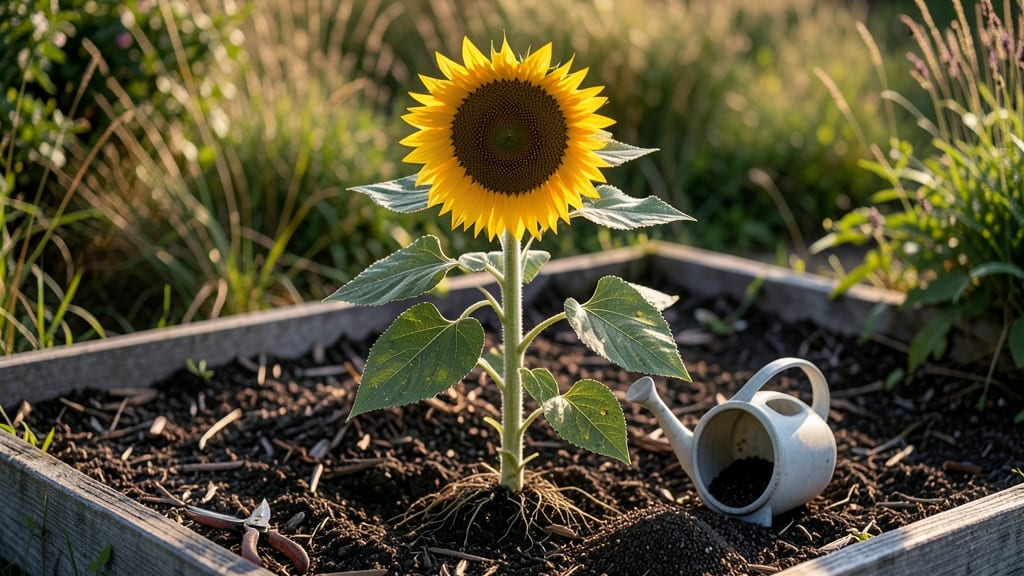
Sunflower seeds aren't living during dormancy—they only become alive when germination begins, requiring water, warmth, and oxygen to activate growth and metabolic processes. Their viability depends entirely on proper storage conditions.
A sunflower seed's "life" status depends entirely on its metabolic state.
While dormant, it's technically alive but in a suspended state—think of it like a hibernating animal. 🌱 Once exposed to the right conditions (moisture, temperature, and oxygen), enzymes activate, cells begin dividing, and the seed "wakes up" to grow into a plant.
This transition marks the true beginning of its biological activity, which is why gardeners focus so much on seed viability tests before planting.
What's fascinating is how this dormancy works: seeds can remain viable for years if stored properly (cool, dry conditions are key), but once moisture triggers germination, the process is irreversible.
I've seen old seeds from seed banks sprout after decades—proof that dormancy isn't death, just a carefully timed pause in the life cycle.
💡 In This Article
- Botanical Definition of Seed Viability and Dormancy
- How to Test Sunflower Seed Germination Potential
Botanical definition of seed viability and dormancy
At the core of this question lies a fascinating biological concept: seeds exist in a unique metabolic limbo. While technically alive, dormant seeds like sunflower seeds exhibit minimal metabolic activity—their respiration rates drop to just 1-5% of active plant levels.
This suspended animation allows them to survive harsh conditions while maintaining viability for months or even years. The key difference between dormancy and true life is the absence of growth and development until triggered by external stimuli.
When germination begins, a cascade of biochemical events unfolds. Water absorption (imbibition) activates dormant enzymes like amylase, which breaks down starch reserves into sugars fueling cell division. Simultaneously, plant hormones like gibberellins surge, signaling the radicle (embryonic root) to emerge first.
This process requires precise coordination—sunflower seeds typically need 70-85°F soil temperatures and 15-20% moisture content to initiate germination within 7-14 days. 🌱 The transition from dormancy to active growth represents the seed's true biological awakening.
What's often misunderstood is that dormancy isn't a form of death—it's an adaptive survival strategy. Even "dead" seeds in storage may still contain viable embryos if stored improperly (above 50°F or with >10% humidity).
The distinction lies in cellular activity: dormant seeds maintain low-level protein synthesis and membrane integrity, while non-viable seeds show cellular degradation. This explains why some seeds sprout after decades in seed banks.
Sunflower seeds demonstrate particularly interesting dormancy mechanisms. Their hard outer shells (seed coats) contain abscisic acid, a natural growth inhibitor that must be broken down before germination. This chemical barrier explains why freshly harvested sunflower seeds often require scarification (light abrasion) or stratification (cold treatment) to improve germination rates.
The balance between these inhibitors and growth promoters creates the precise conditions needed for successful sprouting.
Consider this comparison: A dormant sunflower seed's metabolic rate resembles a human in deep hibernation, burning just enough energy to maintain vital functions. Only when exposed to the right conditions does the seed's internal clock reset, triggering the dramatic shift from metabolic stasis to explosive growth.
This biological duality explains why gardeners must test seed viability—what appears dormant may still hold the potential for life under the right circumstances. ✨