
Light Requirements
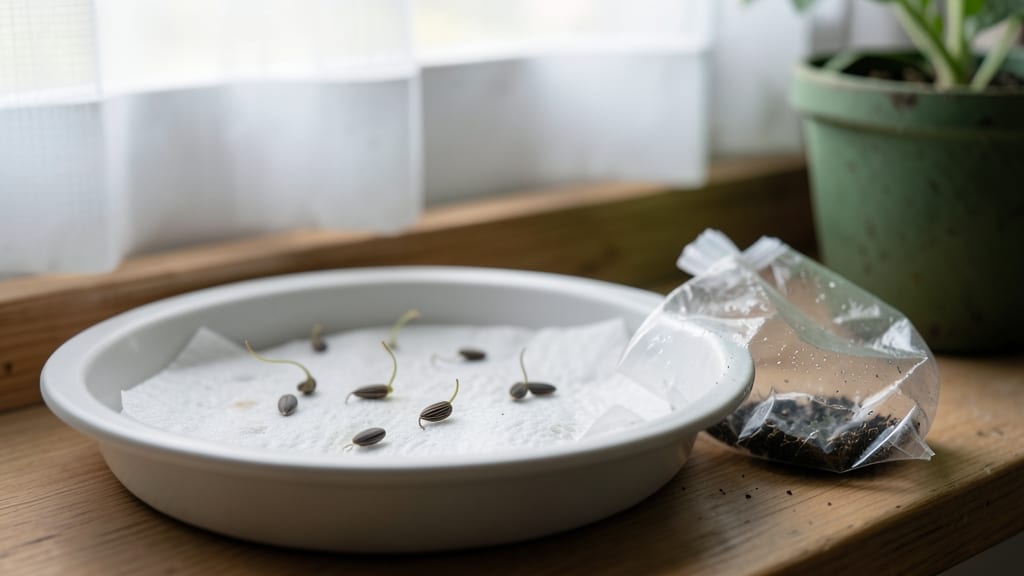
Sunflower seeds don’t actually need light to germinate—you can plant them 1–2 inches deep in the soil, where they’ll happily sprout in the dark.
But here’s the catch: while they’ll grow without light, exposing them to sunlight speeds up germination and gives seedlings a stronger start. Many gardeners overthink this, leading to either planting too shallow (and drying out seeds) or too deep (and delaying sprouts).
In this guide, I’ll break down the science behind sunflower germination—what really matters (soil moisture, warmth, and depth) and how light fits into the picture. You’ll also learn the fastest way to get those 🌻 sprouts popping, whether you’re direct-sowing in your garden or starting indoors.
No more guesswork: by the end, you’ll know exactly how to set your seeds up for success, no matter your zone or growing setup.

How light affects sunflower seed germination (and what doesn’t)
Sunflower seeds are classified as photoblastic but not photoblastic-light-dependent, meaning they technically don’t require light to germinate. However, light exposure can influence speed and vigor. The confusion arises because many gardeners assume seeds need light to sprout, but the real factors are moisture, temperature, and seed depth.
Understanding this distinction can save you weeks of waiting for sprouts.
When planting sunflower seeds, the absence of light won’t stop germination, but it may delay it. Seeds buried 1–2 inches deep in moist, warm soil will sprout without sunlight.
However, once they break the soil surface, light becomes critical for chlorophyll production and healthy growth. This dual-phase requirement explains why some gardeners see inconsistent results.
| Germination Factor | Requirement | Impact on Germination |
|---|---|---|
| Light Exposure | Not Required | Seeds sprout in darkness but may grow leggy or weak without light. |
| Soil Moisture | Consistently Damp | Critical for activating enzymes; dry soil stops germination. |
| Temperature | 60–85°F (15–29°C) | Ideal range for enzyme activity; cold soil slows sprouting. |
| Planting Depth | 1–2 Inches | Too shallow = dries out; too deep = struggles to emerge. |
| Soil Type | Well-Draining | Clay or compacted soil can suffocate seeds. |
The misconception that sunflower seeds need light to germinate likely stems from observing how seedlings stretch toward sunlight after sprouting. In reality, the seed’s radicle (root) emerges first in darkness, followed by the hypocotyl (stem), which then seeks light.
This two-step process is why you can plant seeds 1–2 inches deep without worrying about light exposure during germination.
However, light does play a role in germination speed. Seeds planted in partial light (e.g., under a thin layer of soil or mulch) may sprout 2–3 days faster than those buried in complete darkness.
This occurs because blue light triggers enzymes that break down seed coatings. For fastest results, consider planting in well-lit containers or using a grow light for indoor starts.
Temperature and moisture are equally critical. Sunflower seeds require consistent warmth (60–85°F) and moisture to activate their enzymes. If your soil is too cold (below 50°F), germination can stall for weeks.
A simple trick is to pre-soak seeds in warm water for 4–6 hours before planting, which kickstarts the process and reduces reliance on soil conditions.
Another common mistake is planting seeds too shallow (less than ½ inch) or too deep (over 2 inches). Shallow planting causes seeds to dry out, while deep planting forces seedlings to push through dense soil, weakening their stems.
Aim for 1 inch deep in loose, fertile soil for the best balance of moisture retention and emergence ease.
If you’re growing sunflowers indoors, you can bypass the soil-depth challenge by using seed trays with clear lids. These create a mini greenhouse effect, trapping warmth and moisture while allowing indirect light to reach the seeds.
Once sprouts appear, remove the lid and place them under a grow light for 12–16 hours daily to prevent leggy growth.
Outdoors, the best time to plant sunflower seeds is after the last frost date when soil temperatures consistently stay above 55°F. In cooler climates, use black plastic mulch to warm the soil faster.
This method doesn’t replace light but ensures optimal conditions for germination, reducing the time between planting and sprouting from 7–14 days to as little as 5–7 days.
Remember, while light isn’t essential for germination, it becomes vital once seedlings emerge. After sprouting, provide full sun (6+ hours daily) to prevent etiolation (weak, stretched stems). The key takeaway?
Plant your sunflower seeds 1 inch deep in moist, warm soil, and they’ll sprout without light—but give them sunlight as soon as they break the surface for strong, healthy growth.
Optimal planting depth for sunflower seeds: how deep is too deep?
Sunflower seeds are surprisingly forgiving, but getting the planting depth wrong can mean the difference between fast germination and weeks of waiting. While they technically don’t need light to sprout, burying them too deep or too shallow creates major problems.
Most varieties thrive when planted 1 to 2 inches deep, but soil type and seed size play critical roles in success.
The ideal depth balances moisture retention with oxygen access. Sandy soils dry out faster, so plant seeds 1 inch deep to prevent desiccation, while clay soils benefit from 1.5 to 2 inches to maintain consistent moisture. Overlooking this can lead to seeds either drying out or suffocating—both kill germination rates.
Here’s how different sunflower varieties and soil conditions compare for planting depth:
Planting too shallow (less than ½ inch) exposes seeds to drying out, while burying them deeper than 2 inches can suffocate them, especially in dense soils. I’ve seen gardeners accidentally plant seeds 3+ inches deep in heavy clay, only to watch their germination rates drop by 50%.
Always adjust for your soil’s texture.
Loose, well-draining soil is your best friend here. If your garden soil is compacted, mix in compost or perlite to improve aeration. For container growing, use a lightweight potting mix and plant seeds ½ inch deeper than outdoor recommendations—containers dry out faster, so extra depth helps retain moisture.
Pro tip: After planting, gently press the soil around seeds to ensure good seed-to-soil contact. This small step boosts moisture absorption and speeds up germination. Once sprouted, thin seedlings to 12–18 inches apart (depending on variety) to prevent overcrowding and ensure strong stems.
✅ Key takeaway: Stick to 1–2 inches deep, adjust for soil type, and keep the soil consistently moist (not soggy) for the best results. With these adjustments, you’ll see sprouts in as little as 7 days—even in cooler soils.