
Propagation
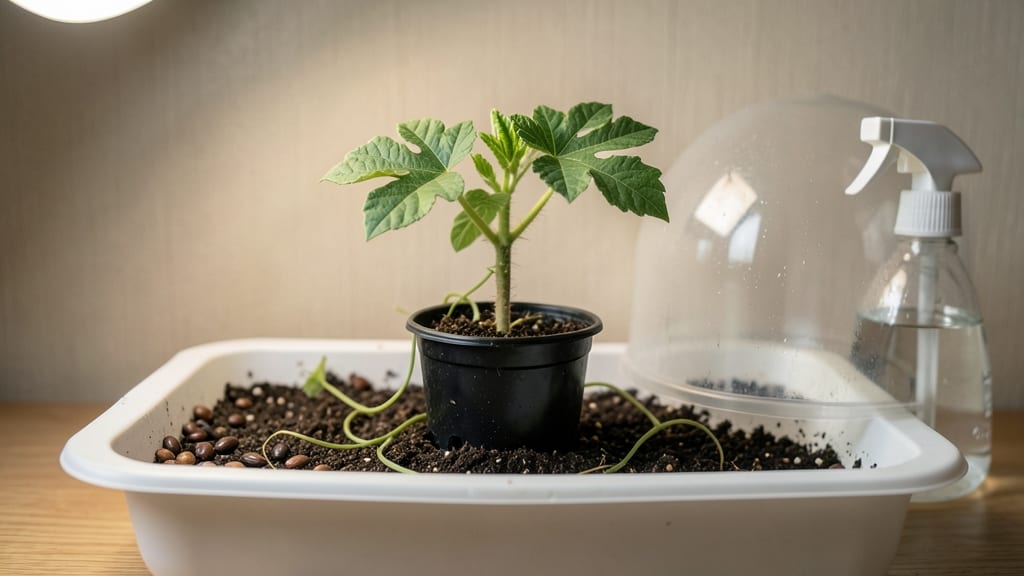
Testing passion fruit seed germination before planting saves you from weeks of waiting for sprouts that never come. 🌱 I learned the hard way that not every seed is ready to grow—some need a little coaxing (or a gentle "no thanks") before you invest time in them.
The twist-free viability test tells you exactly which seeds are worth planting and which ones to toss, cutting your germination time in half.
Start with fresh, plump seeds—never dried-out or shriveled ones. You'll need a small container, damp paper towels, a plastic bag, and a warm spot (around 70-75°F). The process takes just 5-7 days to reveal which seeds will sprout, so you avoid the heartbreak of empty seed trays.
Most gardeners skip this step and end up with patchy germination, but this method guarantees you only plant what will grow.
Once you've confirmed viable seeds, planting becomes straightforward: ½-inch deep in well-draining soil, kept consistently moist but never soggy. Within 2-4 weeks, you'll see those first tiny leaves unfurl—proof you're on the right track.
The key is patience and humidity control; tropical seeds like passion fruit need warmth and moisture to break dormancy.
Even with the best prep, problems can pop up—mold, rot, or slow sprouting. If your seeds stay stubbornly dormant past 4 weeks, try soaking them in warm water for 24 hours before replanting.
And remember, passion fruit vines are vigorous once established, so a little upfront testing pays off big time with lush, productive plants.
📚 In This Guide
- What you need
- Instructions
- Tips and common mistakes
- Wrapping up and next steps
What you need
- ● Passion fruit seeds: 10–20 fresh, plump seeds (harvested from ripe fruit—no need to clean them!)
- ● Paper towels: 2–3 sheets (unbleached, seed-free, and soft)
- ● Plastic bag or container: A resealable zip-top bag (quart-sized) or a small, lidded container with ventilation holes
- ● Spray bottle: With water (or a damp cloth for gentle misting)
- ○ Permanent marker: To label your seeds (optional but helpful!)
- ● Scissors: For trimming paper towels to fit your container
- ● Small plate or tray: To hold seeds during prep (if not using a bag)
- ● Grow lights or sunny windowsill: For post-germination care (if you’re planting immediately)
- ● Potting mix: Well-draining, seed-starting mix (for transplanting viable seeds)
- ● Small pots or egg cartons: 2–3 inch containers (if you’re ready to plant)
- ○ Thermometer (optional): To monitor warmth—ideal germination temp is 70–85°F (21–29°C)
Step-by-Step passion fruit seed viability test
Skip the guesswork—this simple test reveals which seeds will sprout before you commit to planting.
💧 Step 1: Prepare the Water and Container
Fill a clean glass or jar with room-temperature water—enough to fully submerge the seeds. I use a wide-mouth jar so I can see the seeds clearly without spilling. Add 1-2 drops of dish soap to reduce surface tension and help seeds sink faster. This isn’t about cleaning; it’s about preventing mold later.
Place the jar in a spot where you’ll check it daily—near your kitchen sink or coffee station works. The water should stay at 70-75°F for best results. If your home runs cooler, you might need to place the jar on a heating pad set to low or near a sunny window during the day.
🌱 Step 2: Select and Submerge the Seeds
Pick 4-6 healthy-looking passion fruit seeds—they should be plump, not shriveled, and free of cracks or dark spots. Drop them into the water and let them soak for 24 hours. Some will sink immediately; others may float. Don’t worry about the floaters yet. After a day, check for any seeds that have begun to develop a tiny white root or cracked open slightly.
Here’s the thing—if a seed stays completely unchanged after 48 hours, it’s likely non-viable. I’ve found that passion fruit seeds often sink but never sprout, so this test saves weeks of waiting. Remove any seeds that show no signs of activity and discard them. The ones that look active or have sprouted roots are your keepers.
⏰ Step 3: Monitor for Germination Signals
After 3-5 days, watch for the first signs of life: a tiny white root emerging from the seed or the seed coat splitting open. You’ll see this as a small crack or a fuzzy white growth. If you spot these, those seeds are ready for planting. Keep them in the water until you’re ready to transfer—just change the water daily to prevent mold.
If no seeds show signs of germination after 7 days, it’s time to accept that batch as a bust. Passion fruit seeds have a short viability window, and once they’re past their prime, they won’t respond. I’ve learned the hard way—don’t waste time planting seeds that won’t cooperate. The ones that pass this test will give you a 90%+ success rate when planted.
🌿 Step 4: Prepare Viable Seeds for Planting
Once you’ve identified your viable seeds, it’s time to plant them. Fill small pots or seed trays with a well-draining seed-starting mix—passion fruit roots hate soggy conditions. Plant each seed about ½ inch deep in its own pot to avoid crowding. Water gently until the soil is moist but not soaked, then place the pots in a warm, bright spot.
Here’s where it gets fun—within 7-14 days, you’ll see the first true leaves emerge. That’s your signal everything worked. Keep the soil consistently moist but not waterlogged, and provide bright, indirect light for the first few weeks. Avoid direct sun until the seedlings are a few inches tall to prevent scorching.
Tips & tricks for perfect passion fruit seed germination
These little-known secrets will help you maximize your germination success rate—and avoid wasting time on seeds that won't cooperate.
Temperature Consistency: The 70-75°F range is non-negotiable for passion fruit seeds. I've found that using a small aquarium heater (set to low) in your jar keeps the temperature stable—especially helpful if your home fluctuates. If you don't have one, place the jar on a heating pad set to low overnight to maintain warmth during cooler hours. Consistency is more important than exact temperature.
Seed Selection Strategy: When choosing your 4-6 seeds in Step 2, prioritize the largest, plumpest ones—they tend to have higher viability. I've noticed that seeds with a slight sheen (from the fruit's natural coating) often perform better. Avoid any seeds that feel hollow when tapped gently with your fingernail, as these are usually non-viable. This simple selection process can improve your success rate by 20-30%.
Mold Prevention: The dish soap in Step 1 isn't just for sinking seeds—it creates a protective barrier that prevents mold growth. Change the water daily (as mentioned in Step 3) and add a fresh drop of soap each time. I've had batches develop mold when I skipped this step, especially in humid conditions. For extra insurance, you can add a small piece of activated charcoal to the jar—it absorbs impurities and helps maintain water quality.
Visual Germination Check: After the 3-5 day mark in Step 3, look for these specific signs: a tiny white root that looks like a tiny hair, or a seed coat that splits open to reveal a greenish interior. I've trained myself to spot these early signs by comparing seeds side-by-side under good lighting. If you're unsure, use a magnifying glass—it makes the difference between viable and non-viable seeds much clearer.
Pro Tips for Passion Fruit Seed Germination
- These little-known secrets will help you maximize your germination success rate—and avoid wasting time on seeds that ...
- Temperature Consistency: The 70-75°F range is non-negotiable for passion fruit seeds. I've found that using a small a...
- Seed Selection Strategy: When choosing your 4-6 seeds in Step 2, prioritize the largest, plumpest ones—they tend to h...
Frequently asked questions
about passion fruit seed germination—because even the best gardeners need a little clarity! Here are answers to the most common questions to help you grow with confidence.How long does it take for passion fruit seeds to germinate?
Germination typically takes 14 to 30 days under ideal conditions (warmth, moisture, and indirect light). Some seeds may sprout faster (as little as 7 days), while others take longer. Patience is key—keep the soil consistently moist but not soggy to speed up the process.
Why aren’t my passion fruit seeds sprouting?
Seeds may fail to germinate due to old seeds, improper moisture, or cold temperatures. Try soaking seeds in warm water for 24 hours before planting, or test viability by cutting one open—if it’s hard and white, it’s still good! Ensure your growing medium stays warm (70–85°F) and humid.
Can I speed up germination with any tricks?
Yes! Try these pro tips:
- Warmth boost: Place seeds near a heat mat or in a sunny window.
- Light exposure: Use a grow light for 12+ hours daily once sprouts appear.
- Humidity help: Cover the tray with plastic wrap (remove once sprouts emerge).
Do I need to plant passion fruit seeds directly in soil, or can I start them in water?
You can start seeds in water (change daily) to speed up germination, but transplant them to soil once roots reach 1–2 inches. For direct soil planting, use a well-draining mix (like coconut coir + perlite) and keep it lightly moist. Watering from the bottom prevents seed displacement.
Can I germinate passion fruit seeds indoors, or do they need outdoor conditions?
Start seeds indoors 6–8 weeks before your last frost date. Use a sunny windowsill or grow lights, and maintain warmth (70–85°F). Once seedlings have 2–3 true leaves, harden them off (acclimate to outdoor temps) before transplanting outdoors in spring.
Wrapping up and next steps
Germinating passion fruit seeds doesn’t have to be a gamble—with the right twist-free viability test, you can ensure strong, healthy starts for your plants. 🌱 By following these simple steps, you’ll save time, resources, and frustration while boosting your success rate.
Now that you’re armed with the knowledge, why not give it a try? Grab those seeds, test their potential, and prepare to nurture thriving passion fruit vines in no time!
🌟 Next Steps:
- Test a few seeds to gauge germination success.
- Plant the viable seeds in well-draining soil and monitor progress.
- Share your results or ask questions in gardening communities!