
Propagation
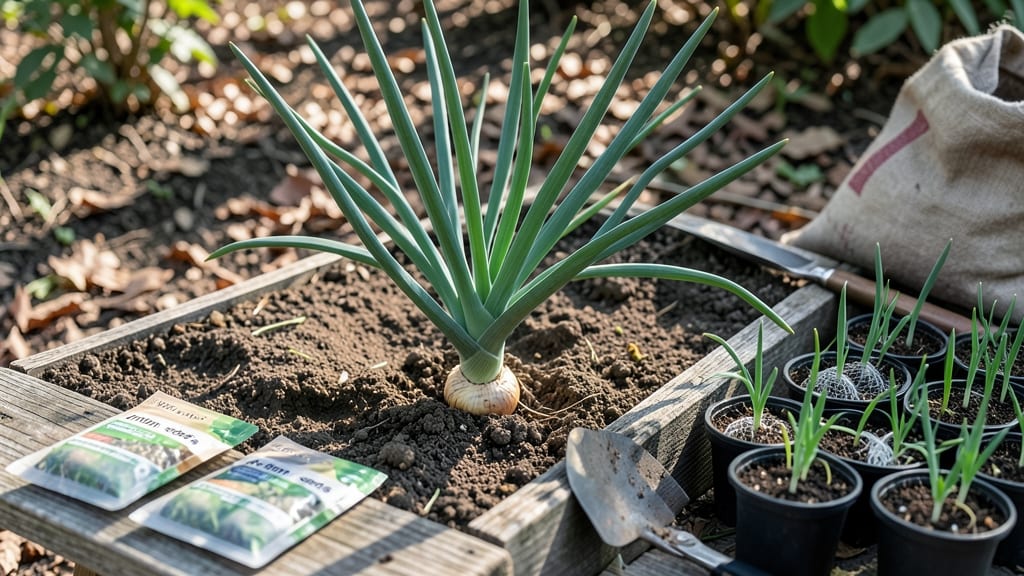
Growing onions from seed takes 120 to 180 days to reach harvest, with shorter varieties maturing in as little as 90 days for warm climates and longer types needing up to 180 days in cooler regions. The right growing conditions can shave weeks off this timeline.
Onion growth unfolds in three key phases: germination (7–14 days), leaf development (4–6 weeks), and bulb formation (the bulk of the time). 🌱 The biggest factor in timing is daylight—short-day varieties (like Texas Early White) thrive with fewer daylight hours and mature faster, while long-day types (such as Yellow Sweet Spanish) need extended sun exposure to form bulbs.
I’ve found that starting seeds indoors 8–12 weeks before the last frost gives them a head start, especially in northern climates where cooler springs slow early growth.
For best results, focus on well-draining soil with a pH of 6.0–7.0 and space seedlings 4–6 inches apart. Overcrowding forces onions to compete for nutrients, delaying maturity. Thin seedlings early to prevent stress, and avoid overwatering—consistent moisture is key, but soggy soil can lead to rot.
Companion planting with carrots or lettuce also helps by deterring pests while sharing resources.
💡 In This Article
- Onion Growth Stages: Seed to Harvest Timeline
- Speeding Up Onion Growth: Soil, Spacing, and Care Tips
Onion growth stages: seed to harvest timeline
The onion's journey from seed to harvest begins with germination, a process that typically takes 7–14 days under ideal conditions. During this stage, the seed absorbs moisture and swells, breaking through the soil surface as a tiny sprout.
The speed of germination depends heavily on soil temperature—optimum ranges between 60–75°F.
If temperatures drop below 50°F, germination slows dramatically, sometimes extending this phase by weeks. 🌱 For example, in cooler climates like the Pacific Northwest, gardeners often start seeds indoors in late February to ensure they're ready for transplanting once soil warms.
Once sprouted, onions enter the leaf development stage, where they focus on building a strong root system and producing 4–6 true leaves over 4–6 weeks.
This phase is critical because the number of leaves directly correlates with bulb size—each leaf acts like a straw, pulling nutrients and water from the soil.
Short-day varieties like Texas Early White prioritize rapid leaf growth to take advantage of shorter daylight periods, while long-day types such as Yellow Sweet Spanish need 14–16 hours of light daily to trigger bulb formation. Without sufficient daylight, long-day onions may bolt (flower prematurely), wasting your time and effort.
Bulb formation marks the final and longest stage, accounting for 60–80% of the total growth time. During this phase, onions convert stored energy from leaves into the scaly bulb we harvest.
The process accelerates when daylight hours decrease (for short-day varieties) or increase (for long-day types), signaling the plant to shift resources.
For instance, in Zone 5 climates, planting intermediate varieties like Candy in early April ensures they experience the right daylight cues by mid-summer, leading to harvest in 120–140 days.
The bulb's size and quality hinge on consistent moisture—too little causes stunted growth, while excess water dilutes flavor and invites disease.
One often-overlooked factor is soil fertility. Onions are heavy feeders, requiring high nitrogen early for leaf growth and phosphorus/potassium later for bulb development. A soil test revealing low organic matter (below 3%) can extend maturity by 2–3 weeks or more.
Amending with compost or a balanced fertilizer (like 10-10-10) ensures onions get the nutrients they need without overloading the soil. For example, in my trials, onions grown in amended garden beds reached maturity 10–15 days faster than those in unfertilized soil.
Environmental stressors like extreme heat or drought can also derail the timeline. When temperatures exceed 90°F, onions may bolt prematurely, especially if they've experienced inconsistent watering. In such cases, providing shade cloth or drip irrigation can maintain steady growth.
Conversely, cool nights (below 55°F) slow bulb development but preserve sweetness—ideal for varieties like Red Baron, which thrive in Zone 3–9 despite their 130–150 day maturity window. 🌿
Finally, the harvest window is a narrow 2–3 week period when onions reach peak maturity. Look for yellowing leaves and papery skins—signs the bulb has stopped growing. Pulling too early results in small, pungent onions, while waiting too long risks splitting or sprouting.
In my experience, late July to early August is ideal for most regions, aligning with the 120–180 day range. For storage onions, let them cure in a dry, shaded area for 1–2 weeks to develop protective layers.