
Lawn
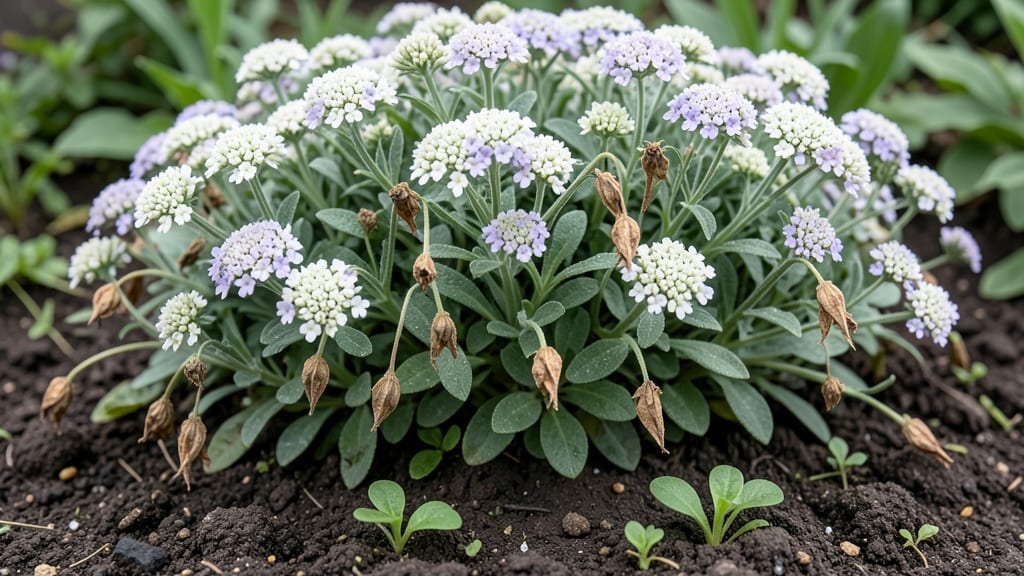
Alyssum does self seed prolifically when left undisturbed, often returning in dense clusters the following spring if you skip deadheading and maintain stable soil conditions. Its tiny, windborne seeds spread effortlessly, creating natural carpets of regrowth where conditions are favorable.
Alyssum's self-seeding habit is actually a clever survival strategy. 🌱 The plant produces thousands of lightweight seeds that mature quickly after flowering, ready to disperse at the slightest breeze.
Unlike some annuals, alyssum seeds remain viable in the soil for years, waiting for the perfect conditions—moisture, sunlight, and undisturbed ground—to sprout. This explains why you might suddenly find patches of it appearing where you didn't plant it, especially in well-drained areas with full sun exposure.
What makes this particularly useful for gardeners is how predictable the process becomes once you understand the triggers. The key factors are timing—letting some flowers go to seed—and soil stability.
I've found that if you stop deadheading in late summer, you'll get a head start on next year's blooms, while also creating natural ground cover that suppresses weeds. The trade-off? You'll need to thin seedlings occasionally to prevent overcrowding, but the low-maintenance regrowth makes it worth the effort.
💡 In This Article
- How Alyssum’s Seed Dispersal Mechanism Works
- Tips to Maximize Alyssum’s Natural Regrowth
How alyssum’s seed dispersal mechanism works
Alyssum's self-seeding superpower starts with its tiny, papery seeds—each one weighing less than 0.001 grams (about the weight of a grain of sand). These seeds form in seed pods that split open when mature, releasing them into the air like confetti.
The pods typically burst open 4-6 weeks after flowering, which explains why you'll see new seedlings appear 6-8 weeks later—just in time for spring planting. 🔥
The secret lies in the seed's lightweight structure. Unlike heavier seeds that rely on animals or machinery for dispersal, alyssum seeds have evolved to ride wind currents with minimal force.
A single plant can produce 50,000-100,000 seeds, and even gentle breezes can carry them 20-30 feet from the parent plant. Some varieties, like Sweet Alyssum (Lobularia maritima), have seeds that also float on water, allowing them to spread via rain runoff—a double dispersal advantage.
Temperature and moisture act as the main triggers for seed release. Alyssum seeds mature fastest in warm, dry conditions (70-85°F), which is why late summer blooms often produce the most reliable self-seeding.
Once released, the seeds need moisture to germinate, but they can remain dormant in the soil for 2-3 years until conditions improve. This explains why alyssum sometimes "reappears" after being absent for a season—its seeds were just biding their time.
Not all alyssum varieties self-seed equally. Sweet Alyssum is the most aggressive self-seeder, while Golden Alyssum (Aurinia saxatilis) produces fewer seeds and relies more on cuttings for propagation.
The difference comes down to seed production volume and pod structure—Sweet Alyssum's longer seed pods release more seeds over a longer period, creating denser regrowth clusters. 💫
One fascinating adaptation is how alyssum seeds prioritize sunlight for germination. Studies show they're more likely to sprout in well-lit areas because their early growth stage requires photosynthesis to establish roots.
This explains why you often see alyssum seedlings popping up in garden edges or between pavers—places where other plants might struggle but alyssum thrives with minimal competition.
The self-seeding process becomes even more reliable when the soil remains undisturbed after seed release. Cultivating or weeding too aggressively can bury seeds too deeply (more than 1/4 inch) or expose them to drying winds.
In ideal conditions, a single alyssum plant can create a 5-foot diameter carpet of regrowth within a season—a natural ground cover that requires almost no intervention once established. ✨