
Propagation
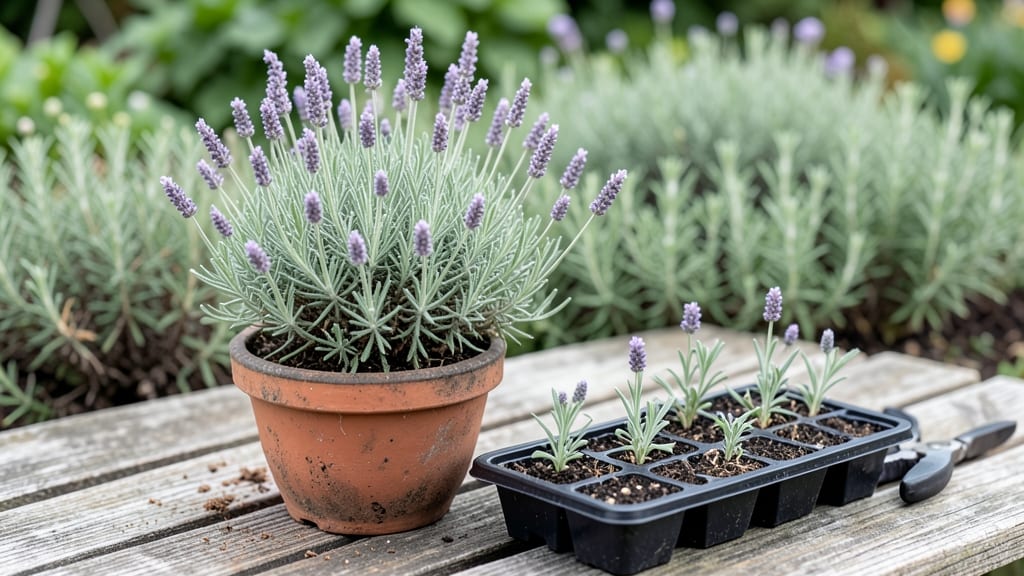
Growing lavender from seed takes 12 to 18 months to reach full maturity, with germination requiring 2 to 4 weeks under ideal conditions (60-70°F soil, consistent moisture). Seedlings grow slowly—expect 6-inch plants in 6 to 8 months before transplanting outdoors. Patience is key, as lavender thrives best when grown from cuttings, not seeds, due to its slow, finicky nature.
If you're starting lavender from seed, you'll need to plan for a long-term project—this isn't a fast crop.
The hard seed coat and dormancy requirements mean even the best conditions won't rush the process. 🌱 I've found that using a heat mat during germination can shave off a few days, but most gardeners still wait weeks before seeing those first tiny sprouts.
Once they emerge, the real challenge begins: keeping them alive through their first winter, as young lavender plants are particularly vulnerable to cold and overwatering.
Many people skip seeds entirely and opt for cuttings instead, which mature in just 1 to 2 years. The trade-off? Cuttings give you identical plants to the parent, while seeds introduce genetic variation—meaning you might end up with lavender that blooms earlier, later, or in different colors.
For me, the excitement of discovering unique varieties makes the wait worthwhile, but I always keep a few cuttings on hand as backup for impatient friends.
💡 In This Article
- Lavender Seed Germination Science: Why It Takes So Long
- Speeding Up Lavender Growth: Pro Tips for Faster Seedlings
Lavender seed germination science: why it takes so long
The primary reason lavender seeds take 2 to 4 weeks to germinate—and why they're so difficult to sprout—lies in their natural survival adaptations. Lavender seeds have a tough, waxy outer coating that acts as a physical barrier against moisture loss and predators.
This coating is nature's way of ensuring seeds only sprout when conditions are truly optimal, which often means waiting for the right temperature and moisture balance.
The seed's dormancy period can last months if conditions aren't perfect, mimicking the Mediterranean climate lavender evolved in, where unpredictable rains and temperatures would otherwise trigger premature germination.
Temperature plays a critical role here: lavender seeds need consistent soil temperatures between 60-70°F to break dormancy. Below 55°F, germination can stall entirely, while above 75°F, seeds may rot before sprouting.
That's why using a heat mat (set to 75°F) under seed trays can cut germination time by 30-50%. Another key factor is light exposure—unlike many plants, lavender seeds don't need darkness to germinate. In fact, keeping them in bright, indirect light from the start helps prevent leggy seedlings.
The ideal setup is a sunny windowsill or grow light positioned 6 inches above the tray.
Soil pH also affects germination rates. Lavender thrives in slightly alkaline soil with a pH between 6.5 and 7.5. Too acidic (pH 6 or lower) can inhibit nutrient uptake, while overly alkaline conditions (> 8.0) may cause nutrient deficiencies.
I've found that mixing 10% perlite into seed-starting mix improves drainage and prevents the fungal issues that often kill young lavender sprouts.
For stubborn seeds that refuse to germinate after 6 weeks, a cold stratification period (placing seeds in the fridge for 2-4 weeks before sowing) can mimic winter conditions and trick them into breaking dormancy.
What most gardeners don't realize is that lavender seeds contain a chemical called abscisic acid, which naturally suppresses germination until conditions are perfect. This hormone is what makes lavender seeds so sensitive to temperature fluctuations—even a 5°F drop can delay sprouting by 1-2 weeks.
That's why maintaining consistent moisture (keeping soil damp but never soggy) is crucial. Overwatering triggers anaerobic conditions that suffocate seeds, while underwatering causes them to dry out and die.
The sweet spot is 40-50% soil moisture, which you can achieve by misting seeds lightly 2-3 times daily until germination occurs.
Once sprouts appear, their slow growth rate becomes apparent. Young lavender seedlings grow at a glacial pace—about 0.5 inches per month—because they're prioritizing root development over top growth. This adaptation helps them establish deep roots before facing harsh Mediterranean summers.
The first true leaves (not the initial seed leaves) signal it's time to transplant seedlings into individual pots. At this stage, they're still delicate, so I recommend using 3-inch pots with well-draining soil to prevent root rot.
Hardening off seedlings (acclimating them to outdoor conditions over 10-14 days) is especially important for lavender, as sudden temperature changes can shock their still-developing root systems.
The real growth spurt happens after the first winter, when established seedlings finally reach 6 inches in height. This is when you'll notice the characteristic square stems and aromatic foliage developing.
What's fascinating is how the plant's growth rate correlates with day length—lavender enters a dormant phase when daylight drops below 12 hours, which is why it's critical to plant them in full sun locations (at least 6-8 hours of direct sunlight daily) to encourage vigorous growth.
Without adequate light, seedlings become etiolated (long, weak stems) and produce fewer flowers.