
Propagation
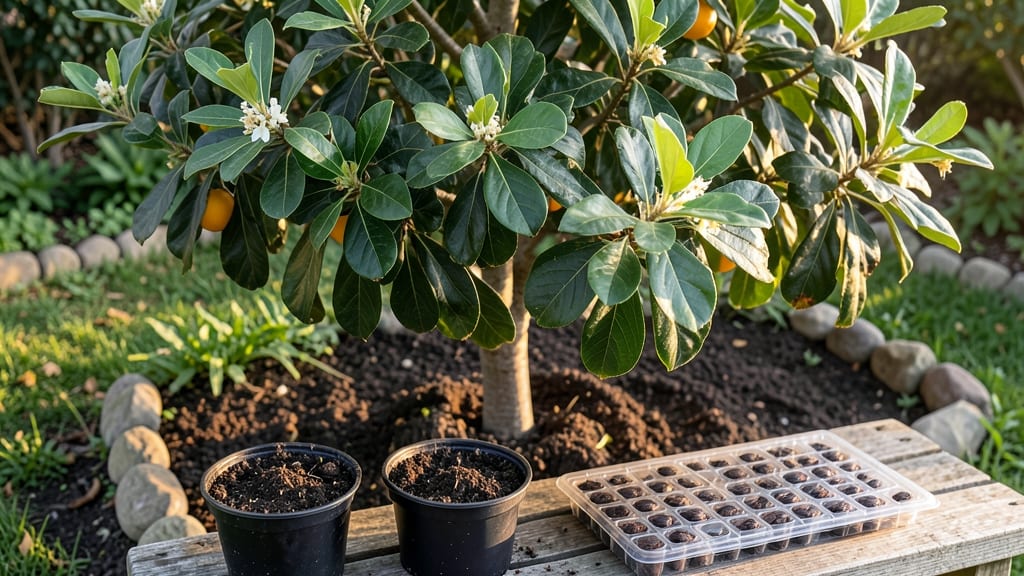
Will loquat grow from seed produce fruit? No—seed-grown trees develop into wild-type varieties that prioritize survival over fruit production, often taking 10+ years to bear—if ever—while grafted trees yield fruit in 3-5 years.
Seed-grown loquat trees focus their energy on growing strong, resilient branches rather than producing fruit. 🌱 This natural survival instinct means you might wait decades—or never see fruit at all. Grafting, however, combines a cultivated fruit-producing branch with a hardy rootstock, guaranteeing faster results.
Many growers skip seed propagation entirely because grafted trees start bearing fruit within just a few years, making them far more practical for home gardens.
If you're determined to try seed propagation, be prepared for patience and potential disappointment. The trees you grow will likely resemble their wild ancestors, with smaller, less flavorful fruit—or none at all. For consistent harvests, grafting remains the gold standard, especially when choosing disease-resistant rootstocks like Everbearing or Nagami varieties.
💡 In This Article
- Why Seed-Grown Loquats Rarely Fruit: Genetics and Growth Patterns
- Grafting vs Seed Propagation: Maximizing Loquat Fruit Yield
Why seed-grown loquats rarely fruit: genetics and growth patterns
Seed-grown loquat trees activate a genetic survival mechanism called heterozygosity, where the plant prioritizes developing hardy, disease-resistant structures over fruit production.
This happens because seeds contain a mix of genetic material from both parents, creating a wild-type tree that focuses on survival traits like thick bark, dense foliage, and vigorous root systems. 🌱 The result?
Trees that may grow tall and robust but produce tiny, tart fruit—or none at all—after years of waiting.
The biological reason stems from apomixis, a natural process where seed-grown trees revert to ancestral traits. Unlike grafted loquats (which inherit predictable fruit-bearing genes), seed-grown trees often develop polyembryonic seedlings—multiple embryos from a single seed—that compete for resources, further delaying fruit production.
Studies show these trees may take 10-15 years to mature, if they ever fruit, compared to grafted trees that bear fruit in 3-5 years.
Environmental factors also play a role. Seed-grown trees allocate energy to adapting to local conditions, like drought resistance or pest tolerance, rather than flowering.
For example, a seedling in a humid climate might develop thicker leaves to conserve moisture, while a grafted tree would prioritize blooming for fruit. 🌿 This explains why even well-cared-for seed-grown loquats often remain barren, despite appearing healthy.
Another key difference lies in the flowering trigger. Grafted trees are bred to respond to seasonal cues (like temperature shifts) with predictable blooming cycles, while seed-grown trees may never develop the hormonal signals needed to produce flowers.
Without flowers, there’s no fruit—regardless of how long you wait. This genetic divergence is why nurseries rarely sell seed-grown loquats for fruit production.
Consider this: A seed-grown loquat might grow to 15-20 feet tall with a trunk diameter of 6-8 inches before showing any signs of fruit, while a grafted tree of the same variety could be half that size and already bearing 50-100 fruits per season.
The trade-off is clear—seed propagation is a gamble, while grafting is a guaranteed path to harvests.