
Container Gardens
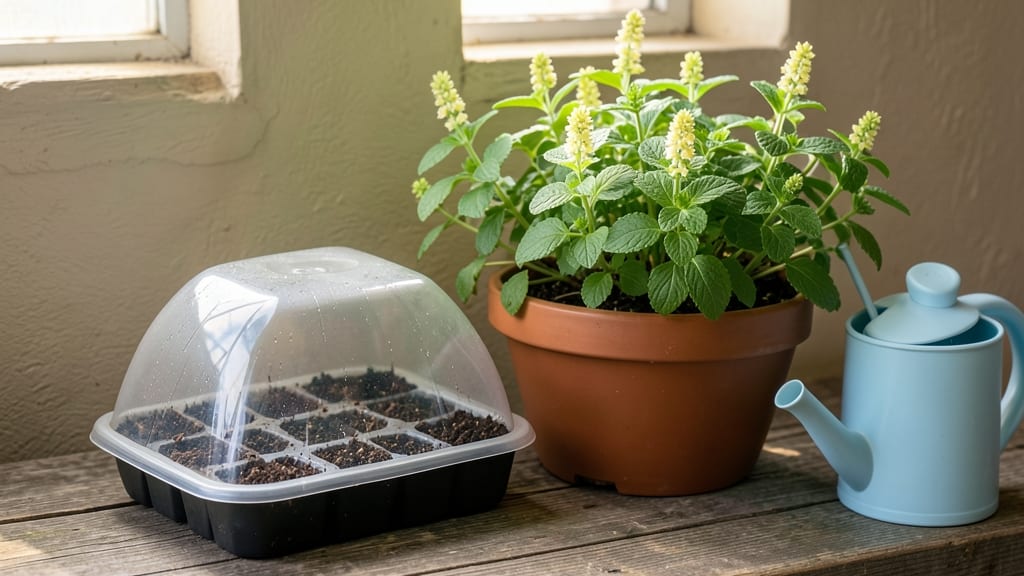
To start lemon balm seeds indoors, aim for 6–8 weeks before your last frost date—this timing ensures sturdy seedlings ready for transplanting when the weather warms.
Timing is everything when growing lemon balm from seeds—start too early, and you’ll waste resources; too late, and your plants won’t thrive outdoors. Mastering zone-specific indoor sowing schedules ensures lush, healthy transplants ready for your garden’s peak growing season.
For most gardeners in USDA Zone 6a, that means sowing in early February, giving your 🍋 lemon balm enough time to mature before the last frost in mid-April. But if you’re in a warmer climate, you might adjust your schedule to avoid overheating indoors.
Below, I’ll walk you through how to calculate your perfect starting window, common mistakes to avoid, and why this timing makes all the difference for a thriving harvest.
Optimal indoor lemon balm seed starting dates by USDA plant hardiness Zones
Getting your lemon balm seeds started indoors at the right time sets the stage for a thriving herb garden. Since lemon balm (Melissa officinalis) thrives in warm weather but can't handle frost, your indoor sowing window depends entirely on your USDA hardiness zone.
Starting too early wastes resources, while starting too late risks weak transplants. Let's break down the perfect timing for each zone to ensure your lemon balm reaches transplant readiness just as your garden warms up.
Most gardeners follow the 8-12 week rule: sow seeds indoors 8-12 weeks before your average last frost date. This gives seedlings enough time to develop strong roots and compact foliage before facing outdoor conditions.
Lemon balm germinates in 14-21 days, so factor that into your calculations. For example, if your last frost is May 15, aim to start seeds between March 1 and March 15 for Zone 6.
Below is a zone-by-zone comparison showing exact indoor sowing windows, last frost dates, and transplant readiness windows. Use this as your guide to align your indoor schedule with your garden's natural timeline.
Remember, lemon balm prefers well-draining soil and bright indirect light, so set up your seed-starting station near a south-facing window or under grow lights.
| USDA Zone | Avg. Last Frost | Indoor Sowing Window | Transplant Ready | Notes |
|---|---|---|---|---|
| Zones 3-4 | May 10-20 | March 1-15 | April 15-30 | Cold-hardy but prefers warmth; harden off carefully. |
| Zones 5-6 | April 25-May 10 | March 1-15 | April 15-30 | Ideal for most gardeners; balance early start with light needs. |
| Zones 7-8 | March 20-April 10 | February 15-March 1 | March 30-April 15 | Longer growing season; can start slightly earlier. |
| Zones 9-10 | February 15-March 1 | January 15-February 1 | March 1-15 | Minimal frost risk; can direct sow or start early. |
For gardeners in Zones 3-4, where frosts linger late, starting seeds by March 15 ensures your lemon balm has 8-10 weeks of indoor growth before transplanting. These zones often face shorter growing seasons, so prioritize light exposure and warmth to speed up germination.
Use a heat mat if your home stays cool, as lemon balm seeds germinate best at 65-75°F.
In Zones 5-6, the most common range for home gardeners, your indoor sowing window aligns perfectly with early spring. Aim to have seedlings ready by mid-April, just as soil temperatures begin to rise.
These zones benefit from extended daylight, so supplement with grow lights if natural light is limited. Lemon balm thrives in partial shade, so avoid placing seedlings in direct midday sun during their indoor phase.
Gardeners in Zones 7-10 enjoy longer growing seasons, giving you flexibility to start seeds slightly earlier. In Zone 7-8, you can begin as early as mid-February without risking wasted resources.
For Zones 9-10, where frost is rare, you might even direct sow seeds outdoors in late winter or start indoors just for a head start. These zones also allow for year-round growth, so you can experiment with fall sowing for a second harvest.
Pro tip: Use a seedling heat mat to maintain consistent soil temperatures, especially in cooler zones. Lemon balm seeds can take up to 3 weeks to germinate if conditions aren't ideal.
Once sprouted, provide 12-16 hours of light daily to prevent leggy seedlings. Thin seedlings to 3-4 inches apart once they develop true leaves to encourage stronger growth before transplanting.
After your seedlings reach 4-6 inches tall with 4-6 sets of leaves, they're ready for the garden. Harden them off over 7-10 days by gradually exposing them to outdoor conditions. Plant in well-draining soil with partial shade and keep soil consistently moist for the first 2 weeks after transplanting.
With the right timing, your lemon balm will reward you with fragrant foli
How to calculate your perfect lemon balm seed starting window
Determining the ideal time to start lemon balm seeds indoors depends on three key factors: your last frost date, the germination period, and the transplant age. Lemon balm seeds typically sprout in 14-21 days and thrive when transplanted at 6-8 weeks old.
By accounting for these variables, you’ll avoid the common pitfalls of seedlings that are either too leggy or too small for outdoor planting.
First, locate your USDA Plant Hardiness Zone—this determines your average last frost date. For example, gardeners in Zone 5 usually experience their last frost around May 15, while those in Zone 8 can expect frost-free conditions by March 15.
Knowing this date is the foundation of your seed-starting timeline, as it dictates when your seedlings must be ready for transplanting.
Lemon balm seedlings need 6-8 weeks of indoor growth before they’re hardy enough to handle outdoor conditions. This window allows them to develop strong roots and a sturdy stem structure, reducing transplant shock. If you start too early, you’ll end up with overgrown, leggy seedlings that struggle to adapt. Starting too late risks weak transplants that won’t establish well before summer heat arrives.
Step-by-Step Guide to Your Lemon Balm Seed Starting Window
- Step 1: Find your last frost date using the USDA Zone Map or a local frost calendar. For example, if your last frost is May 1, work backward from that date.
- Step 2: Subtract 6-8 weeks from your last frost date to determine your indoor sowing window. For a May 1 frost date, aim to start seeds between March 15 and March 30.
- Step 3: Account for 14-21 days of germination. If you sow seeds on March 15, expect sprouts by April 5. This ensures you’ll have enough time to grow seedlings to transplant size.
- Step 4: Verify your light source is ready. Lemon balm seedlings need 12-16 hours of light daily. If your natural light is insufficient, invest in a grow light to prevent leggy growth.
- Step 5: Plan for hardening off (acclimating seedlings to outdoor conditions) 1-2 weeks before transplanting. This gradual process strengthens seedlings and prepares them for your garden.
For gardeners in warmer climates (Zones 9-10), you can start lemon balm seeds as early as January or even late December, since frost is rarely a concern. However, even in these zones, aim to transplant seedlings by March 1 to avoid summer heat stress.
If you live in a cooler zone (Zones 3-5), consider starting seeds in late February to ensure they’re ready by your late May frost date.
Always double-check your local microclimate, as urban areas or high-altitude gardens may experience frost later than official zone averages. A quick call to your local cooperative extension office or a glance at historical frost data can refine your timing.
With this method, you’ll have vigorous lemon balm transplants ready to thrive in your garden by spring.
Once you’ve nailed your seed-starting window, keep an eye on your seedlings’ progress. Healthy lemon balm seedlings will have dark green leaves and a compact growth habit. If they start to look leggy or pale, it’s a sign they need more light or stronger growing conditions.