
Plants
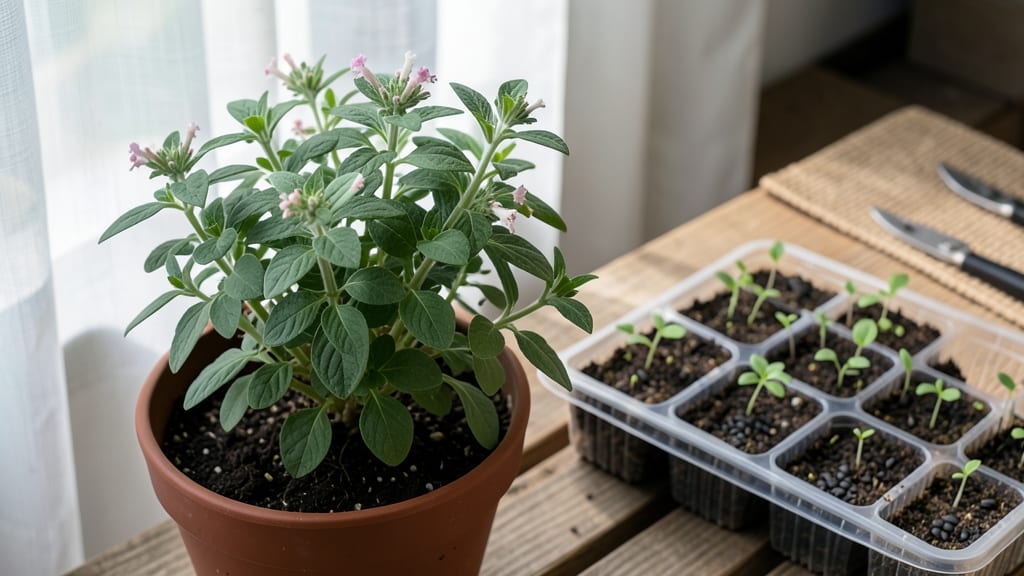
Oregano seeds look like tiny, elongated teardrop-shaped pods about 1-2 millimeters long, with a light brown to tan color and a rough surface. When fully mature, these pods split open to reveal smaller oval seeds inside.
Oregano seeds start their life as small, green, and closed pods that gradually turn brown as they mature. 🌱 The transformation isn't just about color—it's also about texture, as the pods develop a slightly papery feel when ready for harvesting.
These tiny pods are often overlooked in favor of the aromatic leaves, but they're packed with potential for growing new oregano plants.
What makes them unique is their natural splitting behavior once fully ripe. This isn't just a random occurrence—it's nature's way of releasing the seeds for propagation. When you see these split pods, you know you've got fresh seeds ready for planting or drying.
The oval seeds inside are even smaller, typically measuring just 0.5-1 millimeter in length, and they hold the promise of future oregano plants.
For those interested in growing their own oregano, understanding these visual cues is crucial. The color change from green to brown is your first indicator, but the texture shift and eventual splitting are the definitive signs that the seeds are ready for collection.
This knowledge can help you maximize your harvest and ensure you're working with the freshest possible seeds for planting.
💡 In This Article
- Identifying Mature Oregano Seed Pods vs Immature Ones
- How to Harvest and Store Oregano Seeds for Planting
Identifying mature oregano seed pods vs immature ones
Oregano seed pods begin their life as bright green, firm, and tightly closed structures that resemble miniature beans. These immature pods are typically 1-2 millimeters long and have a smooth, almost waxy surface that feels slightly slippery to the touch.
The green color comes from chlorophyll, which indicates active photosynthesis and growth—this is when the plant is still focusing on producing leaves rather than seeds. 🌱
As the pods mature, they undergo a dramatic transformation. The chlorophyll breaks down, and the pods shift to a light brown or tan hue, similar to dried coffee beans. This color change signals the end of photosynthesis in those pods and the start of seed development inside.
The texture also evolves from smooth to slightly rough or papery, a result of the pod walls drying out and becoming more brittle. This change is crucial because it indicates the seeds inside are now fully formed and ready for harvesting.
The most definitive sign of maturity is when the pods begin to split open along one seam, revealing the tiny oval seeds inside. This splitting is a natural mechanism to release seeds for propagation, and it usually occurs when the pods turn a deeper brown color.
The seeds themselves are about 0.5-1 millimeter long, with a slightly wrinkled appearance that helps them cling to surfaces or soil when dispersed by wind or animals. 🌿
Harvesting at the right stage is key—if you pick the pods too early, the seeds inside may not be fully developed, while waiting too long risks the seeds falling to the ground. The ideal time is when about 50-70% of the pods have turned brown and started to split.
This ensures you have a good balance of mature and nearly mature seeds for planting or drying.
Another visual clue is the stem attachment point. Mature pods often develop a slight curvature or droop as they dry, making them easier to spot among the green leaves. This natural positioning helps you identify which pods are ready without having to examine each one closely.
The contrast between the green leaves and brown pods creates a striking visual cue that even beginners can recognize.
For those growing oregano in containers, pay attention to the plant's overall appearance. A mature oregano plant will have more brown pods clustered near the top of the stems, especially after flowering.
This is nature's way of signaling that the plant has completed its reproductive cycle for that season and is ready to share its seeds with the next generation. 🌱
Understanding these visual cues ensures you collect seeds at their peak viability. Freshly harvested seeds from split pods have the highest germination rates, making them ideal for starting new plants.
The key is to act quickly once you notice the color and texture changes—this is when the seeds are at their freshest and most potent for planting.