
Vegetables
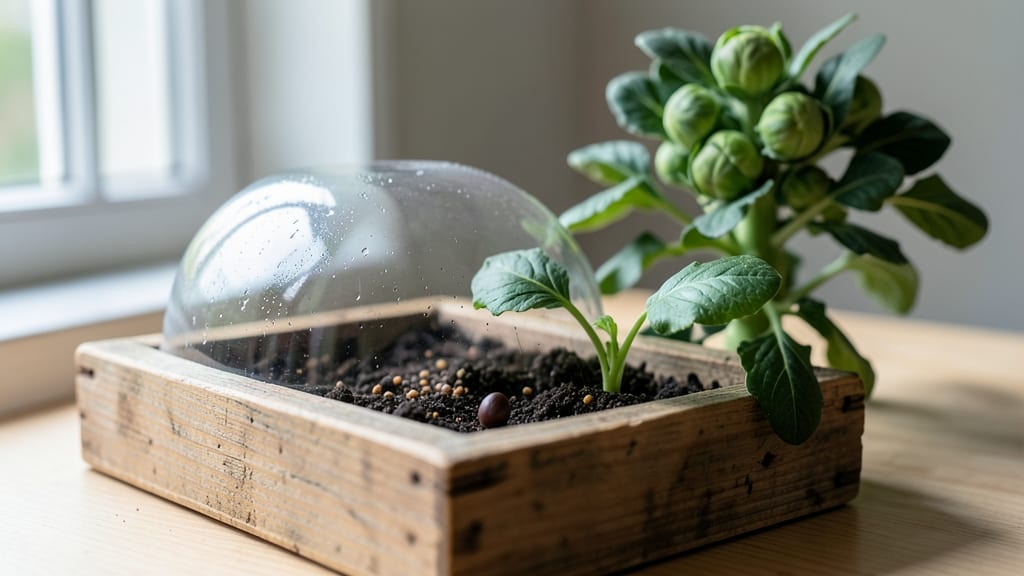
Brussels sprout seeds look like tiny, flat cabbage seeds—pointed at one end and about 1/8-inch long. 🌱 They’re oval-shaped with a slightly ribbed texture, ranging from light tan to dark brown, and feel smooth but firm to the touch.
If you’ve ever held a mustard seed, these are about the same size but more elongated. They’re rarely sold individually, so you’ll find them in packets of 50–100 seeds.
The packets often include a photo for comparison, but the real giveaway is their shape—unlike round radish or bean seeds, these are distinctly flat and tapered. That’s how you know you’ve got the right ones for your winter harvest.
If you’re still unsure, compare them to kale or collard seeds—they’re cousins in the brassica family, so they share that same compact, pointed shape. Just don’t confuse them with tiny cabbage seeds, which are rounder and smoother.
For visual confirmation, check seed catalogs like Johnny’s Selected Seeds or Baker Creek Heirloom Seeds—they include clear photos of the seeds alongside their descriptions. Start your search there, and you’ll spot them instantly.
Seed Appearance Explained Naturally
Understanding why a Brussels sprout seed looks the way it does comes down to the plant’s evolutionary design and reproductive strategies. These tiny, flat, and pointed seeds aren’t just random—they’re perfectly adapted for survival. Here’s why they end up looking like mini cabbages in disguise:
Brussels sprout seeds carry the entire genetic code of the parent plant, including instructions to grow into a recognizable sprout. The seed’s shape—flat, oval, and slightly pointed—mirrors the early developmental stages of the plant itself.
Think of it like a microcosm of the mature vegetable: just as a sprout’s compact, layered leaves resemble its full-sized cabbage-like form, the seed’s structure hints at its future growth pattern.
- Seed coat texture: The rough, papery exterior protects the embryo while allowing moisture to penetrate.
- Embryo positioning: Inside, the radicle (root) and plumule (shoot) are already aligned to break through soil efficiently.
- Color clues: Darker seeds (often brown or black) contain more antioxidants and protective compounds to shield the seed from UV damage and pests.
💡 Pro Tip: If you’ve ever noticed a seed that looks slightly wrinkled or irregular, it might be a sign of incomplete fertilization—though it can still sprout, it may grow less uniformly.
Brussels sprout seeds didn’t evolve in a lab—they’re the result of millennia of natural selection. Their distinctive shape serves key survival functions:
| Feature | Why It Matters | Real-World Example |
|---|---|---|
| Flat and thin | Allows seeds to disseminate easily via wind or water without getting waterlogged. | Like dandelion seeds, but heavier for stability. |
| Pointed tip | Helps the seed penetrate soil more efficiently when germinating. | Acts like a natural "drill" for young roots. |
| Small size | Reduces competition for nutrients in crowded seedbeds. | Fits into tight soil gaps where larger seeds fail. |
🌱 Fun Fact: The seed’s weight and shape also help it cling to animal fur or clothing—an accidental but effective dispersal method in the wild.
While nature sets the baseline, selective breeding by farmers and horticulturists has fine-tuned Brussels sprout seeds over centuries. Here’s how:
- Uniformity: Modern seeds are bred to look consistently flat and symmetrical for easier mechanical planting and harvesting.
- Size standardization: Larger seeds (within reason) are favored because they germinate faster and more reliably in controlled environments like greenhouses.
- Color variations: Some seeds are now lighter or even greenish due to breeding for early-maturing varieties that resist bolting (premature flowering).
⚠️ Watch Out: If you’re sourcing seeds from heirloom or wild varieties, they might look more irregular—this doesn’t mean they’re "bad," just older genetics!
Sometimes, seeds don’t look "textbook perfect" because of growing conditions during their development.
For example: - Drought stress: Can cause seeds to shrivel or develop uneven shapes. - Temperature swings: Extreme heat or cold during seed maturation may lead to discoloration or misshapen seeds. - Poor soil quality: Lack of nutrients can result in smaller, lighter seeds with thinner coats.
🔥 Grower’s Insight: If you’re saving seeds from your own plants, consistent moisture and stable temperatures during the flowering stage will yield seeds that closely match the parent plant’s ideal form.
Identifying and Handling Seed Issues
Got curious about those tiny, mysterious seeds from your Brussels sprouts? Whether you’re saving them for planting or just admiring their unique shape, here’s how to handle them like a pro—from identification to storage and troubleshooting common problems.
Brussels sprout seeds are small, flat, and slightly pointed, resembling tiny, wrinkled cabbage pups.
Here’s how to confirm you’ve got the right ones: - Size: About 1–2mm wide, with a thin, papery shell. - Color: Ranges from light tan to dark brown, often with a faint greenish tint if fresh. - Shape: Oblong and slightly wedge-shaped, not round like many other seeds. - Texture: Smooth but slightly rough, almost like a mini version of the sprout itself.
💡 Pro Tip: If you’re unsure, compare them to mustard seeds (similar size) or radish seeds (slightly larger and more rounded). A magnifying glass helps!
Even the best seeds can hit snags. Here’s how to fix common germination problems:
🔥 Problem: Seeds Aren’t Sprouting
Possible Cause: Old seeds, improper moisture, or incorrect temperature. Fix: - Test viability: Place seeds in a damp paper towel, seal in a bag, and check for sprouts in 3–5 days.
If <50% sprout, they’re likely past their prime. - Soak overnight: Place seeds in lukewarm water for 6–8 hours before planting to soften the shell. - Adjust planting depth: Brussels sprout seeds need light to germinate—plant them ¼ inch deep or sprinkle on top of soil and barely cover.
🍳 Problem: Mold or Rot in Soil
Possible Cause: Overwatering or poor drainage. Fix:
- Use sterile soil: Mix coco coir or seed-starting mix with perlite (20% perlite) to improve drainage.
- Bottom-water seeds: Place pots in a tray of 1 inch of water for 10 minutes, then drain excess.
- Spray lightly: Use a mist bottle instead of pouring water directly on seeds.
👨🍳 Problem: Slow or Stunted Growth
Possible Cause: Weak seeds, low light, or nutrient deficiency. Fix:
- Warmth boost: Keep soil at 70–75°F using a seedling heat mat if your home runs cold.
- Grow lights: Place seeds under LED grow lights 12–14 hours/day (keep 2–3 inches away).
- Fertilizer kickstart: After sprouts emerge, use a diluted fish emulsion (5-5-5) every 2 weeks.
Prevent waste with these simple storage hacks:
- Dry storage: Spread seeds on a paper towel to dry completely (1–2 days), then store in an airtight container (like a mason jar) in the fridge (lasts 2–3 years).
- Freezer trick: Place seeds in a ziplock bag with silica gel packets and freeze for up to 5 years.
- Label everything: Write the harvest date on the container—fresh seeds germinate better!
💡 Pro Tip: If seeds smell musty or sour, toss them—they’ve lost viability.
- Harvest at peak freshness: Save seeds from organic, homegrown Brussels sprouts (store-bought may be treated).
- Dry properly: Seeds must be completely dry before storing—moisture = mold risk.
- Test a few first: Before storing a whole batch, plant 5–10 seeds to check germination rate.
Need a visual? Snap a photo of your seeds next to a penny for scale—it’s the easiest way to confirm size and shape! 📸 With these fixes, you’ll go from seed skeptic to green-thumb gardener in no time.
Frequently asked questions
Are Brussels sprout seeds the same as cabbage seeds?
They’re cousins in the brassica family but have key differences. Brussels sprout seeds are flatter, more elongated, and slightly pointed, while cabbage seeds are rounder and smoother. Think of them like mini cabbages with a tapered end—just smaller and more compact.
Can I plant Brussels sprout seeds directly in the garden?
Yes, but they prefer cooler weather (45–85°F). Start seeds indoors 6–8 weeks before last frost for better control, or sow directly in spring/fall when soil temps are mild. They need light to germinate, so plant them just ¼ inch deep or barely cover them.
Why are my Brussels sprout seeds so small?
These seeds are naturally tiny—about 1/8-inch long—because they’re designed for efficient germination. Their small size helps them disseminate easily and compete for nutrients in crowded soil. If yours look unusually small, they might be from an older seed packet or a heirloom variety.
How do I know if my Brussels sprout seeds are still viable?
Test them with the paper towel method: Place seeds between damp paper towels in a sealed bag, then check for sprouts in 3–5 days. If 50% or more sprout, they’re good to plant. Seeds older than 2–3 years may have lower viability.
Where can I find a picture of Brussels sprout seeds?
Check trusted seed catalogs like Johnny’s Selected Seeds or Baker Creek Heirloom Seeds—they include clear photos. For a quick reference, compare yours to a penny (they’re about the size of a grain of sand next to it) or search for images labeled \"brassica oleracea gemmifera seeds\".