
Plants
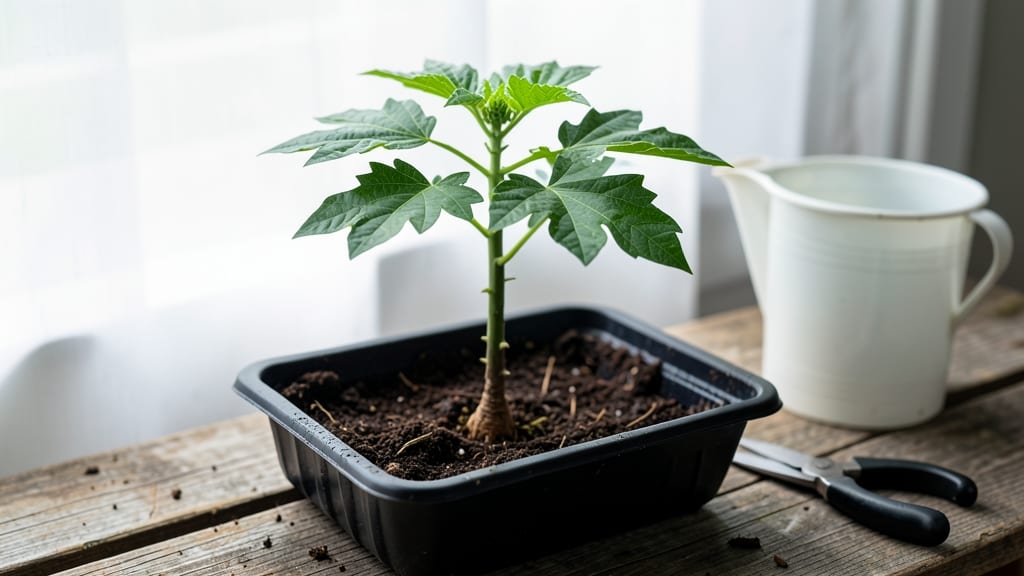
Papaya seedlings look like tiny plants with oval-shaped leaves on slender green stems, often sprouting in clusters. Their young leaves may appear deep red or purple before turning bright green, and they develop a dense, bushy form within the first 4-6 weeks.
Those early stages are where papaya seedlings reveal their most distinctive traits. 🌱 The first leaves you'll notice are actually cotyledons—those tiny, rounded seed leaves that emerge first—before the true leaves appear.
What sets papaya apart is how quickly these leaves transition from vibrant red or purple to their mature green, a process that usually happens within 2-3 weeks of germination.
I've found that the stem's thin, almost hair-like texture is another key identifier, especially when comparing them to other tropical seedlings like mango or citrus, which tend to have thicker stems right from the start.
This compact growth pattern continues until the plant reaches about 6 inches tall, where you'll start seeing the characteristic serrated edges on the leaves—a telltale sign you're dealing with a papaya.
The bushy shape isn't just for show either; it's how the plant conserves moisture in its early stages, which is particularly important if you're growing them indoors or in less-than-ideal conditions.
💡 In This Article
- Identifying Papaya Seedling Stages by Leaf Shape and Color
- Comparing Papaya Seedlings to Common Look-Alikes in Early Growth
Identifying papaya seedling stages by leaf shape and color
The journey of a papaya seedling begins with its cotyledons, the first pair of leaves that appear after germination. These tiny, rounded leaves are usually 1-2 centimeters wide and have a smooth, almost waxy texture.
Unlike true leaves, cotyledons lack the serrated edges that will later become a hallmark of papaya foliage. 🌱 What's fascinating is how these initial leaves often appear slightly cupped or folded, a protective adaptation that helps conserve moisture in the seedling's delicate early days.
Within 7-14 days of germination, the first true leaves emerge in clusters from the stem's growing tip. These early leaves are where you'll notice papaya's signature color transformation: they start with deep red or purple hues that gradually fade to bright green over 2-3 weeks.
This color shift isn't just aesthetic—it's a photoprotective response. The red/purple pigments contain anthocyanins, which shield the young leaves from intense sunlight while they develop their full photosynthetic capacity.
The leaves themselves are oval-shaped with smooth edges at first, but you'll soon spot the characteristic serrated margins that develop as the plant matures.
The stem's development is equally telling. Papaya seedlings begin with a thin, almost hair-like stem that's typically 1-3 millimeters in diameter. This delicate structure supports the plant's rapid early growth, which can reach 2-3 inches per week under optimal conditions.
What's unique about papaya is how the stem often develops a slightly zigzag pattern as it grows, creating those distinctive "elbow" joints where leaves emerge. This growth habit helps the plant spread its leaves to maximize sunlight exposure while keeping the stem close to the soil for stability.
By the 4-6 week mark, you'll see the plant's bushy growth pattern take full form. The leaves develop a leathery texture with prominent veins that create a web-like pattern, and the plant typically reaches 6-12 inches in height.
The color transformation is now complete, with leaves exhibiting that signature papaya green—though some varieties may retain subtle purple tinges along the veins.
This is also when you might notice the first signs of hair-like structures along the stems and leaf undersides, a characteristic that becomes more pronounced as the plant matures and helps distinguish it from other tropical seedlings.
What most gardeners don't realize is that this early coloration serves another critical function beyond photoprotection. The red/purple hues actually help attract pollinators to young plants, even before they produce flowers.
This is particularly important in tropical climates where papayas often grow near other plants that might compete for pollinator attention. The vibrant colors create a visual signal that's hard for insects to ignore, giving young papaya plants a head start in their reproductive cycle. 🌿
To help you visualize these stages, imagine holding a 2-inch papaya seedling: the cotyledons would feel like tiny, smooth buttons at the base, while the emerging true leaves would have that distinctive red-purple blush and slightly serrated edges.
The stem would be so thin you could almost wrap your fingers around it completely, with that characteristic zigzag growth pattern creating gentle bends every few centimeters. This visual progression is what makes papaya seedlings so distinctive in their early growth phases.