
Lawn
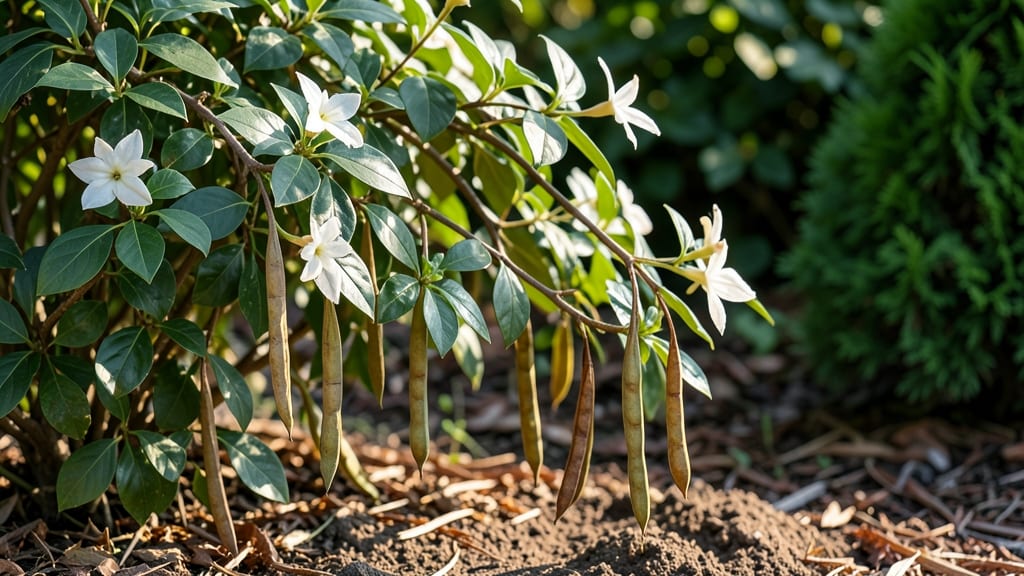
Star jasmine seed pods hold the secret to next year’s fragrant blooms—if you harvest them right. 🌱 I’ve learned that waiting too long turns those pods into brittle husks, while harvesting too early means no viable seeds.
The key is timing: those pods swell to twice their size when fully mature, turning from green to a papery brown that crinkles when you touch it.
Once you spot them, the process is simple: snip the pods with clean scissors and lay them on a tray to dry for a week. Inside, you’ll find flat, dark seeds that look like tiny beans.
These are your future plants, but they need a little help before they’ll sprout—stratification in the fridge for 6-8 weeks mimics winter’s chill and breaks their dormancy.
When you plant them in well-draining soil, keep it lightly moist and warm. Within 3-4 weeks, you’ll see those first delicate shoots—proof that your zero-waste harvest paid off. The seedlings grow slowly at first, but with patience, you’ll have a bush that smells like summer by next spring.
Not every seed will germinate, and some may take months to sprout, but that’s normal. For faster results, consider taking cuttings from healthy star jasmine vines instead—they root easily in water or soil. Either way, you’re building a fragrant legacy for years to come.
📚 In This Guide
- What you need
- Instructions
- Tips and common mistakes
- Wrapping up and next steps
What you need
- ● Star jasmine seed pods: 10–20 mature pods (harvested when fully brown and dry, typically late fall/winter).
- ● Pruning shears or sharp scissors: 1 pair (sterilized with rubbing alcohol for hygiene).
- ● Brown paper bags or breathable fabric sacks: 2–3 medium-sized (for drying pods).
- ● Small paper towels or coffee filters: 1–2 sheets (for separating seeds).
- ● Air-tight seed storage container: 1 (small glass jar, plastic container with lid, or resealable bag).
- ● Fine-mesh strainer or sieve: 1 (for sifting seeds from pod debris).
- ● Pencil or chopstick: 1 (to gently pry open pods).
- ● Labeling tape and marker: 1 roll + 1 marker (to tag containers with harvest date/year).
- ● Magnifying glass: 1 (helps spot tiny seeds in debris).
- ● Desiccant packets: 1–2 (for extra moisture control in storage).
- ○ Humidity monitor: 1 (optional, to track storage conditions).
- ● Notebook or digital app: 1 (to log seed viability notes).
- ● Gloves (nitrile or cotton): 1 pair (if pods are dusty or irritating).
Step-by-step guide to harvesting star jasmine seed pods
Here's how to collect and prepare these pods for next season's fragrant blooms.
🌱 Step 1: Identify and Harvest Mature Seed Pods
Wait until the pods turn from green to a dry, papery brown—this usually happens in late fall after the flowers fade. Gently twist each pod from the stem rather than cutting; the pods should release easily when fully mature. I like to harvest on a dry morning so the pods don't stick to my hands or tools.
Collect pods in a paper bag to prevent moisture buildup, which can cause premature sprouting or mold. If you miss the perfect harvesting window, pods left on the plant will eventually split open on their own, scattering seeds—but you'll lose viability if they sit too long.
🪴 Step 2: Dry and Store the Pods Properly
Spread the harvested pods in a single layer on a paper towel or mesh screen in a warm, dry location out of direct sunlight. This takes about 7-10 days until they feel completely dry and brittle to the touch. You'll know they're ready when you can easily crush one between your fingers without resistance.
Once fully dry, store the pods in an airtight container lined with silica gel packets or a small bag of rice to absorb any lingering moisture. Keep them in a cool, dark place like a pantry—65-70°F is ideal. Label the container with the harvest date since viability drops after about 12 months of storage.
✂️ Step 3: Extract Seeds When Ready to Plant
When you're ready to sow, open each dried pod carefully with a small knife or your fingers. Inside, you'll find 2-4 flat, brown seeds per pod—star jasmine seeds are tiny but plentiful. I like to place the pods in a clean envelope and gently tap them with a pencil to release the seeds without damaging them.
Sift through the seeds to remove any debris or empty pods. For best results, plant them within 2-3 months of extraction. If you notice any seeds looking shriveled or discolored, discard them—they won't germinate. Store any unused seeds back in your airtight container with the silica gel.
💧 Step 4: Stratify Seeds for Improved Germination
Star jasmine seeds benefit from a 60-day cold stratification period to mimic winter conditions. Mix the seeds with a slightly damp sand and peat moss blend (equal parts) in a sealed plastic bag. Place the bag in your refrigerator's crisper drawer, where temperatures stay around 35-40°F. Check monthly to ensure the mix stays moist but not soggy.
After 60 days, remove the seeds and sow them in a well-draining seed-starting mix at a depth of ¼ inch. Keep the soil consistently moist but never waterlogged—star jasmine seeds need 8-12 weeks of warmth (70-75°F) and bright, indirect light to germinate. Patience is key here; don't be tempted to move them to a warm spot too soon.
☀️ Step 5: Transplant Seedlings for Outdoor Growth
Once seedlings develop 2-3 sets of true leaves (not just the initial cotyledons), they're ready to move into individual pots. Choose 4-inch pots with drainage holes and fill them with a light, airy potting mix. Transplant carefully, burying the stems just slightly deeper than they were in the seed tray.
Hardening off takes 10-14 days—gradually expose the seedlings to outdoor conditions by placing them in a sheltered spot for 1-2 hours the first day, then increasing time daily. Watch for wilting or yellowing leaves, which signal they're not ready for full sun yet. Once they're acclimated, plant them in the ground after the last frost, spacing them 6-8 feet apart to allow for their sprawling growth habit.
Tips & tricks for perfect star jasmine seed pod harvesting
Here’s what I’ve learned from years of working with these delicate pods—little details that make all the difference between viable seeds and wasted effort.
Timing Secret: Harvest pods on a dry morning when humidity is low. The pods will be easier to handle and less likely to stick to your fingers or tools. I’ve found that harvesting right after a light frost in late fall gives me the driest pods, which dry faster and store better. If you miss the perfect window, pods left on the plant will eventually split open, but the seeds may lose viability—so don’t wait too long!
Drying Technique: Spread pods in a single layer on a mesh screen rather than paper towels. Airflow is key—this prevents moisture buildup and speeds up the drying process from 7-10 days. Place them in a warm, dry spot (around 70°F) but avoid direct sunlight, which can cause them to overheat and crack. Test readiness by crushing a pod—it should feel completely brittle with no give.
Storage Wisdom: For long-term storage, use silica gel packets instead of rice—they absorb moisture more efficiently and keep pods viable for the full 12 months. I label my containers with the harvest date and store them in the darkest corner of my pantry, where temperatures stay steady around 65-70°F. Pro tip: Write the date in pencil (not pen) in case the label fades over time.
Seed Extraction: When tapping pods to release seeds, use a clean envelope—not your hand—to avoid contaminating them with oils or debris. I find that gently rolling the pod between my fingers while tapping works best. After extraction, sift seeds through a fine mesh strainer to remove any chaff or empty pods. This step ensures only the healthiest seeds move forward to stratification.
Pro Tips for Star Jasmine Seed Pods
- Here’s what I’ve learned from years of working with these delicate pods—little details that make all the difference between viable seeds and wasted effort.
- Timing Secret: Harvest pods on a dry morning when humidity is low.
- Drying Technique: Spread pods in a single layer on a mesh screen rather than paper towels.
Frequently asked questions
Got questions about harvesting and saving star jasmine seed pods? You’re not alone! Here are answers to the most common queries—from timing to troubleshooting—to help you grow next year’s blooms with confidence.
When are star jasmine seed pods ready for harvesting?
Harvest seed pods when they turn dry and brown (usually late fall to early winter), but before they split open. If pods are still green or soft, they’re not ready—wait 1–2 weeks. Overripe pods release seeds prematurely, reducing viability. Aim for a crisp texture like a dried pea pod for best results!
How long do harvested seed pods stay viable for planting?
Star jasmine seeds remain viable for 1–2 years if stored properly in a cool, dry place (like a paper envelope or airtight container with silica gel). Avoid humidity—moisture speeds up decay. Label pods with the harvest date to track freshness. For best germination, plant within 6 months!
Can I grow star jasmine from seed pods if I don’t have a garden?
Star jasmine thrives in containers (5+ gallon pots with drainage) or even hanging baskets. Use well-draining potting mix and place in partial sun (4–6 hours daily). Just ensure pots are large enough—roots spread quickly. For urban growers, balcony railings or trellises work great!
Why aren’t my star jasmine seeds germinating? Troubleshooting tips.
Seeds may fail to sprout due to:
- Cold stratification: Star jasmine seeds need a 2–3 month cold period (place pods in a sealed bag in the fridge). Skip this, and germination drops!
- Depth issues: Plant seeds ¼ inch deep—too deep = rot; too shallow = dry out.
- Moisture imbalance: Keep soil consistently damp (not soggy) during germination. Use a spray bottle to avoid disturbing seeds.
- Old seeds: If pods are >2 years old, viability plummets. Test a few seeds first!
Patience is key—germination can take 3–6 weeks!
What’s the easiest way to propagate star jasmine without seed pods?
If seeds aren’t your style, try stem cuttings! Snip 4–6 inch sections from healthy, non-flowering stems in early summer. Remove lower leaves, dip in rooting hormone, and plant in moist perlite or sand. Keep humid (use a plastic bag) and place in bright, indirect light. Roots form in 4–6 weeks—faster than seeds!
Wrapping up and next steps
Harvesting star jasmine seed pods isn’t just a clever way to reduce waste—it’s a gift to your garden’s future! 🌱 By following these simple steps, you’ll ensure next year’s blooms are even more vibrant and abundant.
Whether you’re a seasoned gardener or just starting out, this zero-waste practice is both rewarding and eco-friendly.
Ready to put your new skills to the test? Start by gathering your tools and head to your star jasmine plants—your garden’s next chapter awaits! 🌿