
Planting
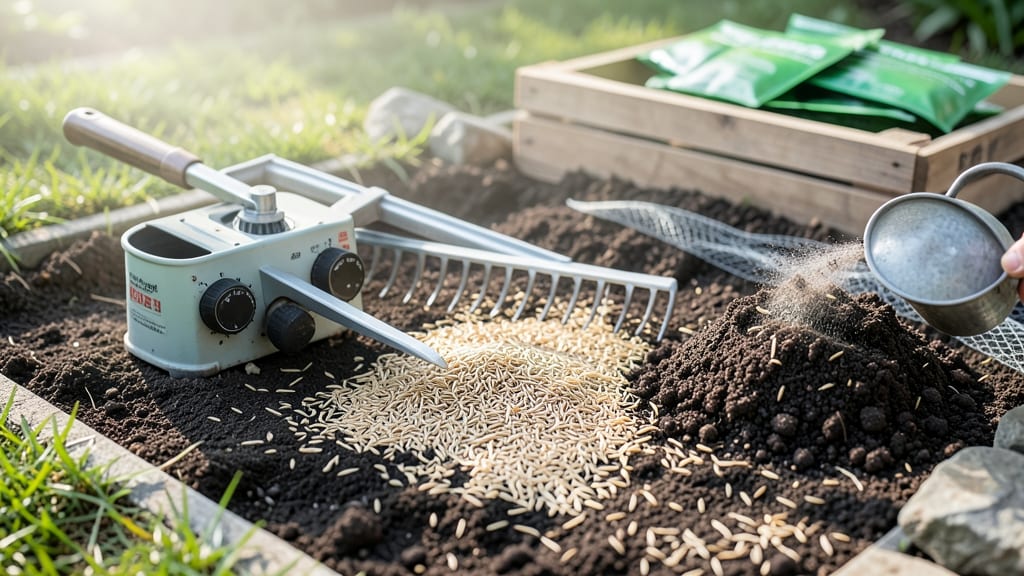
Sowing grass seed in fall is the secret weapon for a lawn that outlasts summer heat. 🌱 I learned the hard way—planting in spring meant my grass struggled through droughts and weeds took over. But sowing in fall? That’s when grass roots grow deep while temperatures stay mild, setting up a thicker, greener lawn by spring.
The best time varies by region: northern zones aim for late August to October, while southern areas should plant by mid-October before frost. Cool soil and shorter days reduce stress on seeds, and weeds are less aggressive—meaning your grass gets the head start it needs.
Just avoid planting when frost is forecasted within 7-10 days.
You’ll need a rake, seed, and a light layer of straw or compost to hold moisture. After scattering seed, keep the soil damp (not soggy) until germination, which takes 7-21 days depending on the variety. The result? Grass that survives winter better and greens up faster than spring-planted lawns.
This method works for cool-season grasses like fescue and ryegrass, which make up most lawns in temperate climates. Even in warmer zones, fall planting gives grass a fighting chance against summer heat. Let’s get those roots growing strong!
📚 In This Guide
- What you need
- Instructions
- Tips and common mistakes
- Wrapping up and next steps
What you need
- ● Grass seed: Choose a cool-season variety (e.g., Kentucky bluegrass, fescue, or ryegrass). Aim for 5–10 lbs per 1,000 sq ft, depending on your lawn’s current condition.
- ● Lawn rake or dethatcher: A bendable-tine rake (for loose soil) or a stiff-bristle dethatcher (for thick grass).
- ● Broadcast spreader or hand spreader: For even distribution. A drop spreader is ideal for precision.
- ○ Soil test kit (optional but recommended): Check pH (ideal: 6.0–7.0) and nutrient levels. Adjust with lime or fertilizer if needed.
- ● Starter fertilizer (low-nitrogen, high-phosphorus): Look for a 10-20-10 or 5-10-10 ratio. Apply 1 lb per 100 sq ft before seeding.
- ○ Compost or soil amendment (optional): Improves soil texture. Use ½–1 inch of compost if your soil is sandy or clay-heavy.
- ● Water source + hose or sprinkler: A gentle misting nozzle or soaker hose works best for hydration.
- ○ Mulch or straw (optional): Lightly cover seeds with ¼ inch of straw to retain moisture (skip if using a starter fertilizer with mulch).
- ● Weather window: Wait for a forecast of consistent temps (40–60°F) and no rain for 24–48 hours before sowing.
- ● Lawn prep: Mow existing grass short (1–1.5 inches) and remove debris. Aerate compacted soil if needed.
- ● Time commitment: Plan for 1–2 hours per 500 sq ft for prep, seeding, and watering.
Step-by-step instructions for sowing grass seed in fall
Fall is the perfect time to establish a resilient lawn—here’s how to do it right.
🌱 Step 1: Prepare the Soil Properly
Start by mowing your existing lawn as short as possible—this helps sunlight reach the soil and exposes any weeds. Then, use a core aerator to pull up small soil plugs, creating channels for seed and roots. This step is critical: compacted soil blocks seed-to-soil contact, which stunts germination. If you don’t have an aerator, rent one or hire a service—it’s worth the investment for a thick lawn.
After aerating, spread ½ pound of 10-10-10 fertilizer per 100 square feet evenly over the lawn. This gives seeds a nutrient boost before winter dormancy. Lightly rake the area to break up any remaining clumps, then water the soil until it’s moist 2-3 inches deep. You’ll know it’s ready when a handful of soil holds together but isn’t sticky—like a damp sponge.
🌱 Step 2: Spread Grass Seed Evenly
Use a broadcast spreader set to the recommended rate for your grass type (usually 5-10 pounds per 1,000 square feet). Walk slowly in overlapping passes to avoid thick or thin patches. I like to spread seed in two directions—first north to south, then east to west—to ensure even coverage. If you’re seeding a large area, mark a grid with stakes to track progress and avoid missing spots.
After spreading, lightly rake the seed into the soil with a stiff-bristled rake. This ensures good seed-to-soil contact without burying it too deep. Aim for a ¼-inch maximum depth—any deeper, and seeds may not have enough energy to break through. If you’re overseeding an existing lawn, a gentle rake will also help loosen surface soil without disturbing roots.
💧 Step 3: Water Consistently for Germination
The first 2-3 weeks after sowing are the most critical. Keep the soil evenly moist—not soggy, not dry. Water lightly twice daily (morning and evening) for 10-15 minutes per session to keep the top ½ inch of soil damp. Use a sprinkler with fine mist or a gentle hose attachment to avoid displacing seeds. You’ll see germination in 7-21 days, depending on temperature and grass type.
Once seedlings reach 2-3 inches tall, reduce watering to once daily for 10-15 minutes. This encourages deeper root growth. Avoid heavy watering now—it can wash away young seedlings or cause them to lean. If rain falls, check soil moisture before watering; you don’t want to drown the new grass. Consistency is key: uneven moisture leads to patchy germination.
✂️ Step 4: Protect and Maintain New Growth
After 4-6 weeks, when seedlings are 3-4 inches tall, mow them for the first time. Set your mower blade to 3 inches high—this strengthens roots and prevents disease. Never remove more than ⅓ of the blade height in one mowing. I also recommend fertilizing again with a slow-release, high-nitrogen formula (like 24-0-5) to support root development before winter.
Fall’s cooler temperatures help new grass establish deep roots before dormancy. By late fall, reduce watering to once every 7-10 days unless rainfall is minimal. Avoid heavy foot traffic or playing on the lawn until spring—this protects the delicate root systems. Come spring, you’ll have a thicker, more resilient lawn than if you’d seeded in warmer months.
🌿 Step 5: Winterize for Spring Success
Before the first hard frost, apply a winter mulch of ½ inch of straw or leaves over the seeded area. This insulates seeds and young roots from freezing temperatures while preventing erosion. Avoid thick layers—too much can smother growth. In early spring, remove the mulch and resume watering as temperatures rise above 50°F. You’ll notice new growth within 7-10 days of consistent moisture.
Here’s the thing—fall seeding works because cooler temps reduce weed competition and encourage deep root growth. By spring, your lawn will be denser and more drought-resistant than one seeded in summer. Just remember: patience pays off. A well-established fall lawn requires less water and maintenance in the long run.
Tips & tricks for perfect fall grass seed sowing
Fall lawn success comes down to these simple but game-changing details that most people overlook.
Soil Prep Secret: After aerating, take a handful of soil and squeeze it—if it crumbles but holds together, you're good to go. If it falls apart completely, add a thin layer of compost before seeding. I've seen compacted soil block germination completely, so don't skip this test! The ½ pound of 10-10-10 fertilizer per 100 square feet is your secret weapon for jumpstarting root growth before winter.
Seed Spread Strategy: For large areas, use a grid system with stakes every 20 feet to track coverage. I've missed spots before when trying to eyeball it—trust me, those gaps show up later! When raking seeds in, use a stiff-bristled rake but go light. You're just creating tiny furrows, not tilling the soil. The ¼-inch depth rule is non-negotiable—any deeper and seeds suffocate.
Watering Wisdom: Those critical first 2-3 weeks demand attention. I set a phone reminder for morning and evening watering sessions. Use a sprinkler with a fine mist setting—anything heavier can wash away seeds. Pro tip: water in the early morning so the lawn has all day to dry, preventing fungal growth. The 10-15 minute sessions should keep that top ½ inch consistently damp without turning to mud.
Winter Prep Insight: When applying your ½ inch of straw mulch, leave a small gap around the edges to prevent moisture buildup. I learned this the hard way when my first batch of mulch created soggy spots that froze solid. And remember—spring comes faster than you think! As soon as temps hit 50°F consistently, remove that mulch and let the sun wake up your dormant seeds.
Pro Tips for Sowing Grass Seed In Fall
- Fall lawn success comes down to these simple but game-changing details that most people overlook.
- Soil Prep Secret: After aerating, take a handful of soil and squeeze it—if it crumbles but holds together, you're good to go.
- Seed Spread Strategy: For large areas, use a grid system with stakes every 20 feet to track coverage.
Frequently asked questions
Got questions about timing, prep, or troubleshooting your fall grass seed project? We’ve got answers! Here are some of the most common concerns—plus pro tips to set you up for success.
When is the exact best time to sow grass seed in fall?
The ideal window is 4–6 weeks before your first hard frost (typically late August to early October in most U.S. zones). This gives seeds time to germinate and establish roots before winter dormancy. Check your local frost dates—cool (50–65°F) but frost-free soil is key!
Will grass seed still grow if I plant it too late in fall?
Planting after the first frost can stunt germination, but don’t panic! If seeds are sown in early fall (before frost) and the ground isn’t frozen, they’ll often survive winter and sprout in spring. Just avoid planting when temps dip below 40°F consistently.
Can I overseed an existing lawn in fall, or do I need to reseed bare spots only?
You can overseed the whole lawn for a thicker carpet, but focus on thin or bare patches first. Use a slit seeder or rake to loosen soil—this helps seeds make contact with the earth. For heavy thatch, spot-treat with a dethatching tool before sowing.
How do I keep pests (like birds or squirrels) from eating my grass seed?
Cover seeds with a light layer of straw or peat moss (¼ inch) to deter scavengers. For stubborn critters, try a seed-specific repellent or temporary fencing. Watering seeds gently (not heavily) also discourages birds from digging.
What if my new grass doesn’t grow by spring? Did I fail?
Not necessarily! Seeds may lie dormant over winter and sprout in early spring (March–April). Check for moisture, sunlight, and soil contact—if conditions were right, patience is key. If nothing emerges by late spring, reseed thin areas.
Do I need to fertilize before planting grass seed in fall?
A light application of starter fertilizer (high in phosphorus) after sowing boosts root growth, but avoid heavy doses before planting—they can burn seeds. Wait until seeds germinate (in 7–21 days) to apply a low-nitrogen fertilizer (like 10-10-10).
Wrapping up and next steps
Fall is the perfect time to plant grass seed—cooler temps, fewer weeds, and steady rain create ideal conditions for strong roots that’ll reward you with a vibrant spring lawn! 🌱 By choosing the right seed, prepping your soil, and following proper techniques, you’re setting your yard up for long-term success.
Don’t wait—this season’s the move.
Ready to take the next step? Grab your supplies, mark your calendar for that crisp autumn day, and watch your lawn transform. Happy planting—your future green oasis starts now! 🌿