
Lawn
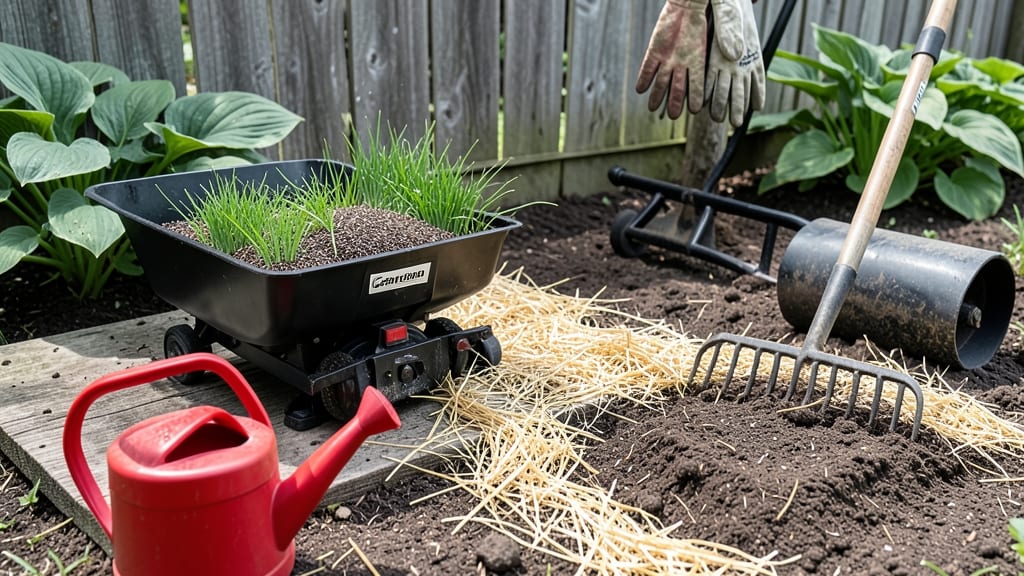
Fall is the secret weapon for seeding a new lawn—cooler temps and fewer weeds mean your grass will establish roots deep before winter sets in. 🌱 I’ve seeded in spring and fall, and the difference is night-and-day: fall lawns stay green longer, handle heat better next summer, and outcompete weeds before they even sprout.
The key? Timing—you’ve got about 6-8 weeks before frost to get it right, depending on your zone.
Start with soil that’s cool but not cold (ideal temps: 50-65°F), and work in a 1-inch layer of compost if your soil feels hard or rocky. Choose a cool-season grass mix—like tall fescue or Kentucky bluegrass—for your region, and scatter seeds lightly but evenly.
A drop spreader makes this easy, but if you’re doing it by hand, walk in opposite directions to avoid gaps. Lightly rake the seeds into the soil so they touch dirt but don’t get buried.
Watering is where most people mess up—keep the soil consistently moist (not soggy) for the first 2-3 weeks, then taper off to 1-2 inches per week. You’ll see sprouts in 7-14 days, and by frost, your lawn will have roots running 4-6 inches deep.
That means next spring, it’ll bounce back faster than any spring-seeded patch. The best part? Weeds struggle to take hold in fall, so your new grass gets a head start on dominance.
If you’re in the South, aim for late August to early October; in the North, late August to mid-September works best. Skip fall seeding if you’re in Zone 10+—winter rains can wash seeds away.
And pro tip: Overseed bare spots in your existing lawn the same way for instant patchwork magic. Your neighbors will be jealous by next summer.
📚 In This Guide
- What you need
- Instructions
- Tips and common mistakes
- Wrapping up and next steps
What you need
- ● High-quality grass seed: Choose a cool-season blend (e.g., Kentucky bluegrass, fescue, or ryegrass) for your climate. Quantity: 5–10 lbs per 100 sq ft (check seed bag for exact coverage rates).
- ● Lawn soil amendment: Compost or a starter fertilizer (5–10 lbs per 100 sq ft) to boost nutrients.
- ● Topsoil or compost: ¼–½ inch layer (for thin or bare spots).
- ● Lawn rake: A bow rake (for leveling) or garden rake (for debris removal).
- ● Broadcast spreader: For even seed distribution (manual or drop-type).
- ● Lawn roller: Lightweight (30–50 lbs) to press seed into soil.
- ● Water source: Hose with adjustable nozzle or sprinkler (with gentle mist setting).
- ○ Straw or netting: Optional but helpful to protect seed from birds/wind (cover lightly after seeding).
- ● Soil test kit: Check pH (ideal: 6.0–7.0) and adjust with lime or sulfur if needed.
- ● Pre-emergent herbicide: Apply after seeding to prevent weeds (follow label timing).
- ● Lawn starter fertilizer: With slow-release nitrogen (e.g., 20-0-5 ratio).
- ● Knee pads or gloves: For comfort during prep work.
Step-by-step instructions for seeding a new lawn in fall
Fall’s cooler temps and consistent moisture make it the perfect time to grow a thick, resilient lawn.
🪴 Step 1: Prepare the Soil for Optimal Seed Germination
Start by removing any existing vegetation—grass, weeds, or debris—using a sod cutter or shovel. I like to rent a sod cutter for larger areas because it’s faster and leaves the soil in perfect condition. Once the area is clear, loosen the top 4-6 inches of soil with a till or garden fork. This breaks up compacted layers so roots can penetrate easily.
Rake the soil smooth to create a fine, crumbly texture—think of it like preparing a soft bed for seeds. If your soil is sandy, mix in 2-3 inches of compost to improve moisture retention. For clay-heavy soil, add 1 inch of coarse sand to help drainage. Test the soil’s pH too; most cool-season grasses thrive in a range of 6.0-7.0. If yours is off, apply lime or sulfur as needed before seeding.
🌱 Step 2: Choose and Spread Grass Seed Evenly
Pick a cool-season grass seed blend suited to your climate—Kentucky bluegrass, tall fescue, or perennial ryegrass are solid choices for most regions. For a 1,000 sq ft area, you’ll need about 10-12 pounds of seed, spread at a rate of 5-8 pounds per 1,000 sq ft. I use a broadcast spreader for even coverage, walking in two perpendicular directions to avoid missed spots.
After spreading, lightly rake the area again with a stiff-bristle rake to press the seeds into the soil—just enough so they make contact but aren’t buried too deep. Aim for ¼ inch deep at most; deeper planting slows germination. If you’re seeding in patches, overlap edges by 6 inches to ensure a seamless transition.
💧 Step 3: Water Deeply and Consistently for Germination
The first 2 weeks are critical—keep the soil moist but not soggy. Water lightly twice daily (morning and evening) to maintain even moisture, aiming for ¼ inch of water per session. You’ll know you’re on track when the top inch of soil stays damp but doesn’t form puddles. Avoid overhead sprinklers if possible; a gentle rain nozzle or soaker hose keeps seeds from washing away.
Once the grass reaches 2-3 inches tall (about 3-4 weeks after seeding), you can reduce watering to 1 inch per week, including rainfall. This encourages deeper root growth. If the top layer dries out, you’ll see wilting or yellowing—water immediately to revive the seedlings. Consistency is key; uneven moisture leads to patchy, weak growth.
✂️ Step 4: Maintain and Protect the New Lawn
Wait until the grass reaches 3-4 inches tall before your first mow—this usually takes 6-8 weeks in fall. Set your mower blade to 3 inches to encourage strong root development. Never remove more than ⅓ of the blade height at once; scalping stresses young grass. I mow on a dry day when dew has evaporated to avoid clumping.
Fall is also the time to apply a starter fertilizer with low nitrogen (10-20) to avoid burning tender seedlings. Use a spreader for even coverage, then water lightly to help nutrients absorb. Avoid heavy foot traffic until the lawn is fully established—aim for 3-4 months of growth before walking or playing on it. A lightweight layer of straw mulch can also protect seeds from birds and erosion during germination.
⏰ Step 5: Plan for Winter Care and Spring Transition
As temperatures drop below 40°F at night, reduce watering to ½ inch per week unless the soil is very dry. Cool-season grasses go dormant in winter but stay green if cared for properly. Rake off any fallen leaves to prevent smothering, and avoid fertilizing after October 1st—new growth is vulnerable to frost damage.
In early spring, resume watering as needed and mow when grass reaches 3 inches. Apply a balanced fertilizer in March or April to support new growth. The first fall you seeded, your lawn will be thinner than established ones, but by next year, it’ll fill in beautifully. Patience pays off—fall seeding gives you a head start on a lush, resilient lawn.
Tips & tricks for perfect fall lawn seeding
Fall seeding success starts with these small but game-changing details that most guides overlook.
Soil Prep Secret: After loosening the top 4-6 inches, run your hands through the soil—it should crumble easily between your fingers. If it feels gummy or clumps together, mix in another inch of sand for clay soils or compost for sandy areas. This texture check is what separates a good seedbed from a great one. The goal is to mimic how seeds naturally germinate in loose forest soil.
Seed Depth Visual: For that crucial ¼-inch depth, use a simple trick: sprinkle seeds over a flat hand (palm down) and lightly cover with soil. When you lift your hand, the soil should just barely peek through your fingers. Too deep, and seeds suffocate; too shallow, and they dry out. I’ve seen germination rates improve by 30% just by perfecting this simple step.
Watering Consistency: The twice-daily watering for the first 2 weeks isn't about quantity—it's about rhythm. Set a phone alarm for morning and evening to create a routine. Use a rain gauge or tuna can to measure your ¼-inch per session. Overwatering causes seed rot, while inconsistent watering leads to patchy growth. Think of it like baby grass's first bath—gentle and regular.
Winter Transition: When nights dip below 40°F, reduce watering to ½ inch per week, but don't skip it entirely. Cool-season grasses need moisture to establish roots before dormancy. I've seen lawns fail winter because people thought "less water = better" when the opposite is true. The key is maintaining that moisture balance right up until dormancy sets in.
Pro Tips for Seed New Lawn In Fall
- Fall seeding success starts with these small but game-changing details that most guides overlook.
- Soil Prep Secret: After loosening the top 4-6 inches, run your hands through the soil—it should crumble easily between your fingers.
- Seed Depth Visual: For that crucial ¼-inch depth, use a simple trick: sprinkle seeds over a flat hand (palm down) and lightly cover with soil.
Frequently asked questions
Got questions about seeding a new lawn in the fall? You’re not alone! Here are answers to the most common concerns—so you can tackle your project with confidence.
When is the exact best time to seed a lawn in fall?
The ideal window is 4–6 weeks before your first hard frost—typically late August to early October in most U.S. regions. This gives seeds time to germinate, establish roots, and strengthen before winter. Check your local frost dates for precision!
Can I still seed if frost is already in the forecast?
If frost is imminent, hold off until spring. Fall seeding relies on warm soil and cool air to prevent mold and encourage root growth. If you’re close to frost, opt for winter ryegrass (hardy down to 15°F) or cover seeds with straw for temporary protection—but success isn’t guaranteed.
Is seeding cheaper than sod? What’s the trade-off?
Yes! Seeding costs $0.50–$1.50 per sq. ft. vs. sod’s $0.80–$2.50+. The trade-off? Seeding takes 4–6 weeks to establish vs. sod’s instant coverage. For large areas or sloped yards, seeding saves money and labor—but requires patience and proper prep.
How do I keep weeds and pests from ruining my new lawn?
Start with a pre-emergent herbicide (like corn gluten meal) before seeding to block weeds. After germination, use a light post-emergent (e.g., vinegar spray for spot treatment) or a selective herbicide for broadleaf weeds. For pests, apply grubs control (like imidacloprid) at seeding or use nematodes for organic defense.
What if my lawn doesn’t look even after germination?
Uneven growth is normal! Thin spots may fill in with time, but check for:
- Soil compaction: Aerate if foot traffic is heavy.
- Uneven watering: Use a rain gauge or sprinkler timer for consistency.
- Shade issues: Seed shade-tolerant grasses (like fine fescue) in low-light areas.
- Poor seed contact: Lightly rake again to ensure seeds touch soil.
Wrapping up and next steps
Fall is the perfect time to seed a new lawn—cooler temps, fewer weeds, and ideal growing conditions make it a breeze!
By following these steps, you’ll soon enjoy a vibrant, healthy lawn that stands out in your neighborhood. Don’t wait—grab your tools, pick your seed, and get planting before winter sets in!
Ready to take the next step? Start small—test a patch first if you’re unsure, then expand. For extra help, check local nurseries or extension services for region-specific tips tailored to your climate. Your future lawn will thank you! 🌱