
Lawn
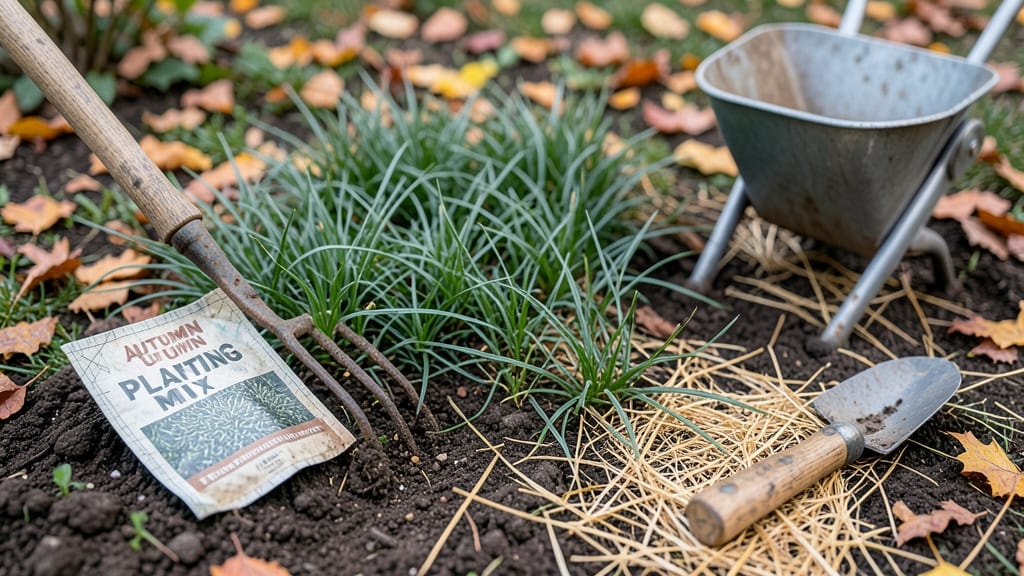
Autumn grass seed planting gives you a head start on next spring's lawn—when most neighbors are still battling weeds and patchy growth. 🌱 The secret isn't just cooler temps; it's how fall's ideal conditions—soil warmth, fewer pests, and steady moisture—work together to give seeds the perfect start before winter slows things down.
Most people wait until spring, but that's when weeds compete fiercely for space and heat stress weakens young grass. In autumn, seeds germinate slowly but steadily, establishing strong roots before dormancy.
You'll need a good seed blend for your climate, a rake, and either a drop spreader or your hands—no fancy tools required.
By early spring, you'll see thick, even growth where others are still patching bare spots. The key is keeping soil moist (not soggy) and avoiding foot traffic for 4-6 weeks—your lawn will reward that patience with a lush, weed-resistant carpet by summer.
Works for cool-season grasses (like Kentucky bluegrass) in the Northern Hemisphere, but flip the timing for Southern Hemisphere gardeners—spring there is autumn down under. Here's how to adapt for your region's first frost date.
📚 In This Guide
- What you need
- Instructions
- Tips and common mistakes
- Wrapping up and next steps
What you need
- ● Grass seed: Choose a cool-season variety (e.g., Kentucky bluegrass, fescue, or ryegrass) suited to your climate. Aim for 5–10 lbs per 500 sq ft, depending on seed type and desired density.
- ● Lawn soil test kit: Test your soil’s pH and nutrient levels (ideal pH: 6.0–7.0). Adjust with lime (to raise pH) or sulfur (to lower it) as needed.
- ● Fertilizer: A starter fertilizer (high in phosphorus, e.g., 5-10-10 ratio) to promote root growth. Apply 1 lb of nitrogen per 1,000 sq ft.
- ● Rake: A bow rake (for leveling) or garden rake (for removing debris). Use one with tines spaced ½–1 inch apart for fine control.
- ● Spreaders: Broadcast spreader: For large areas (calibrate to dispense ¼ lb of seed per 1,000 sq ft per pass).
- ● Drop spreader: For precision in smaller or odd-shaped lawns.
- ● Water source: A hose with adjustable nozzle or garden sprinkler (even-coverage models like oscillating sprinklers work best).
- ● Mulching hay or straw: Lightweight, weed-free straw (¼–½ lb per 100 sq ft) to protect seeds from birds and erosion.
- ● Lawn roller: A lightweight roller (100–150 lbs) to press seed into soil gently after planting.
- ● Soil amendments: Compost or peat moss (¼ inch layer) to improve soil texture and moisture retention.
- ● Erosion control blanket: Biodegradable netting to stabilize seed on slopes or high-wind areas.
- ● Weed barrier fabric: If your lawn has persistent weeds, lay down landscape fabric before seeding (secure edges well!).
- ● Gloves & knee pads: For comfort during prep and planting.
- ● Seed germination mat: A thin, breathable mat to retain moisture in dry autumn conditions.
Step-by-Step instructions for planting grass seed in autumn
Autumn’s cooler temps and steady rains create perfect conditions for grass seed—here’s how to turn your lawn into a lush carpet.
🌱 Step 1: Prepare the Soil for Optimal Seed Contact
Start by mowing your lawn shorter than usual—about ½ inch—to expose fresh soil and remove competing weeds. Use a rake to loosen the top ¼ inch of soil, breaking up any compacted areas. The goal is a fine, crumbly texture that won’t smother seeds when watered.
If your soil feels hard or dry, lightly aerate with a core aerator or a garden fork to create small holes. Focus on high-traffic areas first. You’ll know you’ve done enough when the soil looks like a freshly tilled garden bed—ready to cradle seeds gently.
💧 Step 2: Spread Seed Evenly for Uniform Germination
Use a broadcast spreader for large areas or hand-scatter smaller patches, working in two directions (north-south, then east-west) to avoid missed spots. Aim for 5-8 pounds of seed per 1,000 square feet, depending on your grass type. Lightly rake the area again to press seeds into the soil—just enough so they’re covered but not buried deeper than ¼ inch.
Walk lightly over the seeded area to ensure good seed-to-soil contact. This prevents seeds from blowing away during watering. If birds or pets are a concern, cover the area with a thin layer of straw mulch (about ¼ inch thick) to protect seeds until germination.
☀️ Step 3: Water Gently but Consistently for Germination
Water immediately after planting, keeping the soil evenly moist (not soggy) for the first 2-3 weeks. Use a sprinkler or hose with a gentle setting to avoid displacing seeds. Aim for ¼ inch of water daily, breaking it into two sessions—morning and evening—to reduce evaporation and fungal risks.
You’ll see the first sprouts in 7-14 days, but keep watering until the new grass reaches 2-3 inches tall. At that point, you can gradually reduce watering to 1 inch per week to encourage deep root growth. Avoid heavy foot traffic until the grass is at least 3 inches tall—it’s surprisingly delicate.
✂️ Step 4: Maintain New Growth Through Winter
Once the grass reaches 3-4 inches, mow it to 3 inches to strengthen roots and prevent disease. Use a sharp mower blade to avoid tearing the blades. Avoid fertilizing until spring—autumn planting relies on natural soil nutrients to support new growth.
If frost arrives, the grass may turn brown but will green up again in spring. Keep watering lightly during dry spells (even in winter) to prevent dormancy. By late spring, your lawn will be thicker and more resilient than ever—thanks to that perfect autumn start.
Tips & tricks for perfect autumn grass planting
Autumn lawn planting is all about timing and technique—here's how to avoid common pitfalls and get that lush carpet you're dreaming of.
Soil Prep Secrets: Don't just mow short—use your lawnmower to remove all existing grass clippings first. These can smother new seeds if left behind. For compacted soil in Step 1, rent a core aerator if you don't own one—the holes it creates will help seeds make direct contact with moisture. I've seen lawns fail because seeds couldn't penetrate the hardpan, so take this step seriously. The goal is soil that looks like fine crumbs when you squeeze it.
Seed Distribution Tip: When spreading seed in Step 2, walk in a crisscross pattern to avoid streaks. For small areas, try the "snowfall method"—toss handfuls of seed from above to mimic how snow would settle evenly. The ¼ inch coverage rule is critical: any deeper and seeds won't get enough light to germinate; any shallower and they'll dry out. A simple trick is to sprinkle a tiny amount of sand over the seeds to mark where you've been.
Watering Wisdom: The 2-3 weeks of consistent moisture in Step 3 is non-negotiable for germination. I recommend setting a phone alarm for morning and evening watering sessions—it's easy to forget when you're not seeing immediate results. For the first 7-14 days when sprouts appear, check soil moisture by pressing your finger about an inch deep. If it feels dry, water immediately. A gentle rain gauge can help you measure that ¼ inch daily more accurately than guessing.
Winter Care Strategy: When frost arrives and your new grass turns brown, resist the urge to water heavily—this can actually suffocate roots. Instead, give it a light drink every 10-14 days during dry spells. I've seen lawns recover beautifully in spring after this approach, while others that were overwatered in winter struggled to bounce back. The 3 inches tall threshold before mowing is crucial—shorter grass can't support itself in winter winds.
Pro Tips for Planting Grass Seed In Autumn
- Autumn lawn planting is all about timing and technique—here's how to avoid common pitfalls and get that lush carpet y...
- Soil Prep Secrets: Don't just mow short—use your lawnmower to remove all existing grass clippings first. These can sm...
- Seed Distribution Tip: When spreading seed in Step 2, walk in a crisscross pattern to avoid streaks. For small areas,...
Frequently asked questions
Got questions about timing, prep, or troubleshooting? You’re not alone—autumn grass seeding has its quirks! Here are answers to the most common concerns to help you plant with confidence.
When is the exact best time to plant grass seed in autumn?
For most regions, aim for late summer to early fall—typically 4–6 weeks before the first hard frost (usually September–October in the U.S.). Cool soil temps (60–75°F) and warm days create ideal germinating conditions. Check your local frost dates or seed packet guidelines for precision!
Will grass seed still grow if planted too late in autumn?
Yes, but results vary. If planted 2–3 weeks before frost, seeds may sprout but struggle to establish roots. For late-season planting, choose winter-hardy varieties (like fescue or ryegrass) and use a thick layer of straw mulch (½ inch) to insulate soil. Avoid seeding if frost is imminent—patience pays off!
Do I need to rent a core aerator, or can I use a regular rake?
A manual rake works for small patches, but for thick lawns, core aeration (rent or hire a pro) is best. It removes soil plugs, creating deep channels for seeds, water, and roots. If renting, do it 1–2 days before seeding to let holes settle. Pro tip: Aerate when soil is slightly moist (not muddy!).
How often should I water after planting grass seed?
Keep soil consistently moist (like a damp sponge) for the first 2–3 weeks. Water lightly 2x daily (morning/evening) for 10–15 minutes, avoiding puddles. Once sprouts appear, reduce to 1 inch per week. Overwatering can wash seeds away—use a sprinkler with gentle mist!
What if birds or squirrels eat my grass seed? How do I protect it?
These critters love fresh seed! Spread a light layer of straw mulch (¼ inch) after seeding to deter them. For high-risk areas, use chicken wire or mesh temporarily (remove once grass is 2–3 inches tall). Avoid pre-emergent herbicides—they’ll kill your seedlings too!
Can I overseed an existing lawn, or do I need to start fresh?
Overseeding works great for thinning lawns! Mow short (1–1.5 inches), aerate, and spread seed over your current grass. Just ensure your existing turf is healthy—thin or bare spots may need topsoil first. For new lawns, till bare soil to 4–6 inches deep and rake smooth before seeding.
Wrapping up and next steps
Autumn is your golden opportunity to grow a lush, resilient lawn—cool-season grasses thrive in fall’s mild temperatures and moisture. By choosing the right seed, prepping the soil, and staying patient, you’ll soon enjoy a thick, vibrant yard that’s the envy of the neighborhood. 🌱
Ready to take the next step? Start small—test a patch of your lawn first, then expand as you gain confidence. And remember: consistency is key—stick with your watering and care routine, and you’ll reap the rewards come spring!