
Planting
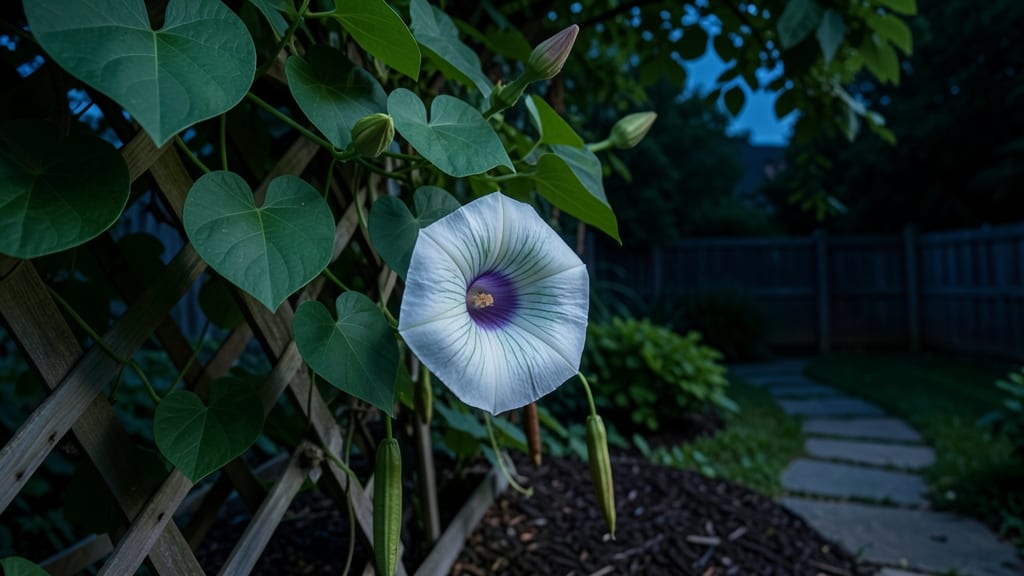
Harvesting the moonflower plant seed pod before it twists open saves seeds and ensures next year’s blooms. 🌙 The key is timing—wait until pods turn brown and feel dry to the touch, but don’t let them split naturally.
I’ve saved hundreds of seeds this way, and the process is simpler than it looks once you know the tricks.
Start by gently twisting the pod at its base until it releases with a soft pop—no force needed. Lay pods on a screen or paper towel in a dry, shaded spot for 5-7 days to finish drying.
The seeds inside will rattle when ready, signaling perfect viability. Store them in an envelope with a moisture absorber like silica gel for up to 2 years.
When sowing, soak seeds overnight to break dormancy, then plant ½ inch deep in warm soil after the last frost. Germination takes 7-14 days, and seedlings love full sun. The first blooms appear in 90-120 days, rewarding patience with those iconic white moon-shaped flowers.
Watch for overripe pods that split prematurely—harvest them early and dry seeds indoors. If seeds don’t sprout, try cold stratification (place damp seeds in the fridge for 4 weeks). This method works even in small spaces, making moonflowers a zero-waste, budget-friendly perennial favorite.
📚 In This Guide
- What you need
- Instructions
- Tips and common mistakes
- Wrapping up and next steps
What you need
- ● Moonflower plants (Ipomoea alba) – Mature, fully bloomed vines with seed pods (aim for pods that are dry and brownish-gray).
- ● Sharp pruning shears or scissors – 1 pair, with clean, sterilized blades (7–9 inches long) to avoid crushing pods.
- ● Paper grocery bags or breathable fabric sacks – 2–3 bags, large enough to hold pods without crushing them (avoid plastic—it traps moisture!).
- ● Rubbing alcohol (70% isopropyl) and cotton swabs – For sterilizing tools and hands (prevents mold or bacterial transfer).
- ● Small wooden spoon or butter knife – 1, for gently prying open pods (avoid metal to prevent seed damage).
- ● Seed-saving envelopes or airtight glass jars – 5–10 envelopes (or 2–3 jars with silica gel packs for long-term storage).
- ● Permanent marker – To label seeds with the harvest date and variety (trust us, you’ll forget!).
- ● Magnifying glass – For inspecting pods/seeds for pests or damage.
- ● Fine-mesh sieve – To separate seeds from chaff or debris.
- ● Desiccant packs – For jars to absorb excess moisture and extend seed viability.
- ● Gloves (nitrile or cotton) – If you’re sensitive to plant sap or thorns.
- ● Camera or phone – To document your harvest for future reference!
How to harvest moonflower seed pods without twisting or damaging them
Moonflowers give you one night of stunning blooms—but the real magic is in those seed pods. Here’s how to collect them cleanly for next year’s garden.
🌱 Step 1: Identify the Perfect Pods to Harvest
Wait until the pods turn from green to a dry, papery brown—this means the seeds are mature and ready. I tap each pod gently with my fingernail; if it sounds hollow, it’s ready. Avoid harvesting pods that still feel plump or have green streaks, as the seeds inside won’t be viable.
Moonflower pods are delicate, so I work on a dry, sunny afternoon when the stems are firm. If you harvest in the morning, the pods may still be slightly damp from dew, making them harder to handle. Always wear gloves—moonflower stems can irritate sensitive skin.
🌿 Step 2: Gently Twist Off the Pods Without Breaking Them
Never yank or pull the pods—they’ll split open and scatter seeds everywhere. Instead, grasp the stem just below the pod with your thumb and forefinger, then twist gently in a slow, circular motion. You’ll feel a slight give as the pod separates cleanly from the stem.
If a pod resists, don’t force it. Let it dry another day or two in the sun—overly green pods are tougher to remove. Once detached, place the pods in a paper bag (not plastic) to allow airflow and prevent mold. Label the bag with the harvest date to track seed viability.
✂️ Step 3: Dry and Open the Pods for Seed Extraction
Spread the pods out on a clean, dry surface in a single layer. Place them in a warm, dry spot (around 70-75°F) for 5-7 days, flipping them daily to ensure even drying. Overcrowding or humidity will cause the pods to rot before the seeds are ready.
When fully dry, the pods will split open on their own—no need to force them. Gently rub the dried pods between your palms over a bowl or tray to release the seeds. Discard any empty or shriveled seed cases, keeping only the plump, dark seeds for planting.
🪴 Step 4: Store Seeds for Next Season’s Planting
Place the harvested seeds in a small, airtight container (like a glass jar with a tight lid) and store them in a cool, dark place—such as a refrigerator or basement—where temperatures stay between 35-45°F. Moonflower seeds remain viable for 2-3 years under these conditions.
Before planting, I always do a quick viability test: soak a few seeds in warm water for 12 hours, then place them between damp paper towels in a sealed bag. Check for sprouts in 3-5 days. If fewer than 50% sprout, consider treating the seeds with a fungicide or planting extra to ensure good germination.
⏰ Step 5: Plant the Seeds for Next Year’s Blooms
Moonflower seeds need warm soil (70°F+) to germinate, so I wait until late spring after the last frost. Scatter seeds ½ inch deep in well-draining soil, spacing them 12 inches apart to give vines room to climb. Water lightly but keep the soil moist—never soggy—until germination, which takes 10-14 days.
Once seedlings emerge, provide a trellis or sturdy support for the vines to climb. Moonflowers grow 10-15 feet tall in a single season, so choose a location with plenty of vertical space. With proper care, you’ll have another season of those enchanting night-blooming flowers.
Tips & tricks for perfect moonflower seed pod harvesting
Here's what nobody tells you about handling these delicate pods without turning your garden into a seed explosion.
Timing Secret: Harvest moonflower pods when they're fully brown and papery—but don't wait until they're brittle. I've learned the hard way that pods left too long on the vine become powdery and crumble at the slightest touch. Aim for that perfect moment when they're dry but still intact, usually about 2-3 days after the flowers have completely faded. The hollow sound test is your best friend here.
Technique Tip: For Step 2, the twisting motion is everything. I used to struggle with pods snapping off too soon—until I realized I needed to twist in a slow, continuous motion rather than a quick jerk. Think of it like unscrewing a stubborn jar lid: steady pressure wins every time. And if a pod resists, it's better to wait another day than force it.
Drying Strategy: When you're drying the pods in Step 3, don't be tempted to speed up the process with heat. I once tried using my oven at 150°F to dry them faster, and it turned them to dust. Stick to that 70-75°F range and be patient—those 5-7 days are non-negotiable for preserving seed viability. A sunny windowsill works perfectly if you live in a dry climate.
Storage Wisdom: The cool, dark storage conditions in Step 4 aren't just about keeping seeds fresh—they're about preventing mold and maintaining germination rates. I store my seeds in small glass jars with silica gel packets to absorb any moisture. And here's a pro move: write the harvest year on the jar with a permanent marker so you can track how long they remain viable.
Pro Tips for Moonflower Plant Seed Pod
- Here's what nobody tells you about handling these delicate pods without turning your garden into a seed explosion.
- Timing Secret: Harvest moonflower pods when they're fully brown and papery—but don't wait until they're brittle. I've...
- Technique Tip: For Step 2, the twisting motion is everything. I used to struggle with pods snapping off too soon—unti...
Frequently asked questions
Got questions about harvesting moonflower seed pods? Here are some answers to help you master the twist-resistant technique and make the most of your zero-waste gardening:
When is the best time to harvest moonflower seed pods?
Harvest moonflower seed pods when they turn tan or light brown and feel dry to the touch—usually 4–6 weeks after flowering. Avoid harvesting too early (green pods) or too late (bursting pods), as seeds may not store well or may have sprouted already. Morning harvests work best when pods are crisp and easier to twist open.
Why do some moonflower seed pods resist twisting open?
Pods resist twisting if they’re too dry or too moist. If they’re stubborn, try gently tapping them against a hard surface to loosen seeds, or soak them in warm water for 10 minutes to soften the fibers. Overly green pods may need more time on the vine—wait until they’re fully mature for the easiest twist-and-release!
Can I save seeds from moonflower pods that have already opened?
Yes! If seeds have scattered naturally, search the ground around the plant for intact, plump seeds (they’ll look like tiny, flat beans). Store them in a cool, dry place for up to 2 years. Just avoid using seeds from pods that were chewed by pests—opt for healthy, unblemished ones instead.
What’s the best way to store moonflower seeds after harvesting?
Store seeds in a paper envelope or breathable container with a silica gel packet to absorb moisture. Label with the harvest date and keep them in a cool, dark place (like a fridge). Avoid airtight containers—they trap humidity and can cause mold. Seeds stay viable for 1–2 years if stored properly!
Are there alternatives if my moonflower pods won’t twist open?
If twisting fails, try these tricks:
- Cut open pods with clean scissors or a knife.
- Use a rolling pin to gently crush pods and release seeds.
- Shake pods over a tray to let seeds fall out naturally.
Wrapping up and next steps
Growing moonflower plant seed pods isn’t just rewarding—it’s a zero-waste way to propagate these enchanting vines while embracing sustainable gardening. 🌙 With the right techniques, like twist-resistant harvesting, you’ll ensure healthy seeds and a thriving garden year after year.
Ready to take the next step? Start by saving a few seed pods from your current crop, and soon, you’ll be sharing the magic of moonflowers with fellow gardeners!