
How To
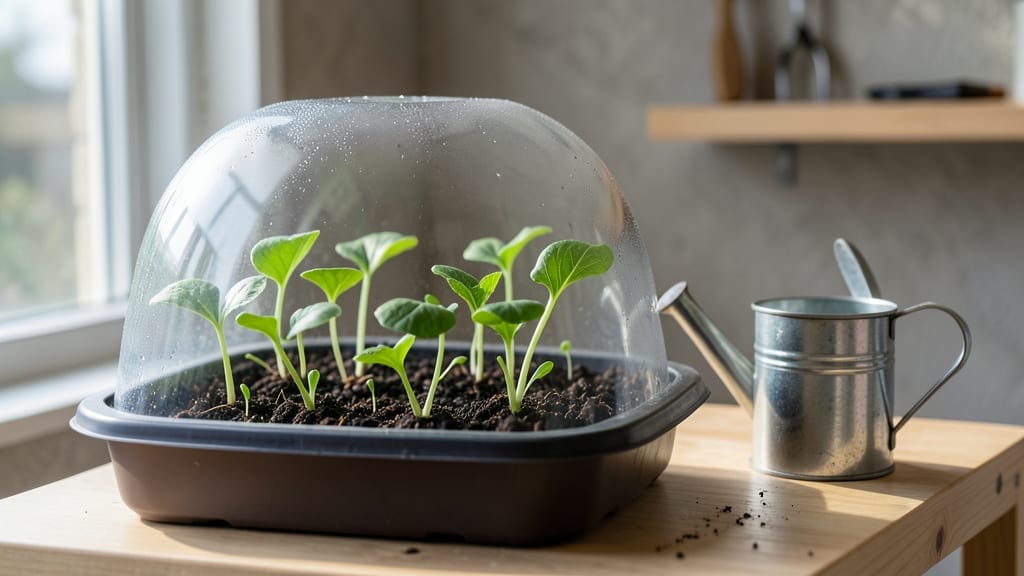
Understanding how long it takes for seedlings to sprout isn't just about patience—it's about creating the right conditions. 🌱 The key factors like soil warmth and consistent moisture work together to trigger germination.
For example, beans often sprout within 5-10 days when kept at 70-80°F, while delicate herbs like basil can take 7-14 days if the soil stays too cool. I've found that using a seedling heat mat can cut germination time in half for slower varieties by maintaining optimal temperatures.
What's interesting is how different plants respond to these conditions. Some seeds, like lettuce, germinate quickly in cool soil but bolt (go to seed) if exposed to heat, while others, like tomatoes, need warm soil to break dormancy.
This is why gardeners often start seeds indoors—the controlled environment gives them more flexibility to adjust temperature and light exposure for faster, more reliable sprouting.
💡 In This Article
- Factors Affecting Seed Germination Speed
- Germination Timelines for Common Garden Plants
Factors affecting seed germination speed
The core mechanism behind seed germination timing lies in the interplay between enzymes and environmental triggers. When a seed absorbs water, it activates amylases—enzymes that break down starches into sugars, fueling the seedling's growth.
This process requires precise moisture levels (typically 40-60% soil humidity) to prevent dehydration while avoiding waterlogging, which can suffocate embryonic roots. For example, fast-sprouting radish seeds need consistent moisture to maintain this enzymatic activity, while slower-growing tomato seeds may require deeper hydration to soften their tough seed coats.
Temperature acts as the primary regulator of germination speed, as enzymes function optimally within specific ranges. Most vegetables thrive at 65-80°F, but cool-loving crops like lettuce germinate best at 55-65°F, while heat-loving peppers need 75-85°F.
The rule of thumb is that for every 10°F drop below ideal temperature, germination can double in time. I've seen basil seeds take 14 days at 60°F versus just 7 days at 75°F—that's a dramatic difference in garden planning!
Seed dormancy adds another layer of complexity, where some species require specific conditions to break their natural growth inhibitors. For instance, apple seeds contain cyanogenic glycosides that must degrade through cold stratification (exposure to 32-40°F for 60-90 days), while others need light exposure to trigger germination.
This explains why some "slow" seeds like okra may take 10-20 days—their dormancy mechanisms are built to wait for optimal conditions.
The soil's composition also plays a subtle but critical role. Aerated, well-draining mixes with organic matter provide the perfect balance of oxygen and nutrients, while compacted or waterlogged soil can create anaerobic conditions that slow germination.
I've noticed that seeds planted in sterile seed-starting mixes sprout 2-3 days faster than those in garden soil, thanks to the absence of competing microbes and consistent structure.
Light exposure becomes particularly important for seeds with photoblastic requirements. Some, like lettuce, need darkness to germinate (hypogeal germination), while others like wheat require light to break dormancy (epigeal germination).
This is why covering seeds with 1/4 inch of soil can make the difference between 5-day and 10-day sprouting for certain varieties.
Finally, seed viability—often overlooked—directly impacts timing. Older seeds may take 2-5 days longer to sprout due to degraded enzymes or damaged embryos.
A simple float test (placing seeds in water) can reveal viability: seeds that sink typically germinate within 70% of their labeled timeframe, while those that float are often nonviable.