
Lawn
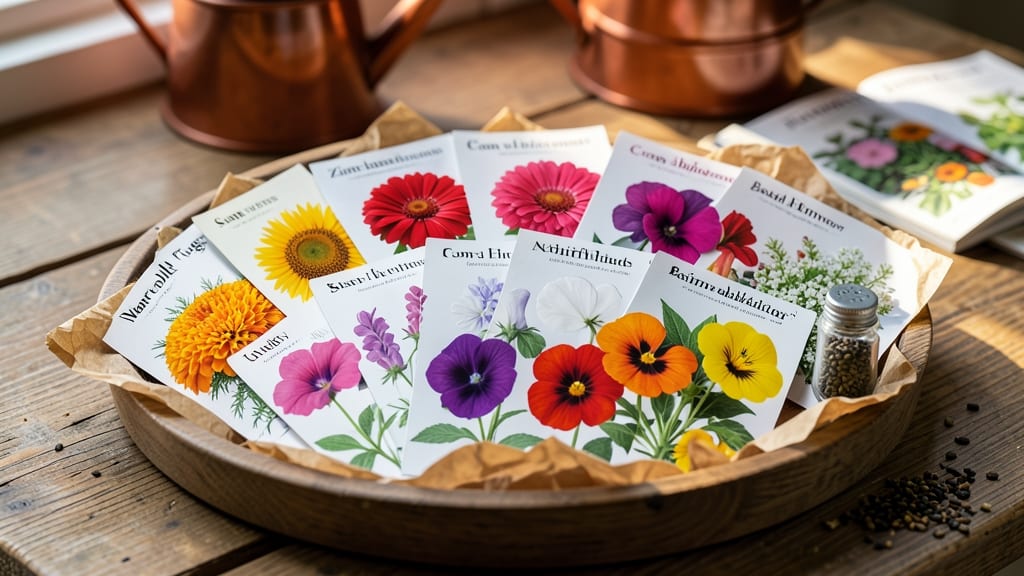
Mastering common flower seed identification before planting saves you from growing weeds in your garden beds. 🌱 I’ve spent years sorting through seed packets and wild-harvested collections, and here’s how to tell your cosmos from your cosmos—because even experienced gardeners mix up similar-looking seeds.
The key is studying seed shape, size, and texture first. A marigold seed is tiny and ribbed, while sunflower seeds are large and striped. Wild-collected seeds often need verification through seed-starting tests or comparing with trusted reference photos. Packets with vague descriptions? Cross-check with a reliable seed guide.
Once you master these visual cues, you’ll match seeds to your garden’s sunlight, soil, and design goals with confidence. No more guessing whether those "wildflower mix" seeds will turn into cheerful blooms or invasive weeds.
This skill works for heirloom collections, wildflower meadows, or just avoiding the wrong plant in your flowerbeds. Let’s get those seeds sorted!
📚 In This Guide
- What you need
- Instructions
- Tips and common mistakes
- Wrapping up and next steps
What you need
- ● Magnifying glass (10x or higher) – For close-up inspection of seed textures, shapes, and markings.
- ● Ruler or measuring tape – To check seed size (in mm or inches) for accurate ID.
- ● White or light-colored tray – A shallow dish (8"x12" or larger) to spread seeds for better visibility.
- ● Small paintbrush or tweezers – For gently handling delicate seeds without damage.
- ● Field guide or printed ID chart – A reference for comparing seeds (digital or physical).
- ● Notebook & pen – To jot down observations like color, shape, and seed coat details.
- ● Moist paper towels (2-3 sheets) – For testing seed viability by placing them between damp towels.
- ● Digital microscope or smartphone with macro lens – For high-res photos of seed details.
- ● Seed catalog or app (e.g., Seed Savers Exchange, iNaturalist) – For cross-referencing rare varieties.
- ● UV flashlight (blacklight) – Some seeds fluoresce under UV, aiding identification.
- ● Glass slides & cover slips – For examining seed cross-sections under a microscope.
- ● Seed storage bags (quart-sized, resealable) – To organize collected seeds by type.
How to identify common flower seeds before planting
Here's how I break down tricky flower seeds—no guesswork, just visual cues and size comparisons.
🌱 Step 1: Examine Seed Shape and Size
Most flower seeds fall into three basic shapes: round, oval, or elongated. Round seeds like marigold or zinnia are typically ⅛ to ¼ inch wide and feel smooth to the touch. Oval seeds, such as snapdragon or cosmos, are slightly flattened with one edge longer than the other. Elongated seeds—think larkspur or hollyhock—are often ½ inch or longer and may have a slight curve.
Hold seeds between your thumb and forefinger to assess texture. Smooth seeds usually indicate fast germination, while ridged or textured seeds (like poppy) may take longer. I always compare unknown seeds to a dime—if they're smaller, they're likely fine-seeded annuals like pansy or sweet alyssum. If they're larger, they're probably perennials like black-eyed Susan or coneflower.
🌿 Step 2: Check for Distinctive Markings or Colors
Some seeds have telltale patterns that reveal their identity. Sunflower seeds are large, striped, and often mottled with black and white. Dahlia seeds are tiny, papery, and clustered like a miniature dandelion puff. Four o'clock seeds are uniquely shaped with a small, raised bump or "eye" on one end.
Color matters too. Larkspur seeds are black and shiny, while hollyhock seeds are flat, brown, and slightly winged. If seeds are encased in a hard, woody shell (like peony or iris), they'll need scarification or stratification before planting. I keep a small magnifying glass handy—it reveals details like foxglove seeds' fuzzy, star-shaped hairs or columbine seeds' delicate, feathery tails.
📏 Step 3: Compare Seed Packets to Known Samples
Lay out seeds side by side with labeled reference cards or printed images. Pay attention to seed coat texture—smooth, ridged, or netted. Poppy seeds have a fine, almost silky coating, while snapdragon seeds are rough and papery. If seeds are clustered in a dry, papery pod (like cosmos or zinnia), they're likely from a self-seeding annual.
I keep a small notebook with sketches of seed shapes and sizes. For example, marigold seeds are round and ⅛ inch, while nasturtium seeds are flat, shield-shaped, and ¼ inch long. If seeds are tiny and dust-like (like sweet pea or lupine), they need a fine sifter or gentle misting to avoid washing away during planting.
⏰ Step 4: Test Germination Speed as a Final Check
Plant a few seeds in a small pot with moist potting mix and cover with plastic wrap. Check daily for sprouts—fast germinators like marigold or cosmos will sprout in 3-7 days, while slow starters like foxglove or delphinium may take 2-3 weeks. This tells you if you're dealing with a quick-growing annual or a slower perennial.
If seeds fail to sprout after 3 weeks, they might be old, improperly stored, or misidentified. I always label test pots with the seed type and date—it saves time when troubleshooting. For example, snapdragon seeds germinate in 7-14 days, while larkspur can take up to 21 days.
🔍 Step 5: Use a Seed Identification Key or App
For stubbornly unclear seeds, I rely on a seed identification key or a trusted app like Seedling or Gardenate. These tools ask about seed size, shape, and color, then narrow down possibilities. I also cross-reference with Burpee’s Seed Guide or The Seed Savers Exchange catalog for visuals.
If seeds are still ambiguous, I plant them in separate pots and observe growth patterns. For instance, cosmos seedlings have deeply lobed leaves, while zinnia** leaves are more rounded. This step is my last resort—it’s easier to start with a few extra pots than to waste an entire season on misidentified seeds.
Tips & tricks for mastering flower seed identification
Here's what nobody tells you about turning seed identification into a foolproof system—these tricks save time and eliminate guesswork.
Texture is Your Secret Weapon: Beyond just smooth or rough, pay attention to how seeds feel when rolled between fingers. Poppy seeds have a silky, almost powdery texture that's impossible to mistake once you've felt it. Sweet pea seeds, on the other hand, have a slightly waxy coating that makes them feel almost slippery. I keep a small velvet pouch in my gardening kit—rubbing seeds against the fabric reveals subtle textures that photos can't capture. This is especially useful for distinguishing between lupine (slightly gritty) and delphinium (smooth but with faint ridges).
Light Matters More Than You Think: Hold seeds up to a bright window or use a desk lamp to examine them. The way light reflects off seed surfaces reveals hidden details: foxglove seeds catch light in their fuzzy hairs, creating a shimmering effect, while columbine seeds have tiny translucent wings that become visible only when backlit. I've caught more than one misidentified seed this way—what looked like nasturtium seeds in normal light revealed their true identity as four o'clock seeds under focused lighting. Keep a small magnifying lamp handy for close inspection.
Create Your Own Reference Library: Start a physical or digital catalog of seeds you've already identified. Take high-resolution photos of each type with a ruler for scale, then organize them by shape, size, and color. I've found that seeing seeds grouped this way makes patterns obvious—like how most perennial seeds tend to be larger and darker than annual seeds. For digital organization, apps like Google Photos let you create albums and search by visual attributes. This becomes your go-to resource when you encounter unfamiliar seeds later. The key is consistency: always photograph seeds from the same angle with the same lighting.
Seasonal Timing Can Be a Game-Changer: Some seeds only appear at specific times. Dahlia seeds, for example, ripen in late summer, while foxglove seeds mature in early fall. If you're identifying seeds in spring, you're unlikely to encounter hollyhock seeds, which typically disperse in late summer. I keep a seasonal chart that notes when each seed type is most commonly found. This helps narrow down possibilities—if you're looking at seeds in January, they're probably stored from last year's harvest rather than fresh collections. For stored seeds, check for moisture content by gently squeezing: dry seeds will feel brittle, while damp seeds might mold if planted immediately.
Pro Tips for Common Flower Seed Identification
- Here's what nobody tells you about turning seed identification into a foolproof system—these tricks save time and eli...
- Texture is Your Secret Weapon: Beyond just smooth or rough, pay attention to how seeds feel when rolled between finge...
- Light Matters More Than You Think: Hold seeds up to a bright window or use a desk lamp to examine them. The way light...
Frequently asked questions
Got questions about flower seed identification?
You’re not alone! Whether you’re a beginner gardener or just want to double-check your purchases, here are answers to the most common queries about recognizing and growing flower seeds.
How can I tell if a flower seed packet is expired?
Most flower seeds retain viability for 1–3 years if stored properly (cool, dry, and dark). Check the packaging date—if it’s older than 2 years, test germination by planting a few seeds in moist paper towels. If they sprout within 7–14 days, they’re likely still good! Pro tip: Store seeds in airtight containers with silica gel or rice to extend freshness.
What if my flower seeds look identical to weeds?
Many weed seeds (like cheatgrass or pigweed) resemble flower seeds, especially tiny ones. Compare your seeds to our visual guide—look for shape, texture, and color clues. If unsure, plant a few in a pot first! Troubleshooting: Weeds often have smooth, round seeds, while flower seeds may have ridges, wings, or fuzzy coatings.
Why aren’t my flower seeds sprouting after 3 weeks?
Patience is key! Some seeds (like foxglove or larkspur) need stratification (cold treatment) or light to germinate. Check the seed packet for specific needs—some require warmth, while others need moisture. If soil is too dry or cold, try a seedling heat mat or adjust watering. Warning: Moldy soil or overwatering can kill seeds before they sprout!
Can I mix different flower seed varieties in one planter?
Yes, but plan carefully! Mixing seeds with similar care needs (sunlight, water, soil type) works best. Avoid combining fast-growing annuals (like marigolds) with slow perennials (like lavender)—they’ll compete for resources. Tip: Start with a small batch (e.g., 3–5 types) to test compatibility before filling a whole bed.
Are heirloom flower seeds worth the extra cost?
if you prioritize biodiversity, uniqueness, or sustainability! Heirloom seeds are open-pollinated, meaning you can save and replant them year after year. Hybrid seeds (cheaper) may produce inconsistent colors or weaker plants. Budget hack: Swap seeds with local gardening groups or buy in bulk from reputable sellers like Baker Creek.
What’s the easiest flower seed to grow for beginners?
Start with sunflowers, marigolds, or zinnias—they’re fast-growing, hardy, and forgiving! Sunflowers sprout in 7–14 days, while marigolds deter pests naturally. Bonus: Their large seeds are easy to handle, and they thrive in full sun with minimal fuss. Avoid delicate flowers like orchids or snapdragons until you gain confidence!
Wrapping up and next steps
Mastering common flower seed identification opens up a world of vibrant gardens and confident gardening! 🌸 Whether you're just starting or refining your skills, recognizing these 25 varieties will help you cultivate beauty with ease.
Now that you’re equipped with visual cues and tips, why not take the next step?
Start small—plant a few seeds based on what you’ve learned, or share your newfound knowledge with fellow gardeners. Happy planting, and may your garden bloom with joy (and maybe a few surprises)! 🌱