
Planting
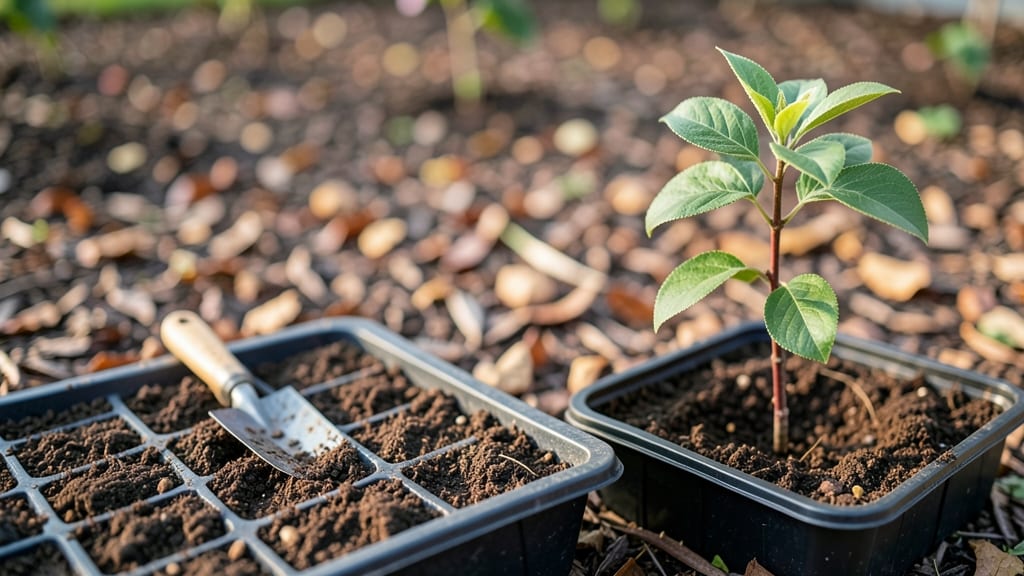
Planting apple seeds is possible, but the resulting trees will almost never produce fruit identical to the parent due to genetic variation through cross-pollination. Successful growth requires cold stratification (mimicking winter) and can take months to sprout, with fruiting potentially years away.
While apple seeds can sprout, their genetic unpredictability means you’ll likely end up with a completely different variety than the fruit you ate. 🌱 The key to success lies in replicating nature’s dormancy cycle—stratification involves chilling seeds for 4-6 weeks in moist soil or a damp paper towel to break their natural rest period.
Even with proper care, seedlings may take 3-6 months to emerge and grow into trees that won’t bear fruit for 5-10 years.
This process explains why commercial orchards use grafted trees instead—it guarantees consistent fruit quality. However, growing apple seeds can be a rewarding experiment for gardeners curious about nature’s surprises.
💡 In This Article
- How Apple Seed Germination Works: Stratification and Growth Stages
- Planting Apple Seeds: Step-by-Step Guide for Beginners
How apple seed germination works: stratification and growth stages
The reason apple seeds need stratification is rooted in their evolutionary survival strategy. Nature designed apple seeds to remain dormant until after winter, when conditions are ideal for germination. This cold treatment mimics the natural 6-8 weeks of freezing temperatures seeds experience in their original environment.
Without it, the seed's hard outer coat prevents water and oxygen from reaching the embryo, leaving it unable to sprout. 🌱
During stratification, the seed absorbs moisture while kept at 34-40°F (1-4°C), which softens the seed coat and triggers hormonal changes. This process breaks dormancy by activating enzymes that prepare the embryo for growth.
Think of it like waking a hibernating animal—without the proper cold exposure, the seed simply won't respond to warm conditions. The science behind this is called "seed dormancy breaking," where the cold period acts as a biological switch.
Once stratified, seeds typically germinate within 2-6 weeks when exposed to warmth and light. The first stage shows a tiny root (radicle) emerging, followed by the shoot (hypocotyl) pushing upward. What's fascinating is how these seedlings develop into trees with completely different genetic traits than their parent fruit.
This happens because apple trees are cross-pollinated, meaning the seed's DNA combines traits from two different parent trees—resulting in unpredictable varieties.
For example, planting a seed from a Granny Smith apple might yield a tree that produces fruit resembling a completely different cultivar, like a McIntosh or Fuji. This genetic variation is why commercial orchards use grafting instead—it guarantees the exact fruit variety.
However, for gardeners, this unpredictability is part of the fun! The resulting trees might even develop unique disease resistance or adaptability to local climates.
Growth stages after germination include the seedling phase (first 1-2 years), where the tree focuses on root and leaf development, followed by the juvenile phase (up to 5 years) before flowering and fruiting begin.
Patience is key here—most apple trees grown from seeds won't bear fruit for 8-12 years, if ever. This long timeline explains why seed-grown trees are rarely used for commercial production.
Understanding this process helps explain why your kitchen apple seed might sprout but never produce fruit like the one you ate. The magic of nature's unpredictability makes seed-growing a fascinating experiment for patient gardeners willing to wait for potential rewards. 🌿