
Vegetables
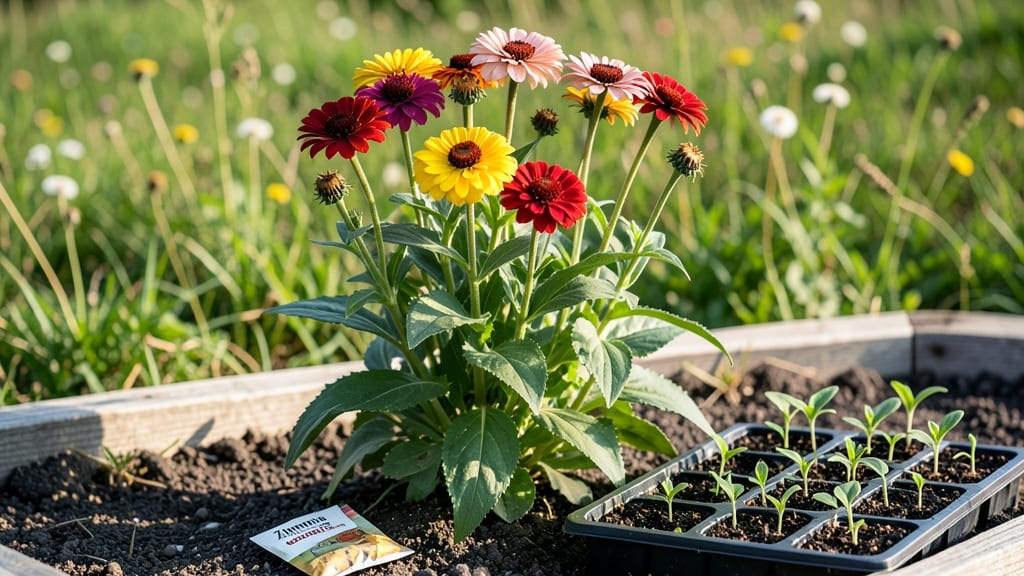
Understanding annual seeds meaning reveals plants that grow, flower, and produce seeds all within a single season before dying. These fast-growing species contrast sharply with perennials or biennials, which survive multiple years or require two growing seasons to complete their cycle.
Annual plants have evolved to capitalize on seasonal conditions, often sprouting quickly when temperatures rise and completing their life cycle before winter arrives. 🌱 This rapid growth strategy makes them ideal for gardeners in regions with short growing seasons, as they can produce vibrant blooms or abundant harvests in just a few months.
Many popular vegetables like tomatoes and lettuce fall into this category, along with showy flowers such as marigolds and zinnias, which thrive on this one-season life cycle.
What sets annuals apart is their complete reliance on seeds for reproduction—unlike perennials that regrow from roots or rhizomes. This adaptation explains why they often produce more flowers or fruit in their first season compared to plants that spread their energy over multiple years.
For gardeners, this means annuals deliver immediate rewards while requiring less long-term maintenance than their perennial counterparts.
💡 In This Article
- Life Cycle and Growth Patterns of Annual Plants
- Best Annual Seeds for Gardens and Their Benefits
Life cycle and growth patterns of annual plants
Annual plants have evolved a remarkable survival strategy: they complete their entire life cycle—from seed germination to flowering, pollination, and seed production—in just 90-180 days, depending on the species.
This rapid timeline is driven by seed dormancy mechanisms that respond to specific environmental cues like temperature shifts and daylight length. For example, many annuals require 10-14 hours of daylight to trigger germination, ensuring they sprout when conditions are optimal for growth.
The key biological advantage lies in their shallow root systems, which allow them to absorb nutrients quickly from the topsoil layer. Unlike perennials that develop deep taproots for multi-year survival, annuals focus energy on above-ground growth, producing 10-20% more biomass in their single season than biennials or perennials.
This explains why vegetables like basil and radishes grow so fast—some varieties reach maturity in just 30 days! 🌱 Their rapid maturation also means they can outcompete weeds by reaching reproductive age before weed seeds have time to germinate and grow.
Annuals employ clever adaptations to ensure seed survival. Many produce thousands of seeds per plant (like sunflowers with 1,000+ seeds), increasing the odds that some will find suitable growing conditions.
Some species even develop seed coats that require scarification (like passing through an animal's digestive tract) to break dormancy, ensuring dispersal to new locations. This contrasts with perennials that rely on underground storage organs to survive harsh seasons.
Temperature plays a crucial role in their growth patterns. Most annuals thrive in 60-80°F ranges but can't tolerate frost, which is why they're often planted after the last frost date in spring.
Their short life cycle means they must balance rapid growth with reproductive timing—delaying flowering too long risks frost damage before seeds mature, while flowering too early may produce weak, non-viable seeds. This delicate timing explains why gardeners must carefully select varieties suited to their local growing season length.
Consider the contrast with biennials like carrots, which store energy in roots during their first year, or perennials like asparagus that develop extensive root systems over multiple seasons. Annuals skip these energy-intensive survival strategies entirely, focusing instead on maximizing seed production in a single season.
This biological specialization makes them ideal for regions with unpredictable climates where long-term survival strategies would be less effective.
What's fascinating is how annuals have adapted to different ecological niches. Some, like desert annuals, germinate immediately after rare rainfall events, growing and flowering within weeks to complete their cycle before the next drought.
Others, like many garden flowers, time their growth to coincide with peak pollinator activity, ensuring successful reproduction. This adaptability explains why annuals dominate in disturbed ecosystems where perennial plants can't establish quickly.