
Propagation
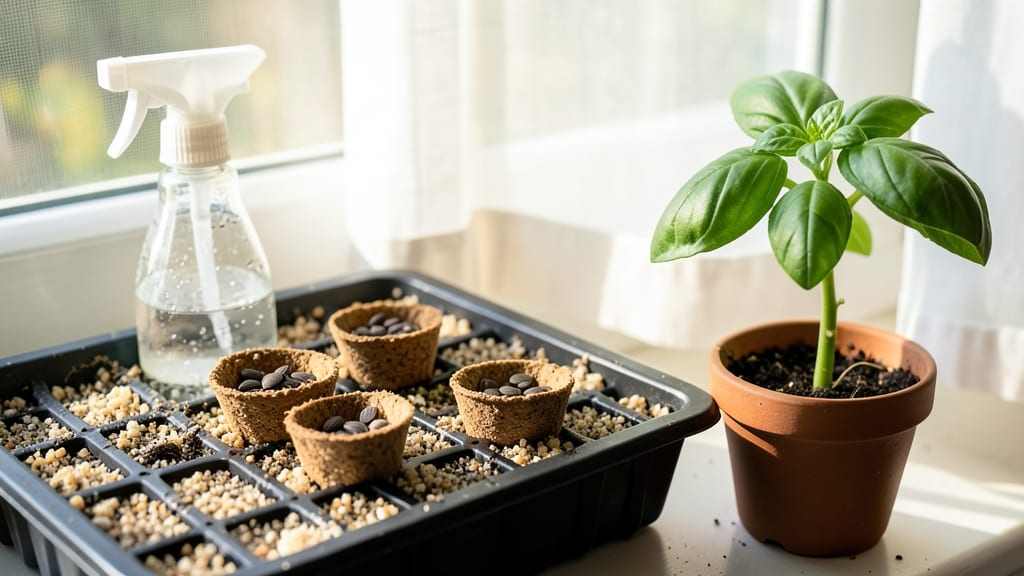
Growing basil from seed indoors is faster than you think—7-day germination is totally doable with the right setup. 🌱 I’ve grown dozens of pots this way, and the secret isn’t fancy equipment—it’s knowing exactly when to water, how much light to give those tiny sprouts, and when to trust the soil’s warmth to do the work.
Most people overthink it by using sterile soil mixes or seed-starting trays, but basil thrives in simple potting soil and small containers.
Just plant the seeds ¼ inch deep, keep the soil moist (not soggy), and place them in a spot where they’ll get bright, indirect light—like a sunny windowsill or under a grow light. Within a week, you’ll see those first green leaves pushing through.
By the time your seedlings are 2-3 inches tall, you’ll be pinching them back to encourage bushier growth, and before you know it, you’re harvesting fresh basil for pesto, pasta, or sandwiches—year-round. The best part?
No pests, no weeds, and no need to buy wilted bunches from the store. This method works for any indoor space, from kitchens to sunrooms. Just remember: patience is key, and those first sprouts are worth the wait!
📚 In This Guide
- What you need
- Instructions
- Tips and common mistakes
- Wrapping up and next steps
What you need
- ● Basil seeds – 5–10 seeds (or a small packet for multiple plants). Look for Genovese, Sweet Basil, or Thai Basil varieties.
- ● Seed-starting trays or small pots – 2–4" deep, with drainage holes (or a seed-starting kit with cell inserts).
- ● Seed-starting mix or potting soil – Lightweight, sterile mix (avoid garden soil—it’s too dense!).
- ● Spray bottle – For gentle watering (a fine mist setting works best).
- ● Clear plastic dome or plastic wrap – To create a humidity tent (or a ziplock bag with holes).
- ● Grow lights or a sunny windowsill – 6+ hours of light daily (south-facing windows are ideal).
- ○ Heat mat (optional but helpful) – Keeps soil warm (70–80°F) to speed up germination.
- ● Fertilizer – A diluted balanced liquid fertilizer (5-5-5 or 10-10-10) after sprouts appear.
- ● Humidity tray or pebble tray – Adds extra moisture for faster germination.
- ● Small fan – Light airflow prevents mold (run it gently for 1–2 hours daily).
- ● Plant labels – To track varieties and planting dates.
- ● Pruning shears – For pinching back stems later to encourage bushiness.
Step-by-Step instructions for growing basil from seed indoors
Here’s how to get your basil seeds sprouting in just 7 days—no fancy equipment needed.
🌱 Step 1: Soak Seeds to Speed Up Germination
Place your basil seeds in a small bowl and cover them with lukewarm water for 12 hours. This softens the tough outer coating and triggers faster germination—you’ll see tiny white roots peeking out after just a few hours. Drain the water before planting, but don’t let the seeds dry out.
I like to use a paper towel to blot excess water gently—this keeps them moist without drowning them. The goal is to jumpstart growth so you’re not waiting weeks for those first sprouts. If you skip this step, germination could take 10-14 days instead of 7.
🪴 Step 2: Fill Containers with Moist Seed Starting Mix
Use 4-inch pots (or a seed tray with cells) and fill them with sterile seed-starting mix—never garden soil, which can harbor fungus. Moisten the mix until it’s damp like a wrung-out sponge. Press it down lightly so it’s firm but not packed, giving roots room to spread.
Leave about ½ inch of space at the top of each pot—this prevents overflow when you water. I tap the container gently on the table to settle the soil evenly. If the mix feels dry after pressing, spritz it lightly with water until it’s consistently moist but not soggy.
🌿 Step 3: Plant Seeds Shallow and Keep Warm
Drop 2-3 seeds per pot (just in case one doesn’t sprout) onto the soil surface, then cover them with a thin layer of mix—no deeper than ¼ inch. Basil seeds need light to germinate, so burying them too deep slows things down. Mist the surface with water until it looks evenly damp.
Place the pots in a warm spot (ideally 75-80°F)—a seedling heat mat speeds things up, but a sunny windowsill or top of the fridge works too. Cover the pots with plastic wrap to trap humidity, but remove it as soon as sprouts appear to prevent mold. You’ll spot tiny green shoots in 3-5 days—that’s your cue to start thinning!
☀️ Step 4: Move to Bright Light Immediately After Sprouting
The second those first leaves appear, remove the plastic wrap and place the pots under grow lights (or a south-facing window). Basil needs 12-14 hours of light daily—without it, seedlings stretch leggy and weak. If your lights are too far away, the stems will bend toward them like they’re reaching for a hug.
Keep the soil moist but not soggy—water from the bottom by placing pots in a tray of water for 10 minutes, then drain excess. You’ll know moisture is right when the top inch feels damp but not wet. Watch for first true leaves (the second set after the initial cotyledons)—this means your seedlings are ready for their next growth phase.
✂️ Step 5: Thin and Fertilize for Bushy Growth
Once seedlings have 2-3 true leaves, snip the weakest one in each pot, leaving the strongest. This gives the remaining plant room to grow without competing for nutrients. Pinch off the top set of leaves when the plant reaches 4-6 inches tall—this encourages bushier growth instead of a tall, spindly stem.
After thinning, feed your basil with a diluted liquid fertilizer (half-strength) every 2 weeks. You’ll see new leaves emerge within a week—that’s your signal everything is working. Keep the soil moist and rotate pots weekly so they grow straight, not lopsided toward the light.
Tips & tricks for fast basil seed germination indoors
A few clever tricks will help you beat the 7-day germination goal—and keep those seedlings thriving once they sprout.
The Soak Secret: For the 12-hour soak in Step 1, use a shallow container so the seeds don't get buried under water. I place a mesh strainer over a bowl to keep them submerged but prevent drowning. The goal is to soften those tough seed coats without over-saturating them—this is what triggers those first roots to appear in just hours.
Warmth Hack: That 75-80°F range in Step 3 is critical, but don't have a heat mat? Place your pots on top of your fridge or near a sunny window with indirect heat from a lamp. Even a warm spot above your oven (when not in use) works—just monitor for overheating. Basil seeds are sensitive to temperature swings, so consistency is key for that 3-5 day sprout window.
Light Transition Tip: When moving seedlings to light in Step 4, do it gradually over 2-3 days. Start with just 2 hours of light, then increase daily. This prevents shock and those dreaded leggy seedlings. I use a simple timer for my grow lights to ensure that 12-14 hour daily requirement—set it and forget it while you're at work.
Thinning Without Trauma: For Step 5's thinning, use clean scissors or your fingers to gently remove the weaker seedlings at soil level. Don't pull—this can damage the roots of your remaining plant. I like to do this on a sunny day when the soil is slightly dry, as it's easier to see the seedlings clearly and they're less likely to stick to wet soil.
Pro Tips for Grow Basil From Seed Indoors
- A few clever tricks will help you beat the 7-day germination goal—and keep those seedlings thriving once they sprout.
- The Soak Secret: For the 12-hour soak in Step 1, use a shallow container so the seeds don't get buried under water.
- Warmth Hack: That 75-80°F range in Step 3 is critical, but don't have a heat mat?
Frequently asked questions
Got questions about growing basil from seed indoors? You’re not alone! Here are answers to the most common queries to help you succeed with your fresh, homegrown basil.
How long does it take for basil seeds to germinate indoors?
With the right conditions—warmth (70–80°F), moisture, and indirect light—basil seeds typically sprout in 7–14 days. Using a heat mat or seedling heat pad can speed this up to just 5–7 days. Patience is key, but don’t let the soil dry out!
Why aren’t my basil seeds sprouting? Troubleshooting tips?
If your seeds aren’t germinating, check these common issues:
- Cold soil: Basil loves warmth—keep trays on a heat mat or near a sunny window.
- Dry soil: Mist seeds daily or use a humidity dome to retain moisture.
- Old seeds: Store-bought seeds last 1–2 years; if older, try soaking them overnight in warm water.
- Low light: Seeds need some light to sprout (unlike mature plants). Place trays under a grow light or in bright, indirect sunlight.
Can I grow basil indoors without a grow light?
Yes! Basil thrives near a south-facing window with at least 6–8 hours of sunlight daily. If your space is dim, supplement with a LED grow light (12–16 hours/day) to prevent leggy, weak plants. Rotate trays weekly for even growth.
How do I prevent basil from bolting or flowering indoors?
Bolting (premature flowering) happens when basil gets too much light or heat. To delay it:
- Use artificial light (like LEDs) for controlled exposure.
- Avoid placing pots near heat vents or direct sun in summer.
- Harvest leaves regularly (pinch off flowers) to encourage bushier growth.
- Keep temps between 60–75°F—basil hates extreme heat.
What’s the best container size for growing basil from seed?
Start with small seed trays or peat pots (2–3 inches deep) for germination. Once seedlings have 2–3 true leaves, transplant them into 5–6 inch pots (or larger) with drainage holes. Basil has shallow roots but benefits from 1–2 inches of extra space per plant to thrive.
Wrapping up and next steps
Growing basil from seed indoors is a rewarding journey that brings fresh, aromatic herbs right to your kitchen—in just 7 days! With the right setup, patience, and a little love, you’ll enjoy a thriving basil plant perfect for pesto, salads, or garnishes. Now that you’ve mastered the basics, why not expand your indoor garden?
- Next steps: Try growing other herbs like parsley, cilantro, or mint using the same method.
- Bonus tip: Share your basil harvest with friends or freeze extras for later!
Happy growing—your future meals (and Instagram-worthy dishes 🌿🍽️) will thank you!