
Lawn
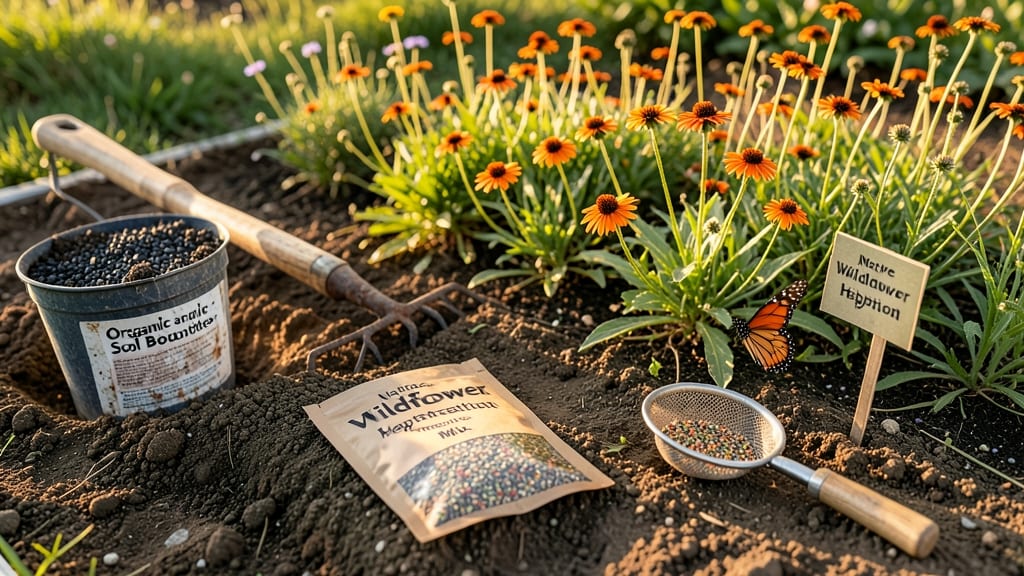
Your wildflower habitat thrives when the seed mix meets soil improvement—not just survival, but a lush, buzzing ecosystem where every seed takes root and blooms boldly. 🌱 The right soil mix transforms a patch of dirt into a pollinator magnet, where every sprinkle of seed mix finds fertile ground to root deep and bloom bold.
I learned this the hard way after planting wildflower seeds in heavy clay soil and watching them struggle for years. The secret isn't fancy equipment—it's simple soil science. Test your soil's pH and texture first (most wildflowers prefer slightly acidic to neutral soil with good drainage).
Then, amend with compost or aged manure to loosen heavy soil or improve sandy patches. Just 2-3 inches of organic matter works wonders, breaking up compaction and holding moisture without drowning roots. By spring, you'll see wildflowers pushing through soil that feels like a fluffy blanket, not concrete.
Bees, butterflies, and hummingbirds will follow, turning your garden into a buzzing, fluttering ecosystem. The best part? This soil prep pays off for years, reducing future maintenance and keeping blooms vibrant through droughts. Works for sun-drenched meadows, shady borders, or even container gardens.
Here's how to get started—no green thumb required!
📚 In This Guide
- What you need
- Instructions
- Tips and common mistakes
- Wrapping up and next steps
What you need
- ● Wildflower habitat seed mix: 1–2 lbs per 100 sq. ft. (choose a native mix for your region).
- ● Compost or aged manure: 2–3 inches spread evenly over the area.
- ○ Topsoil or garden soil: 1–2 inches for amending poor soil (optional if soil is already fertile).
- ● Organic mulch (straw or wood chips): 1–2 inches to retain moisture and suppress weeds.
- ● Garden hose or sprinkler: For thorough watering (aim for 1 inch of water per week).
- ● Garden rake: To level soil and mix amendments.
- ● Garden gloves: To protect your hands from thorns or rough soil.
- ○ Broadcast spreader (optional but helpful): For even seed distribution.
- ● Soil test kit: To check pH and nutrient levels (ideal pH: 6.0–7.0 for most wildflowers).
- ● Lime or sulfur: Adjust pH if needed (follow kit instructions).
- ● Organic fertilizer (low-nitrogen): 5-10-10 or compost tea for extra nutrients.
- ● Weed barrier fabric: If your area has aggressive weeds (lay before adding soil).
- ● Stakes or flags: To mark planting rows (helpful for larger areas).
- ● Wheelbarrow: For hauling soil and compost.
How to prepare soil for a thriving wildflower habitat
Ready to turn your patch of earth into a buzzing pollinator paradise? Here's how to get the soil just right.
🪴 Step 1: Clear the Area and Assess Soil Quality
Start by removing all existing vegetation, weeds, and debris from your planting area. I like to use a sturdy garden rake to pull up roots and turn the soil—this prevents competition and gives wildflower seeds a clean slate. For a 4-foot by 4-foot area, you'll want to clear at least 6 inches deep.
Next, check your soil's texture by squeezing a handful. If it crumbles easily, you're good to go. If it stays in a hard clump, you'll need to add organic matter. Wildflowers thrive in well-draining soil, so avoid compacted or waterlogged spots. Mark any areas that need extra attention—these might need more compost or a slight elevation.
🌱 Step 2: Loosen and Aerate the Soil
Use a garden fork or tiller to break up compacted soil to a depth of 8-12 inches. This mimics natural soil conditions and helps wildflower roots establish easily. I work in sections, loosening the soil in one area before moving to the next. Avoid over-tilling—you just want to create a loose, crumbly texture, not pulverize it completely.
For rocky or particularly dense soil, mix in 2-3 inches of coarse sand to improve drainage. This step is especially important if your area tends to hold water after rain. You'll know you've done it right when the soil feels light and airy, like a well-fluffed pillow. Wildflowers reward you with vibrant blooms when their roots can breathe.
💧 Step 3: Amend with Organic Matter
Spread a 2-inch layer of compost evenly over the loosened soil. This adds essential nutrients and improves soil structure without overwhelming wildflowers, which prefer lean conditions. I like to use a garden rake to distribute it smoothly—no clumps left behind. For areas with heavy clay, mix in 1 part peat moss or coconut coir per 3 parts soil to lighten the texture.
Work the compost into the top 4-6 inches of soil using a broadfork or your hands. You're not creating a rich garden bed—wildflowers thrive in conditions that mimic their natural prairie or meadow habitats. Think of this as a gentle boost, not a fertilizer overload. The goal is soil that holds moisture but drains freely, with plenty of organic material for microbial life.
☀️ Step 4: Level and Prepare for Seeding
Rake the soil surface until it's smooth and free of clumps. Wildflower seeds need good contact with the soil to germinate, so eliminate any bumps or low spots. I use a level to check for evenness—this ensures uniform seed distribution later. For sloped areas, create small terraces with a slight lip to hold seeds in place.
Lightly tamp down the soil with the back of a rake or your boot to create a firm seedbed. This prevents seeds from washing away during the first rain. You want the surface to be firm enough to hold seeds but still loose enough for roots to penetrate. Think of it like pressing a book closed—just enough pressure to keep things in place, not so much that it becomes compacted.
⏰ Step 5: Test Soil Moisture Before Planting
Before scattering your wildflower seed mix, check soil moisture by digging a 2-inch hole and feeling the soil. It should be damp but not soggy—like a wrung-out sponge. If it's dry, water gently until moisture reaches 4 inches deep. Wildflower seeds need consistent moisture to germinate, but they'll rot if the soil stays waterlogged.
For dry climates, consider installing a simple drip irrigation system or soaker hose. Aim for 1 inch of water per week during germination. You'll know your soil is ready when the surface feels cool to the touch and holds moisture without puddling. This is your signal that the habitat is primed for seeds to take root and thrive.
Tips & tricks for perfect wildflower soil prep
Transforming your yard into a pollinator haven starts with the right soil foundation—and these pro tips will ensure your wildflower seeds thrive.
Tool Selection: Rent a rototiller for large areas, but for smaller spaces, a sturdy garden fork works just as well. I've found that hand-loosening soil in sections prevents compaction better than power tools. For rocky soil, use a broadfork to break up the earth without pulverizing it—wildflower roots need that airy texture to spread.
Compost Quality Matters: Use well-aged compost (at least 6 months old) to avoid introducing weeds or excess salts. I like to sift mine through a quarter-inch mesh screen to remove any large debris that could smother seeds. For clay-heavy soils, mix in coconut coir instead of peat moss—it's more sustainable and holds moisture better.
Moisture Management: After amending your soil, cover it with a thin layer of straw mulch to retain moisture without suffocating seeds. This is especially helpful in dry climates. I've seen germination rates double when using this simple trick—just spread about 1/4 inch over the prepared bed.
Timing Secret: Prepare your soil in early spring or late summer when temperatures are moderate. Avoid working wet soil—it compacts easily and can damage soil structure. The ideal time is when the ground feels cool to the touch but isn't frozen.
Pro Tips for Wildflower Habitat Seed Mix Soil Improvement
- Transforming your yard into a pollinator haven starts with the right soil foundation—and these pro tips will ensure your wildflower seeds thrive.
- Tool Selection: Rent a rototiller for large areas, but for smaller spaces, a sturdy garden fork works just as well.
- Compost Quality Matters: Use well-aged compost (at least 6 months old) to avoid introducing weeds or excess salts.
Frequently asked questions
Got questions about creating a thriving wildflower habitat?
Here are answers to the most common ones—so you can get growing with confidence!
What’s the best time of year to plant wildflower seed mixes for soil improvement?
For most regions, late summer to early fall (August–October) is ideal—seeds germinate in cooler weather and establish roots before winter. Spring planting (March–April) works too, but summer heat can stress young seedlings. Check your seed packet for regional timing tips!
Do I need to till my soil before planting wildflower seeds?
Not always! Wildflowers thrive in undisturbed or minimally tilled soil to mimic natural habitats. Lightly rake or scratch the surface (¼ inch deep) to ensure good seed-to-soil contact. Over-tilling can bury seeds too deep or disrupt beneficial microbes—keep it simple!
Can I use wildflower seed mixes on poor or clay-heavy soil?
Many wildflower blends include native species adapted to tough conditions, like clover, coreopsis, or black-eyed Susan. Amend clay soil with compost or sand (1 part to 3 parts soil) to improve drainage. Test your soil’s pH—most wildflowers prefer 6.0–7.0.
How long until I see pollinators visiting my wildflower patch?
Patience pays off! Some annuals bloom in 6–8 weeks, while perennials may take 60–90 days. Once established, expect butterflies, bees, and hummingbirds within 2–3 months. Thin, sparse blooms? Try light watering (½ inch per week) to encourage growth.
What if weeds take over before my wildflowers grow?
Weeds are normal early on! Use mulch (straw or wood chips) to suppress weeds without chemicals. Hand-pull stubborn weeds when soil is moist. Pre-emergent herbicides can harm wildflower seeds—skip them. Let wildflowers establish (3–4 weeks), then they’ll outcompete weeds naturally.
Are there drought-tolerant wildflower seed mixes for soil improvement?
Yes! Look for mixes labeled “drought-resistant” or “xeric”, featuring native grasses (like little bluestem) and flowers (e.g., blanket flower, yarrow). These thrive with minimal watering once established. Pair with compost to boost soil moisture retention during dry spells.
Wrapping up and next steps
Creating a thriving wildflower habitat isn’t just about sprinkling seeds—it’s about nurturing life with every step!
By improving your soil and choosing the right seed mix, you’re not only beautifying your space but also giving pollinators like bees and butterflies a critical lifeline. 🌸 The effort you put in today will bloom into a vibrant, sustainable ecosystem tomorrow.
Ready to take the next step? Start small—pick a sunny patch of land, gather your supplies, and dive in! Whether you’re a seasoned gardener or a beginner, every seed you plant makes a difference. Now go ahead and turn your yard into a pollinator paradise! 🌱