
Propagation
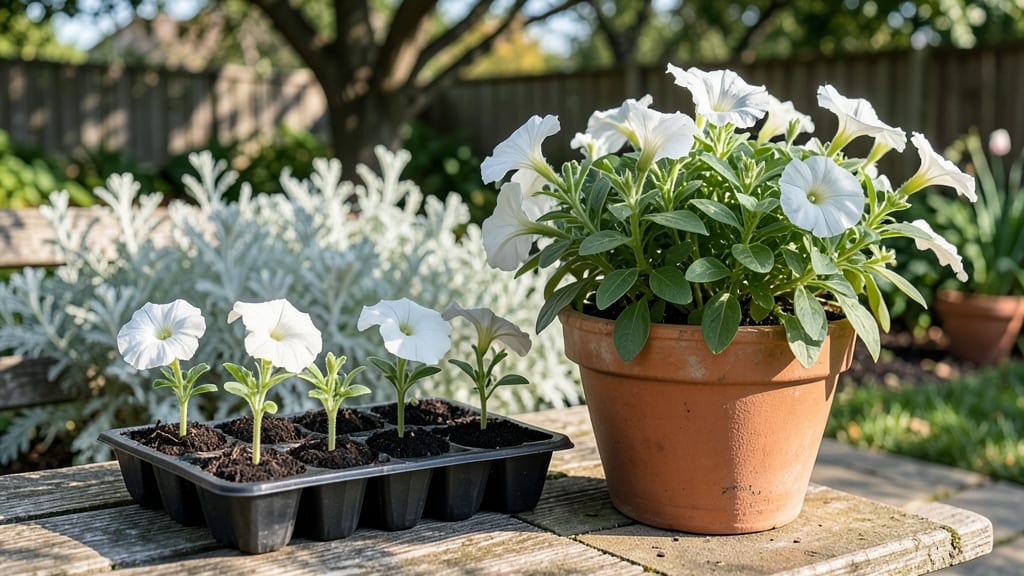
Growing white petunia seeds from scratch gives you summer blooms that rival nursery plants—but the early weeks are where most gardeners stumble. 🌱 I’ve started hundreds of petunia seeds, and the secret to strong, cold-stressed roots isn’t complicated: it’s patience, the right soil mix, and a little heat trick that makes all the difference.
Start seeds indoors 6-8 weeks before your last frost, using a seed-starting mix that’s light and airy—no garden soil here. Keep them warm (around 70°F) and moist, but never soggy, until those first tiny sprouts appear.
That’s when the real work begins: hardening off those delicate seedlings so they’re ready to handle the great outdoors without wilting.
📚 In This Guide
- What you need
- Instructions
- Tips and common mistakes
- Wrapping up and next steps
What you need
- ● White petunia seeds – 1 packet (typically 50-100 seeds). Look for Petunia × hybrida varieties like 'White Dream' or 'Crystal White' for reliable blooms.
- ● Seed-starting trays or small pots – 2-4 inch pots or cell packs (biodegradable or plastic). Quantity: 1 tray (200+ cells) or 12-24 small pots.
- ● Seed-starting mix – 1 bag (1-2 cubic feet). Use a sterile, well-draining mix (e.g., 50% peat moss + 50% perlite/vermiculite). Avoid garden soil!
- ● Grow lights or sunny windowsill – A full-spectrum LED grow light (12-16 hours/day) or a south-facing window (6+ hours of sunlight).
- ○ Misting bottle or spray nozzle – For gentle watering. Optional: A humidity dome (store-bought or DIY with plastic wrap).
- ○ Heat mat (optional but helpful) – A seedling heat mat (70-75°F) to speed up germination. Alternative: Place trays on a warm appliance (like a fridge) for indirect heat.
- ● Tweezers or toothpick – For carefully placing tiny seeds.
- ● Fertilizer (balanced or starter) – A water-soluble 10-10-10 or 5-5-5 fertilizer (diluted to half-strength). First feeding: 2-3 weeks after germination.
- ● Transplanting tools – Small hand trowel or spoon for moving seedlings.
- ● Labels & markers – To track varieties and planting dates.
- ○ Cold-stress kit (for hardiness) – Optional: A small fridge (35-40°F) or cold frame for 2-3 days before transplanting to toughen roots.
Step-by-step instructions for growing white petunias from seeds
Here's how I transform tiny white petunia seeds into vibrant summer blooms using cold stress.
🌱 Step 1: Start Seeds Indoors with Proper Timing
White petunias need a long growing season, so I start seeds indoors 8-10 weeks before the last frost date. Use biodegradable seedling pots (2-3 inches deep) filled with sterile seed-starting mix—never garden soil. The mix should feel like a damp sponge when squeezed.
Plant 2-3 seeds per cell just below the soil surface (about ⅛ inch deep). Cover lightly with more mix and mist gently with water. Place pots in a seedling heat mat set to 70-75°F—this warmth encourages faster germination. You'll see tiny sprouts in 7-14 days, but don't be surprised if it takes longer in cooler homes.
💧 Step 2: Apply Cold Stress for Stronger Plants
Once seedlings have 2-3 true leaves, it's time for cold stress. Move them to a refrigerator (not freezer!) for 10-14 days. Place pots in a plastic bag with a tiny hole for airflow—this mimics winter conditions and toughens the roots.
Check daily for moisture. The soil should stay slightly damp but not soggy. After the cold treatment, return pots to room temperature (65-70°F) and place under grow lights for 14-16 hours daily. You'll notice slower growth at first—that's normal. The cold stress delays flowering until summer heat arrives.
☀️ Step 3: Harden Off and Transplant Outdoors
Two weeks before the last frost, begin hardening off seedlings. Start with 1 hour outside in partial shade, then gradually increase exposure over 7-10 days. By the time you transplant, they should tolerate full sun without wilting.
Choose a bright, sheltered spot with well-draining soil. Space plants 12-18 inches apart—petunias spread quickly. Water deeply at the base to encourage root growth. Avoid overhead watering, which can spread disease. You'll know they're established when new leaves appear 5-7 days after transplanting.
✂️ Step 4: Maintain for Continuous Blooms
Deadhead spent flowers weekly to encourage more blooms. Pinch back leggy stems to promote bushier growth. Feed every 2-3 weeks with a balanced liquid fertilizer (10-10-10) diluted to half strength. Petunias love moisture, so water early in the morning to reduce fungal risks.
Watch for aphids or whiteflies—spray with neem oil if needed. In fall, cut back plants by half to rejuvenate growth. With proper care, your white petunias will reward you with months of fragrant blooms.
Tips & tricks for perfect white petunia blooms
These little tricks will help you coax the most vibrant summer blooms from your white petunia seeds.
Timing is Everything: That 8-10 week indoor start time seems long, but it's critical for petunias to establish strong roots before summer heat arrives. Mark your calendar based on your last frost date—this ensures your seedlings won't be rushed when transplanting. I always check my local frost forecast and count backward to set my schedule, which prevents last-minute panic planting.
Cold Stress Secret: The refrigerator treatment might seem counterintuitive, but those 10-14 days in cold are what create hardy plants. I've found that wrapping pots in plastic bags with tiny holes creates the perfect microclimate—humidity stays high while allowing airflow. This mimics winter conditions and actually strengthens the seedlings' immune systems against summer pests.
Lighting Matters: Those 14-16 hours of grow light are non-negotiable for petunias. I use LED grow lights because they're energy-efficient and produce less heat than incandescent bulbs. Position lights about 4-6 inches above seedlings and adjust the height as they grow—too far away and they'll stretch leggy, too close and they'll burn. A simple timer makes this effortless.
Transplanting Tip: When you're ready to move seedlings outdoors, I recommend doing it on a cloudy day or in the evening. This gives them time to acclimate without the stress of full sun. Watch for those new leaves appearing 5-7 days after transplanting—they're your sign that roots have established and the plant is thriving.
Pro Tips for White Petunia Seeds
- These little tricks will help you coax the most vibrant summer blooms from your white petunia seeds.
- Timing is Everything: That 8-10 week indoor start time seems long, but it's critical for petunias to establish strong roots before summer heat arrives.
- Cold Stress Secret: The refrigerator treatment might seem counterintuitive, but those 10-14 days in cold are what create hardy plants.
Frequently asked questions
Got questions about growing white petunias from seeds? You’re not alone!
Here are some of the most common queries—plus quick, no-fluff answers to help you nail that dreamy summer bloom.
How long does it take for white petunia seeds to germinate?
White petunia seeds typically germinate in 14–21 days when kept in warm (70–75°F), moist soil. Use a heat mat or place them near a sunny window to speed things up. Patience is key—some seeds may take longer, especially if soil temps dip below 60°F. Pro tip: Keep the soil consistently damp (not soggy) to avoid mold!
When is the best time to plant white petunia seeds indoors?
Start seeds 8–10 weeks before your last frost date for summer blooms. For most U.S. zones, this means March or early April. If you’re in a warmer climate (zones 9–11), you can direct-sow seeds in early spring. Use seed-starting trays with drainage holes for best results.
Why aren’t my white petunia seeds sprouting? Troubleshooting tips!
Seeds might fail to sprout due to cold soil, poor light, or old seeds. Check these fixes:
- Temperature: Use a heat mat if your home stays cool.
- Light: Provide 14–16 hours of grow lights daily.
- Moisture: Mist seeds lightly (don’t drown them!).
- Seed viability: Test with a seed viability kit or buy fresh seeds (store-bought last 1–2 years).
If all else fails, try scarifying seeds (lightly nicking the shell) to break dormancy.
Can I grow white petunias from seeds in containers?
Petunias thrive in containers 6+ inches deep with drainage holes. Use a well-draining potting mix and place pots in full sun (6+ hours daily). For small spaces, try hanging baskets—just ensure they’re large enough for root growth. Pro tip: Deadhead spent blooms to encourage more flowers!
What’s a good alternative if my white petunia seeds don’t work?
If germination fails, try transplanting nursery starts instead. Look for healthy, compact seedlings with no yellow leaves. For a similar look, consider:
- White calibrachoa (tiny flowers, trailing habit).
- White lobelia (great for containers).
- White vinca (drought-tolerant, long blooms).
All three offer low-maintenance, high-impact color!
Wrapping up and next steps
Growing white petunia seeds may start with a little patience—especially when it comes to their cold-stressed roots—but the reward is a garden bursting with fragrant, snow-white blooms that’ll steal the show all summer long! 🌸 With the right materials, a dash of cold treatment, and consistent care, you’re well on your way to transforming your outdoor space into a dreamy, petunia-filled paradise.
Ready to dive in? Grab those seeds, follow the steps, and soon, you’ll be pinching back those lush stems like a pro. Happy planting—your future blooms are waiting! 🌱