
Transplanting
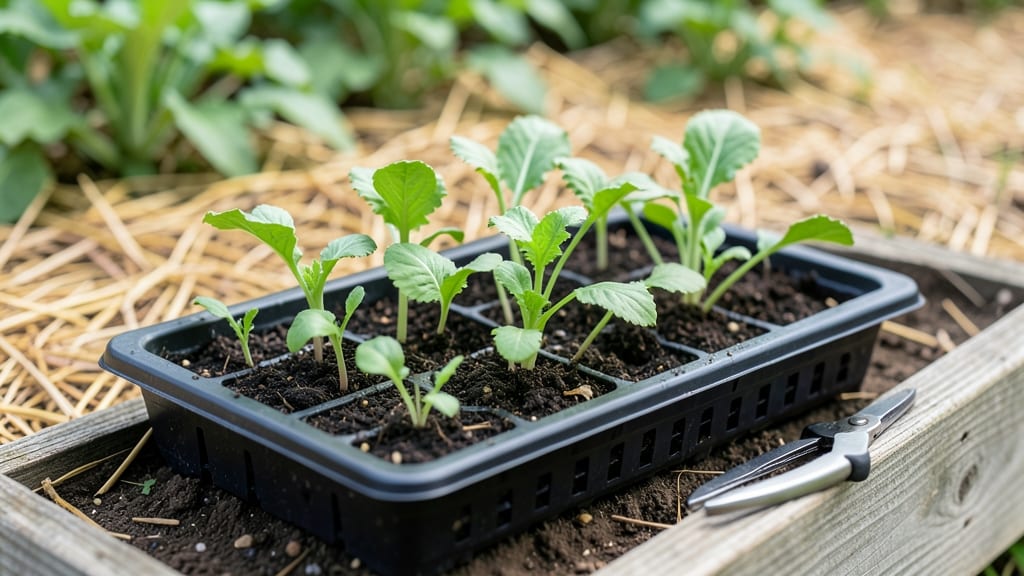
Thinning seedlings means removing excess plants to create space that allows remaining seedlings to grow stronger by accessing more sunlight, nutrients, and moisture.
Thinning seedlings isn't about eliminating plants—it's about giving them room to breathe. 🌱 When seedlings are too close, they compete fiercely for resources, leading to weak stems, pale leaves, and stunted growth. I've seen firsthand how crowded seedlings can become leggy and spindly, struggling to reach sunlight.
The key is timing: thin when seedlings have at least two true leaves but before they get too tall, as this reduces transplant shock. For leafy greens like lettuce, aim for 1-2 inches between plants, while herbs like basil need 6-12 inches of space to thrive.
What many gardeners overlook is how thinning reduces disease risk. Crowded plants trap moisture, creating the perfect environment for fungal infections. 💫 By spacing seedlings properly, you improve air circulation and let the soil dry faster between waterings.
Plus, the act of thinning itself can be repurposed—those extra seedlings make great transplants for containers or gifts to neighbors!
💡 In This Article
- Why Thinning Seedlings Boosts Plant Health
- Step-by-Step Guide to Thinning Seedlings Safely
Why thinning seedlings boosts plant health
At its core, thinning seedlings addresses the fundamental challenge of resource competition. When seedlings are packed too closely, their roots tangle underground, fighting for the same nutrients and water in the soil. This competition triggers a survival response where seedlings stretch upward in search of sunlight—a phenomenon called etiolation.
You'll notice this as long, weak stems with sparse leaves, often pale or yellowish in color. Studies show that crowded seedlings can reduce their growth rate by up to 40% compared to properly spaced ones, as they divert energy to competing rather than growing strong roots and leaves.
The real magic happens above ground where photosynthesis takes center stage. Each seedling needs access to at least 4-6 hours of direct sunlight daily to produce enough energy for healthy growth.
In crowded conditions, only the seedlings at the edges get adequate light, while those in the center become shaded and struggle. This light deprivation causes leaves to develop poorly, reducing their ability to convert sunlight into energy through chlorophyll.
For example, tomato seedlings spaced 18-24 inches apart produce 30% more fruit than those grown in crowded trays, thanks to better light exposure and air circulation.
Nutrient availability plays a critical role too. The soil contains finite amounts of essential minerals like nitrogen, phosphorus, and potassium. When too many seedlings share the same root zone, they deplete these nutrients faster than the soil can replenish them.
This leads to nutrient deficiencies, often visible as yellowing between leaf veins (a classic sign of nitrogen deficiency) or purple stems (indicating phosphorus shortage). Proper thinning ensures each plant gets its fair share, allowing roots to explore deeper soil layers where nutrients are more abundant.
Disease prevention is another often-overlooked benefit. Crowded seedlings create a humid microclimate where moisture lingers on leaves, creating ideal conditions for fungal pathogens like damping-off or powdery mildew. These diseases spread rapidly in tight spaces, turning a healthy seedling tray into a breeding ground for infection.
By thinning, you improve air circulation around each plant, allowing foliage to dry faster after watering. This simple act can reduce disease incidence by up to 50% in susceptible crops like brassicas or peppers.
What's fascinating is how thinning affects a plant's hormonal balance. When seedlings sense competition, they produce more ethylene gas, a plant hormone that triggers stress responses like premature flowering or stunted growth.
Proper spacing reduces ethylene buildup, allowing seedlings to focus on vegetative growth instead. This is why thinned seedlings often recover quickly and develop thicker stems within just 3-5 days of the process.
Consider the case of basil seedlings: when grown at 6-inch spacing, they develop robust stems and fragrant leaves, while crowded plants become leggy and produce fewer flavorful leaves.
The same principle applies to vegetables like carrots or beets, where proper thinning ensures straight, tender roots rather than forked or woody ones caused by root competition.