
Lawn
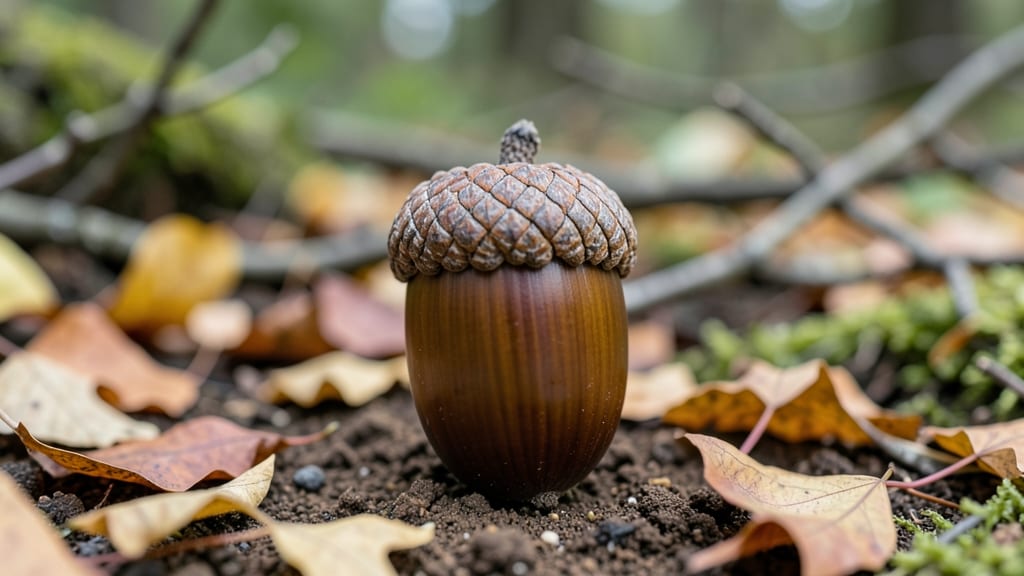
An oak tree seed, called an acorn, typically looks like a small, oval nut with a rounded cap at the top and a pointed base, often encased in a scaly or smooth cup-like structure called the cupule. Their size ranges from pea-sized to over an inch long, depending on the oak species.
Oak tree seeds, or acorns, are instantly recognizable by their distinctive shape and protective cupule. 🌰 The cupule acts like a natural shield, safeguarding the seed inside while it develops.
Many people confuse acorns with other nuts, but their unique combination of a rounded top, pointed base, and scaly cupule sets them apart.
White oaks tend to have smoother, less bitter-tasting acorns compared to red oaks, which often have more pronounced ridges and a stronger flavor—though both are essential for wildlife and forest ecosystems.
When identifying acorns, always check the cupule's texture and the nut's size. White oak acorns usually have a flatter cap and a sweeter taste, while red oak acorns are more pointed and bitter.
The cupule's shape can also vary—some are deeply lobed, while others are more rounded. This diversity helps ecologists and gardeners distinguish between species, especially when planning for tree growth or wildlife support.
💡 In This Article
- Acorn Anatomy: Key Features of Oak Tree Seeds
- How to Identify Acorns in the Wild or Garden
Acorn anatomy: key features of oak tree seeds
The acorn's iconic shape begins with its cupule, a protective structure that resembles a tiny, scaly cup. This cupule typically measures 0.5 to 1.5 inches in diameter and encases the nut snugly, acting like a natural helmet to shield the seed from predators and harsh weather.
The cupule's texture varies drastically—some species like the white oak produce smooth, velvety cupules, while others, such as the red oak, develop deeply ridged or spiky versions that resemble miniature pinecones. 🌱
The nut itself is an oval or egg-shaped seed with a rounded cap (hilum) at the top and a pointed base. This cap is where the seed attaches to the parent tree, and it often bears a small scar marking the connection point.
Inside the hard, glossy shell lies the embryo, which contains the genetic blueprint for a future oak tree.
White oak acorns tend to have a smoother, less bitter shell compared to red oak acorns, which are often more elongated and bitter-tasting—a natural defense mechanism to deter animals from eating them before they mature.
The size of acorns can vary dramatically depending on the oak species. For instance, the bur oak produces some of the largest acorns, reaching up to 2 inches long, while the dwarf chinkapin oak yields tiny acorns barely 0.3 inches in length.
This variation plays a crucial role in how wildlife interacts with them—larger acorns are often favored by squirrels, while smaller ones may be consumed by birds or insects.
The cupule's shape also influences how the acorn disperses, with some species relying on wind or animals to carry them away from the parent tree.
One fascinating detail is how the cupule's structure changes as the acorn matures. Young cupules start off green and soft, gradually hardening and darkening to a brown or grayish hue as they dry out. This transformation is essential for protecting the seed during its critical development phase.
Additionally, the cupule's ridges or scales can trap moisture, helping to regulate the seed's hydration levels—a clever adaptation for surviving unpredictable weather conditions. 💧
Understanding these anatomical features is key to distinguishing between oak species. For example, white oak acorns have a flatter cap and a sweeter taste, while red oak acorns are more pointed and bitter.
The cupule's shape can also provide clues—some species, like the live oak, have cupules that remain attached to the acorn even after it falls, while others, like the willow oak, develop cupules that split open more easily.
These differences are not just academic; they influence how acorns are used in gardening, wildlife management, and even culinary traditions.
For those curious about the science behind acorn anatomy, the cupule's role extends beyond protection. It also helps regulate the seed's exposure to light and temperature, ensuring optimal conditions for germination.
The hard shell of the acorn itself is a marvel of engineering—it balances rigidity with flexibility, allowing the seed to withstand physical stress while still permitting the necessary exchange of gases. This dual functionality is what makes acorns such resilient and adaptable seeds in forest ecosystems. 🌳