
Lawn
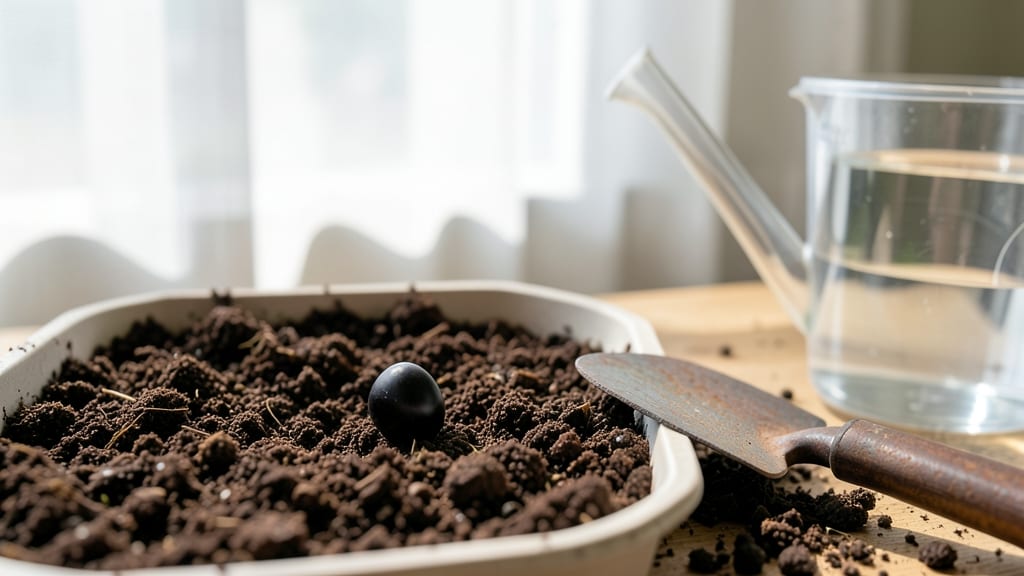
Cabbage seeds look like tiny, teardrop-shaped ovals that are flattened and measure about 1-2 millimeters in length, featuring a pale yellowish-brown or tan color with a smooth, slightly glossy texture. Fresh seeds often have a faint ridge along one side.
A cabbage seed's distinct shape and size help gardeners tell them apart from other brassica seeds like broccoli or kale. 🌱 These seeds are so small they're often mistaken for specks of dust, but their subtle ridge and glossy sheen make them stand out under close inspection.
The color can vary slightly depending on moisture levels—drier seeds may appear more golden, while freshly harvested ones lean toward a softer tan. I always recommend examining seeds in natural light or with a magnifying glass to spot these details clearly, especially when distinguishing them from similar-looking varieties.
When comparing cabbage seeds to other brassica seeds, their flattened teardrop shape is the key identifier. For example, broccoli seeds tend to be more rounded, while kale seeds often appear slightly larger and rougher.
The smooth surface of cabbage seeds also helps differentiate them from seeds with textured or pitted exteriors. Understanding these differences is crucial for gardeners who want to ensure they're planting the right variety for their crops.
💡 In This Article
- Identifying Cabbage Seeds by Shape and Color
- Where to Find and Store Cabbage Seeds for Planting
Identifying cabbage seeds by shape and color
Cabbage seeds are microscopic marvels of nature's efficiency, designed to maximize surface area while minimizing space. Their teardrop shape—technically called "obovoid"—isn't random; this form helps them roll away from the parent plant when moisture causes them to swell slightly.
Under a 10x magnifier, you'll see their 1-2 millimeter length becomes obvious, though they feel nearly weightless when held between fingers. The faint ridge along one side serves as a natural stress line, preventing cracks when the seed absorbs water during germination.
The color spectrum of cabbage seeds reveals their hydration status. Freshly harvested seeds display a soft tan hue due to their 12-15% moisture content, while dried seeds for storage turn to a more golden yellow as moisture drops below 5%.
This color shift occurs because the seed's outer layer—called the testa—contains flavonoids that react to dehydration. For comparison, broccoli seeds maintain a more uniform brown color, while kale seeds often show darker speckling.
The glossy sheen comes from a waxy cuticle that reduces water loss, making cabbage seeds appear almost oily when viewed at certain angles.
Texture plays a crucial role in identification too. Cabbage seeds feel remarkably smooth to the touch—almost silky—thanks to their microscopic papillae (tiny bumps) that create light refraction. When you rub them between fingers, they create a faint whispering sound due to their low friction coefficient.
This smoothness helps them pass through soil particles more easily during natural dispersal. In contrast, mustard seeds (another brassica) have a slightly rougher surface that can be felt with careful handling. The glossiness also makes them more reflective under sunlight, creating tiny sparkles when scattered on dark soil.
Moisture dramatically alters cabbage seeds' appearance. When exposed to humidity above 60%, they can swell up to 30% in volume within hours, making them appear plump and slightly translucent. This swelling triggers the ridge to become more pronounced as the seed's internal pressure increases.
For gardeners, this means storing seeds in airtight containers with silica gel packets prevents premature swelling. The opposite occurs in dry conditions—seeds shrink slightly and develop a matte finish as their protective coatings harden.
This moisture sensitivity explains why seeds harvested in rainy seasons often show more variation in color and shape.
Understanding these visual cues helps distinguish cabbage seeds from common lookalikes. For instance, radish seeds appear similarly sized but have a more pronounced ridge and often show black and white mottling. Turnip seeds, while similar in shape, typically have a slightly rougher texture and duller finish.
The key identifier remains that smooth, glossy teardrop shape with its subtle ridge—nature's way of ensuring these tiny powerhouses get planted just right. 🌱