
Plants
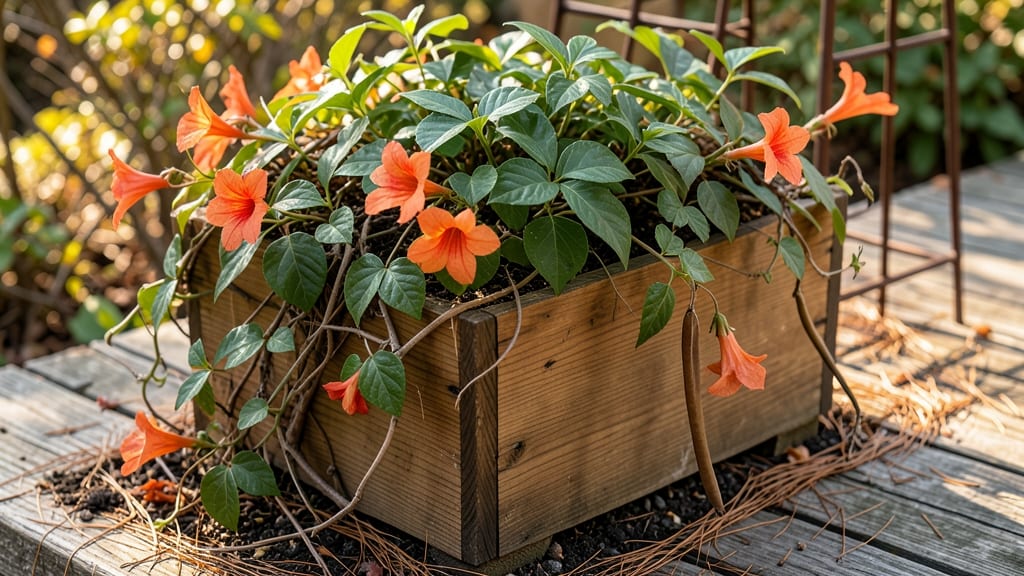
Trumpet vine seeds look like tiny, flattened teardrop shapes—smooth, glossy, and dark brown to black—measuring about 1/4 inch long. They often appear in clusters and have a distinctive elongated oval form with a slightly tapered end, making them easy to identify among garden debris.
These distinctive seeds develop from the trumpet vine's bright orange flowers and stand out against other garden debris due to their unique shape and sheen. 🌿 Unlike many vine seeds that are round or irregular, trumpet vine seeds have a consistent teardrop form that helps gardeners distinguish them from invasive species like morning glory.
The glossy texture comes from a natural waxy coating that protects them during germination.
When harvesting, look for seed pods that have turned brown and split open naturally—this usually happens in late summer or early fall. The seeds inside will be fully mature and ready for collection.
I always recommend storing them in a cool, dry place until spring planting, as their viability remains high for up to two years when stored properly.
💡 In This Article
- Identifying Trumpet Vine Seeds by Shape and Texture
- Where to Find Trumpet Vine Seeds in the Garden
Identifying trumpet vine seeds by shape and texture
The teardrop shape of trumpet vine seeds isn't random—it's an evolutionary adaptation for efficient wind dispersal. These seeds develop from the vine's distinctive orange trumpet-shaped flowers, which mature into elongated seed pods.
The flattened teardrop form creates a larger surface area relative to weight, allowing them to catch air currents more effectively. 🌬️ This aerodynamic design helps them travel farther from the parent plant, increasing the vine's chances of spreading to new locations.
The glossy, almost waxy surface serves a dual purpose: it protects the seed from moisture loss and gives it a reflective quality that makes it stand out against garden debris. Under magnification, you'll notice tiny ridges along the edges that provide structural support without adding bulk.
Fresh seeds are typically dark brown, but they darken to nearly black as they mature—this color change is caused by increased melanin production, which provides UV protection during germination. Compared to morning glory seeds, trumpet vine seeds are more elongated and lack the fuzzy texture common in morning glory varieties.
Size variation occurs based on maturity and growing conditions. While most measure between 1/4 inch (6mm) to 3/8 inch (9mm) in length, seeds from vines grown in nutrient-rich soil or full sun may reach 1/2 inch (12mm).
The width typically stays consistent at about 1/8 inch (3mm), creating that signature teardrop proportion. What makes them truly unique is how they cluster—often 3-5 seeds together in a compact group, attached to a thin membrane that eventually dissolves as they mature.
Texture plays a crucial role in identification. Unlike many invasive vine seeds that feel rough or fibrous, trumpet vine seeds have a remarkably smooth surface that feels almost polished between your fingers.
This smoothness comes from a natural cutin layer that prevents water absorption, allowing seeds to remain viable even in damp conditions. 🌧️ The tapered end is particularly diagnostic—it's not just rounded but has a subtle point that helps orient the seed for optimal germination when it lands.
Color can vary slightly based on soil pH—seeds from alkaline soils tend to be slightly lighter brown, while those from acidic soils develop the classic black hue. This variation is subtle but noticeable when comparing seeds from different garden beds.
The glossiness remains consistent regardless of color, making these seeds instantly recognizable even when mixed with other plant debris.
What most gardeners don't realize is that the seed's internal structure also affects identification. When you hold a seed up to light, you can sometimes see the developing embryo through the translucent edges—a telltale sign of viability.
This internal visibility is more pronounced in trumpet vine seeds than in many other vine species, giving them a distinctive "window" effect when examined closely.