
Planting
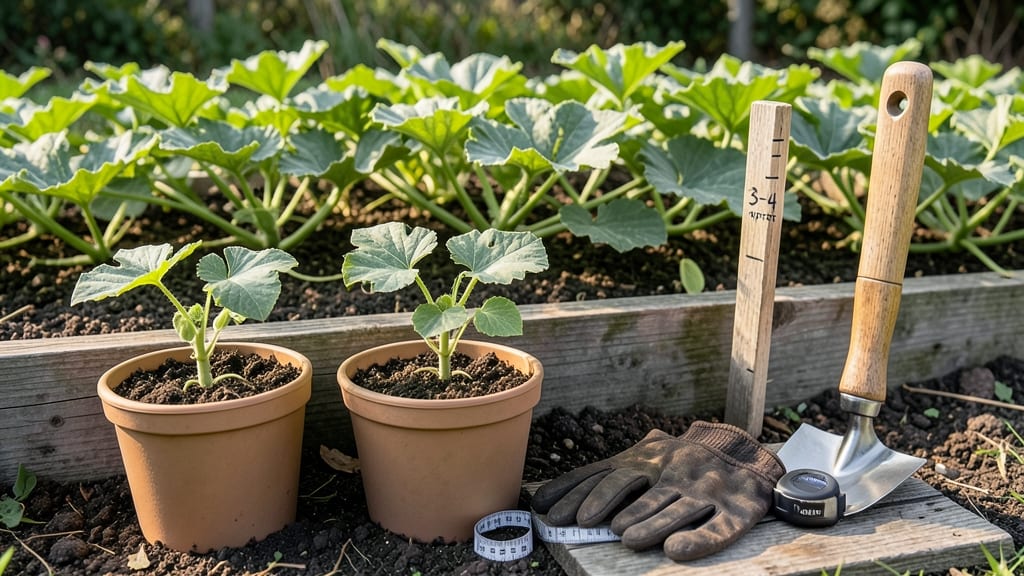
Proper watermelon seed spacing determines whether you'll be hauling in 50-pound melons or fighting over scraps with the squirrels. 🌱 I learned this the hard way—my first year's crowded vines produced tiny, bitter melons that barely ripened.
The right spacing isn't just about giving roots room; it's about airflow, sunlight penetration, and preventing disease that turns your garden into a science experiment gone wrong.
Start with 18-24 inches between plants in rows spaced 5-7 feet apart. This might seem excessive, but watermelons spread like lazy sunbathers—vines can stretch 6-10 feet in all directions. Amend your soil with 2-3 inches of compost before planting, and avoid fresh manure (it burns roots and attracts pests).
The key is balance: too close, and you'll get gnarly, undersized melons; too far, and you waste space on a plant that thrives on sprawl.
What you'll end up with is vines that climb confidently, leaves that stay disease-free, and melons that grow to their full potential—10-20 pounds each, with that signature sweetness only proper spacing unlocks.
The first harvests arrive in 70-90 days, but the real payoff is the consistent quality you won't get from crowded plants. Even in small spaces, trellising can reclaim vertical room while keeping vines properly spaced.
For cooler climates, wait until soil reaches 70°F before planting—cold soil stunts root growth. In hot zones, use black plastic mulch to warm the soil faster and retain moisture.
The biggest mistake? Skipping the spacing guidelines because "it looks crowded." Trust the numbers: they're based on decades of what actually works, not what looks pretty in a catalog.
📚 In This Guide
- What you need
- Instructions
- Tips and common mistakes
- Wrapping up and next steps
What you need
- ● Watermelon seeds – Choose heirloom or hybrid varieties based on your climate. Aim for 2-3 seeds per hill (more on spacing later!)
- ● Well-draining soil – Test your soil’s pH (ideal range: 6.0–6.8) and amend with compost if needed.
- ● Fertilizer – A balanced 10-10-10 NPK or organic options like composted manure (follow package instructions).
- ● Mulch – Straw, black plastic, or grass clippings to retain moisture and suppress weeds.
- ● Watering can or hose – A gentle spray nozzle or drip irrigation system works best.
- ● Garden trowel or transplanting tool – For digging holes and transplanting seedlings.
- ● Measuring tape or ruler – To ensure precise watermelon seed spacing (typically 3–6 feet apart in rows).
- ● Gloves – Protect your hands from thorns and dirt.
- ○ Stakes or trellis (optional) – For vine varieties like ‘Sugar Baby’ to save space.
- ● Warm soil – Wait until soil temps reach 70°F+ (use a soil thermometer if unsure).
- ● Sunny location – Watermelons need 6–10 hours of direct sunlight daily.
- ● Last frost date – Plant after all frost risk has passed (usually 2–3 weeks after).
Step-by-Step guide to proper watermelon seed spacing
Here's the method I rely on for consistent, vigorous vines and melons that reach their full potential.
🌱 Step 1: Understand Your Variety's Space Requirements
Watermelon varieties fall into three spacing categories: small (like 'Sugar Baby'), medium (like 'Crimson Sweet'), and large (like 'Moon and Stars'). Small types need 3-4 feet between plants, medium types 4-5 feet, and large types 5-6 feet in all directions. Check your seed packet—this determines your entire planting layout.
I always sketch a quick grid on paper before planting. For a 4-plant row, small varieties fit perfectly in a 12-foot square (3 feet apart), while large types require a 20-foot square. This prevents overcrowding, which leads to powdery mildew and stunted fruit.
🌱 Step 2: Prepare the Planting Grid
Mark your planting spots using wooden stakes or garden flags spaced according to your variety's needs. For example, if planting 'Sugar Baby' watermelons, place flags every 3 feet in both directions. This creates a clear visual guide that prevents accidental overcrowding.
Use a measuring tape to verify each spacing. I've learned the hard way that eyeballing leads to plants too close together—you'll see vines competing for sunlight and fruit developing unevenly. The goal is to give each plant enough room for its mature spread.
🌿 Step 3: Plant Seeds at Correct Depth and Spacing
Plant 2-3 seeds per hole at a depth of 1 inch—this ensures at least one strong seedling emerges. Space holes according to your grid, but here's the trick: plant seeds in a smaller triangle (about 1 foot apart) within each planting spot. After germination, thin to the strongest seedling.
This triangular approach gives you flexibility to thin later. You'll know which seedling to keep by 7-10 days when the strongest one shows 2 true leaves and outpaces the others. The extra seedlings act as insurance against poor germination.
☀️ Step 4: Maintain Spacing as Vines Develop
Once seedlings emerge, watch for first true leaves—this signals it's time to thin. Use clean scissors to cut unwanted seedlings at soil level rather than pulling, which disturbs roots. Leave the strongest plant in each spot, even if it's slightly off-center from your grid.
As vines grow, you'll see why spacing matters. Properly spaced plants develop stronger stems, more leaves, and better fruit set. Crowded plants produce smaller melons and are more prone to disease. I often stake the main vines at 3-4 feet tall to keep them upright and prevent sprawling into neighboring plants.
✂️ Step 5: Adjust for Trellising (Optional but Recommended)
If you choose to trellis watermelons (which saves space and improves air circulation), reduce horizontal spacing by 25%. For example, 'Crimson Sweet' would then need 3-4 feet between plants instead of 4-5 feet. Install trellises early—wait until vines reach 6 inches tall before guiding them upward.
This method works best with smaller varieties. Large watermelons need full ground space to develop properly. You'll notice trellised plants produce fruit closer to the vine's base, making harvesting easier. Just be prepared to support 10-15 pound melons**—use sturdy netting or a heavy-duty trellis system.
Tips & tricks for perfect watermelon plant spacing
Took me years of trial and error to master these spacing secrets—your melons will thank you.
Variety-Specific Planning: The 3-4 foot spacing for small varieties like 'Sugar Baby' isn't just arbitrary—it accounts for their mature vine spread and fruit size. Large varieties like 'Moon and Stars' need that extra 5-6 feet because their vines can sprawl up to 10 feet long. I always verify spacing by checking the seed packet first—this prevents the heartbreak of stunted melons later.
Grid Visualization Technique: That 12-foot square for small varieties in Step 1 isn't just a suggestion—it's a proven layout. Draw it out on graph paper first to visualize how many plants will fit in your space. For example, a 10×10 foot bed can fit 9 small watermelons in a 3×3 grid, but only 4 large ones in a 2×2 arrangement. This spatial planning prevents the "I didn't realize how much room they'd need" mistake I made my first year.
Thinning Strategy: The 7-10 day window for thinning in Step 3 is critical—this is when you can clearly see which seedling is strongest. I've found that using clean scissors rather than pulling prevents root damage. Pro tip: Thin in the morning when plants are hydrated, and always keep the most vigorous seedling in the center of your triangular planting pattern. This central position gives it optimal access to sunlight as it grows.
Trellising Adjustments: That 25% spacing reduction for trellised plants in Step 5 works because vertical growth eliminates the need for horizontal sprawl. However, I've learned the hard way that large varieties still need their full spacing even when trellised—their fruit weight requires that ground support. For trellising, I recommend waiting until vines reach 6 inches tall before guiding them upward, as this prevents stem damage from premature bending.
Pro Tips for Watermelon Seed Spacing
- Took me years of trial and error to master these spacing secrets—your melons will thank you.
- Variety-Specific Planning: The 3-4 foot spacing for small varieties like 'Sugar Baby' isn't just arbitrary—it accounts for their mature vine spread and fruit size.
- Grid Visualization Technique: That 12-foot square for small varieties in Step 1 isn't just a suggestion—it's a proven layout.
Frequently asked questions
Got questions about watermelon seed spacing?
You’re not alone! Here are some of the most common concerns—and their straightforward answers—to help you plant like a pro.
What’s the ideal distance between watermelon seeds?
The gold standard is 12 to 18 inches apart in rows, with 5 to 6 feet between rows. This gives vines room to sprawl (or climb if trellised) while preventing overcrowding. For hill planting, space seeds 6 to 8 inches apart in a circle—just thin to the strongest seedling later!
Can I plant watermelon seeds too close together?
Absolutely—but expect trade-offs! Crowded seeds may yield smaller fruits or vines competing for nutrients. You’ll also face higher disease risk (like powdery mildew) from poor airflow. If you’re short on space, opt for bush varieties (like ‘Sugar Baby’) and space them 12 inches apart.
How soon after germination should I thin seedlings?
Thin seedlings 2 to 3 weeks after germination (when they’re 2–3 inches tall). Gently snip weaker sprouts at soil level with scissors—no need to pull. Leave the strongest plant per hill or row. Pro tip: Do this on a cloudy day to reduce stress on remaining seedlings.
Does spacing change if I’m growing watermelons in containers?
Yes! For containers, use one seed per 5-gallon pot (or larger) with 18–24 inches of space between pots. Dwarf varieties (like ‘Tiny Tim’) can handle 10–12 inches between plants in 3-gallon pots. Just ensure pots have drainage holes—watermelons hate soggy roots!
My watermelon vines are sprawling everywhere—did I space them wrong?
Not necessarily! Watermelons are heavy vines and need space, but if they’re taking over, it might be time to prune or trellis them. For sprawlers, train vines along a fence or use a cattle panel trellis to save space. If you’re still struggling, check your variety—some (like ‘Crimson Sweet’) need more room than compact types.
Wrapping up and next steps
Perfecting your watermelon seed spacing is the secret ingredient to a thriving garden and a harvest bursting with juicy, sweet fruit! 🌱 By following the right techniques—whether you’re planting in rows, hills, or containers—you’ll set the stage for healthy vines, fewer pests, and bigger melons.
Now that you’re armed with expert tips, it’s time to roll up your sleeves and get planting!
Ready to take the next step? Start small—try a few hills or a single row to test your spacing, then expand as you gain confidence. Before you know it, you’ll be sharing homegrown watermelons with neighbors (and maybe even winning a local gardening contest!). Happy growing! 🍉✨