
Pests
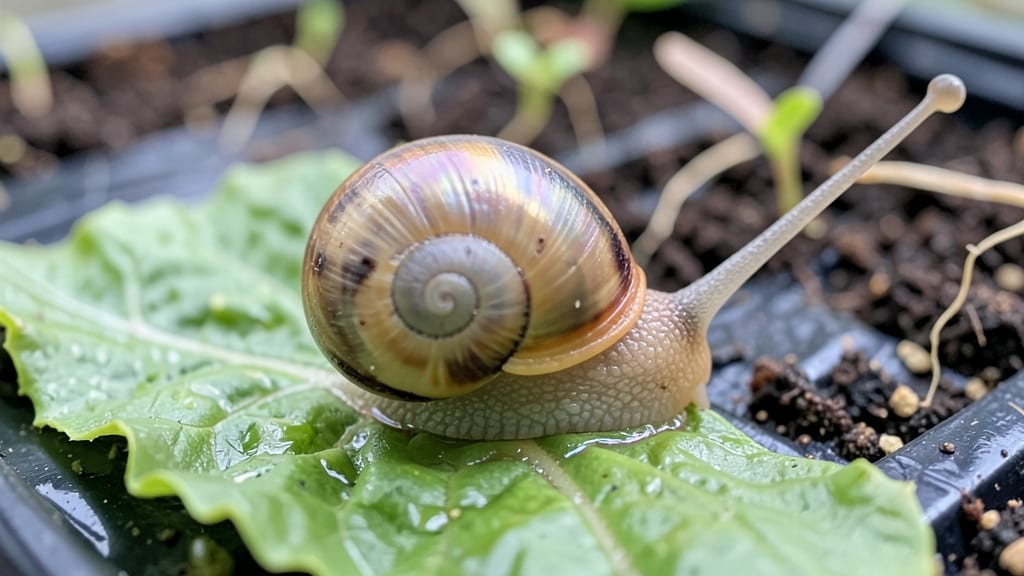
Starting seeds only to watch snails devour them before sprouts even emerge is the gardener’s worst nightmare. 🐌 I’ve lost entire seed trays to these slimy raiders—until I discovered the right barriers and deterrents that actually work without harming beneficial insects or your soil.
The key is acting before the first nibble, because once they find your seeds, they’ll keep coming back. You don’t need fancy (or toxic) solutions—just a few simple barriers like crushed eggshells, copper tape, or even a floating row cover draped loosely over trays.
I swear by the diatomaceous earth trick around containers: it’s organic, non-toxic, and makes snails think twice before they crawl over. The best part? These methods work for both indoor starts and outdoor setups, so you’re covered no matter where your seeds begin their journey.
By the time your seedlings are big enough to fend for themselves, you’ll have already broken the snail cycle in your garden. No more waking up to half-eaten seedling leaves or mysterious holes in your trays.
The peace of mind alone makes the setup worth it—especially when those first true leaves finally push through unscathed. This approach works for any seed type, from delicate lettuce to hardy tomatoes, and scales from a single windowsill tray to a greenhouse full of starts. The secret? Consistency.
Snails are persistent, so you’ve got to be too—with these tricks, you’ll stay one step ahead every season.
The Real Culprits Behind Seed Snails
If your seedlings are mysteriously disappearing or showing telltale signs of slime trails and ragged edges, snails and slugs are likely the culprits. These slimy pests thrive in moist, shaded environments and have a voracious appetite for young, tender plants.
But why do they target your seed-starting setups so aggressively? Let’s break down the science—and the sneaky habits—behind their destructive behavior.
Snails and slugs are amphibious, meaning they need moisture to survive. Their bodies lack a protective shell (except snails), so they rely on a layer of mucus to stay hydrated.
If your seed-starting trays, pots, or greenhouse floors are perpetually damp—whether from overwatering, poor drainage, or high humidity—you’re essentially rolling out the welcome mat for these pests.
- Why it happens: Soil moisture above 30-40% saturation creates the perfect environment for snail eggs to hatch and adults to thrive. Even a thin film of water on the soil surface is enough to attract them.
- Science in action: Snails detect moisture gradients using specialized sensory organs called osphradia. If your seedlings are in a tray with standing water or condensation, they’ll be the first to arrive.
- Actionable fix:
- Use well-draining seed-starting mixes (avoid peat-heavy blends that retain too much moisture).
- Water only at the base of seedlings—never from above—to prevent soil saturation.
- Elevate trays on drip pans or gravel to improve airflow and reduce humidity at soil level.
In a balanced ecosystem, snails and slugs face predators like birds, frogs, ground beetles, and parasitic nematodes. But in a controlled seed-starting environment—especially indoors or in a greenhouse—these natural checks and balances are often missing. Without predators, snail populations can explode exponentially in just a few weeks.
- Why it happens: Greenhouses and indoor setups lack the biodiversity of a garden. Even outdoor seed-starting areas may be stripped of predators if you’ve used pesticides or disrupted the soil.
- Science in action: Studies show that Carabid beetles (a snail’s natural enemy) reduce slug damage by up to 80% in organic farms. Without them, snails reproduce unchecked—laying 50-100 eggs per week in ideal conditions.
- Actionable fix:
- Introduce beneficial nematodes (Phasmarhabditis hermaphrodita)—microscopic worms that target slugs without harming plants.
- Invite predator-friendly insects by planting dill, fennel, or yarrow nearby (even in pots).
- Avoid broad-spectrum pesticides, which kill both pests and their predators.
Snails and slugs are nocturnal and prefer cool, dark conditions. If your seedlings are tucked away in shaded corners, under dense mulch, or hidden beneath broad-leaved plants, you’ve created the perfect hideout for them. They emerge at night to feed, leaving behind a trail of destruction by dawn.
- Why it happens: Direct sunlight and wind dry out their mucus layer, making them vulnerable. They seek out microclimates where humidity stays high and temperatures are mild (ideal range: 50–75°F).
- Science in action: Research from the University of California found that slug activity increases by 400% in shaded areas compared to sunny spots. Their preferred hiding spots include:
- Under plastic domes or row covers (which trap moisture).
- Beneath mulch or dense ground covers (like ivy or hostas).
- In cracks in greenhouse floors or pots (where they lay eggs).
- Actionable fix:
- Space seedlings 3–4 inches apart to improve airflow and reduce humidity at soil level.
- Use floating row covers during the day to deter snails, then remove them at night for pollination.
- Keep greenhouse floors clean and dry—sweep away debris where snails hide.
Seedlings are like all-you-can-eat buffets for snails and slugs. Their soft stems, tender leaves, and high moisture content make them an irresistible snack. Plus, freshly germinated seeds release volatile organic compounds (VOCs) that snails can detect from up to 2 feet away.
- Why it happens: Snails prefer plants with high nitrogen content (like lettuce, basil, and brassicas), which are common in seed-starting mixes. Even healthy seedlings emit chemical signals that attract them.
- Science in action: A 2018 study in Journal of Chemical Ecology found that slugs are drawn to damaged plant cells, which release sugars and amino acids. Once they taste one seedling, they’ll return night after night.
- Actionable fix:
- Hardening off seedlings before transplanting reduces their appeal—tougher stems are less palatable.
- Avoid over-fertilizing with nitrogen-heavy amendments (like fresh manure).
- Use copper tape barriers around trays—snails can’t cross copper because it disrupts their slime layer.
Understanding these triggers is the first step to outsmarting snails. The good news? With a few strategic tweaks to your seed-starting routine, you can make your setup uninhabitable for these slimy invaders—before they even arrive. 🚫🐌
Quick Fixes for Snail Seed Starting Woes
Snail and slug damage can turn your seed-starting dreams into a soggy mess, but don’t lose hope! Below are practical, step-by-step solutions tailored to common problems—plus prevention tips to keep your seedlings safe.
Whether you’re dealing with chewed leaves, empty seed trays, or mysterious holes, these fixes will help you regain control without harsh chemicals.
Cause: Snails and slugs feast on tender young shoots, leaving jagged edges and missing leaves. Fix It Fast:
- 🔥 Handpick at Night – Snails are most active after dark. Shine a flashlight and crush them (or relocate them far from your garden).
- 🍳 Beer Traps – Bury a shallow dish filled with beer near your seed trays. The yeast attracts them, and they drown. Pro tip: Refresh every 2–3 days for best results.
- 👨🍳 Copper Barrier – Wrap copper tape around containers or lay it in a circle. The mild electric shock snails feel deters them. (Works best on hard surfaces like pots.)
Prevent Future Damage: ✅ Use Egg Cartons – Place empty egg cartons (pointy-side up) around seedlings. Snails hate crawling over the sharp edges. ✅ Diatomaceous Earth (DE) – Sprinkle food-grade DE lightly around seed trays. It’s non-toxic but deadly to snails’ soft bodies. Reapply after rain. ✅ Avoid Overwatering – Snails seek damp areas. Water seedlings in the morning so soil dries faster.
Cause: Snails may eat seeds before they sprout or dig them up entirely. Fix It Fast:
- 🔪 Protect with Row Covers – Use floating row covers (lightweight fabric) to block snails while allowing sunlight and water through.
- 🏺 Clay Pot Barriers – Bury broken clay pots (rim-side down) around seed trays. The jagged edges discourage crawling pests.
- 🌡️ Iron Phosphates (Organic Bait) – Sprinkle Sluggo or similar baits near trays. It’s slow-acting but humane—snails eat it and stop moving.
Prevent Future Loss: ✅ Start Seeds Indoors First – If snails are relentless, grow seedlings in a sunny windowsill or under grow lights before transplanting. ✅ Use Raised Trays – Elevate seed trays on bricks or cinder blocks to reduce ground-level access. ✅ Coffee Grounds – Sprinkle used coffee grounds around trays. The caffeine acts as a natural repellent.
Cause: Snails may burrow to lay eggs or hide during the day. Fix It Fast:
- 🔍 Inspect Daily – Check under trays and pots for eggs (small, jelly-like clusters). Destroy them with a spray of soapy water.
- 🌿 Mulch Alternatives – Skip traditional mulch near seedlings. Instead, use sharp gravel or crushed eggshells—snails avoid rough textures.
- 🎯 Night Patrols – Set out yellow sticky traps (meant for insects) to catch snails overnight.
Prevent Future Burrowing: ✅ Seal Gaps – Ensure seed trays have no drainage holes (or cover them with mesh) if snails are entering from below. ✅ Rotate Plant Locations – Snails remember favorite spots. Move trays every few days to confuse them. ✅ Duck or Chicken Patrol – If you have poultry, let them forage around seed areas during the day. (Supervised only!)
For persistent infestations, combine multiple methods for best results:
- Natural Predators – Attract ground beetles, frogs, or birds with a small water feature or diverse garden ecosystem.
- Citrus or Garlic Spray – Mix peel tea (citrus) or garlic juice with water and spray around trays.
The scent repels snails. 3. Solar-Powered Lights – Snails dislike bright light. Place solar path lights near seed areas to deter nighttime raids.
Remember: The key is consistency. Snails are sneaky but predictable—stay one step ahead with these tactics, and your seedlings will thrive! 🌱🚀
Frequently asked questions
Can I use coffee grounds to protect my seed trays from snails?
Used coffee grounds are a fantastic natural deterrent. The caffeine in them repels snails while also adding nutrients to your soil. Sprinkle a thin layer around your seed trays, but avoid overdoing it—too much can make the soil too acidic. Reapply after rain to maintain effectiveness.
How do I know if snails are eating my seeds before they sprout?
Look for tiny holes in your seed trays or missing seeds—snails often dig them up to eat. You might also spot slime trails or chewed seed coatings. For extra protection, cover trays with floating row covers or use crushed eggshells around the edges. These pests are most active at night, so check your setup in the morning.
Will copper tape work for indoor seed starting?
Yes! Copper tape is effective indoors as well—snails can't cross it because it disrupts their slime layer. Wrap it around the edges of your seed trays or pots, or create a barrier around the base. Just make sure the copper stays clean and dry for best results. It’s a chemical-free solution that works year-round.
What’s the best way to remove snail eggs from seed trays?
Snail eggs look like tiny jelly blobs. Check under trays and in soil crevices daily, especially after rain. Destroy them with soapy water or crush them—never compost them. For prevention, keep your seed-starting area dry and use diatomaceous earth around containers to deter egg-laying. Consistency is key!
Are there any plants that naturally repel snails?
Yes! Planting dill, fennel, or mint nearby can help deter snails. Their strong scents mask the smell of your seedlings. You can also place pots of these herbs around your seed trays. Just be mindful—some, like mint, can spread aggressively.