
Planting
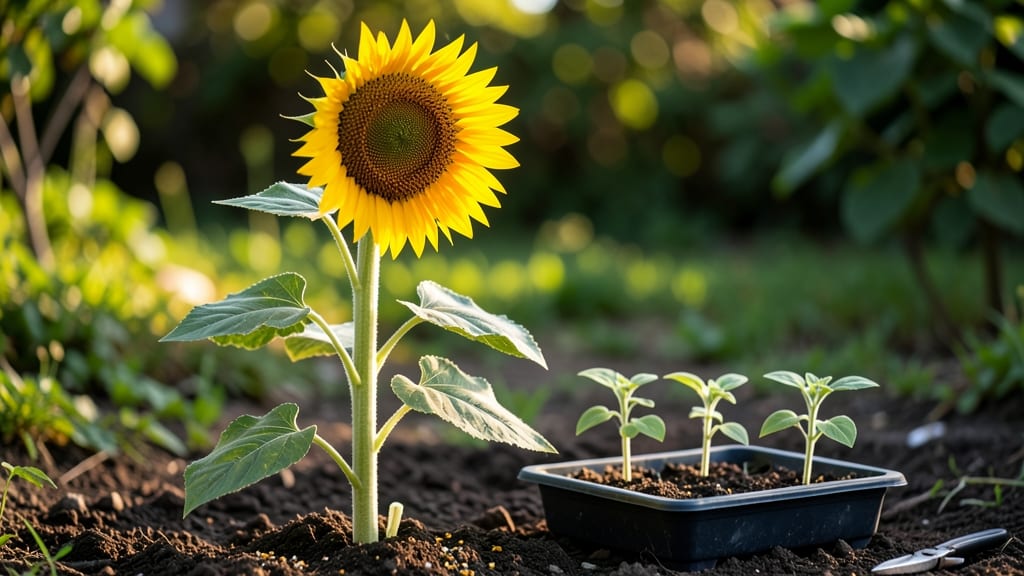
Planting sunflower seeds point up or down makes all the difference in how fast those towering stalks appear. 🌻 I used to wonder why some seeds sprouted in days while others took weeks—until I learned the simple trick of orienting them just right.
The key isn't just about depth or soil type, but how you position that tiny seed before covering it. Sunflowers thrive when planted with their pointy ends facing down about 1 inch deep in warm soil.
Think of it like planting a carrot—you want the "root" (the blunt end) pointing downward where it can anchor, while the sprout (the pointed tip) heads straight up toward sunlight.
This orientation helps the seedling push through the soil faster, often breaking ground in just 5-7 days instead of two weeks. The secret sauce? Warmth and patience. Sunflowers love soil that's at least 60°F, so wait until all danger of frost has passed.
Space seeds 6 inches apart in rows 2 feet apart to give them room to stretch their legs. Once they pop up, watch them grow 2-3 inches per day—it's like watching a time-lapse of nature's skyscrapers. For best results, keep the soil moist but not soggy.
If you're planting in cooler climates, consider using black plastic mulch to warm the soil faster. And here's a pro tip: if you're planting multiple seeds, mark their location with popsicle sticks so you don't accidentally dig up a sprout thinking it's weeds.
📚 In This Guide
- What you need
- Instructions
- Tips and common mistakes
- Wrapping up and next steps
What you need
- ● Sunflower seeds: 10–20 seeds (choose heirloom or hybrid varieties like 'Mammoth' or 'Sunspot' for best results).
- ● Seed-starting pots or trays: 2–4 small pots (3–4 inches deep) or a seedling tray with individual cells.
- ● Potting mix: 1–2 cups of lightweight, well-draining seed-starting mix (avoid garden soil—it’s too dense!).
- ● Watering can or spray bottle: With a fine mist nozzle to avoid disturbing seeds.
- ○ Clear plastic wrap or humidity dome: To retain moisture (optional but highly recommended for speedy germination).
- ● Grow light or sunny windowsill: Sunflowers need 6–8 hours of light daily (a full-spectrum LED grow light works best if natural light is limited).
- ● Ruler or measuring tape: To ensure seeds are planted at the correct depth.
- ● Seedling heat mat: Keeps soil 70–80°F (21–27°C) for faster germination (especially in cool climates).
- ● Plant labels: To track which seeds were planted point up vs. down.
- ● Fertilizer (low-dose): A balanced, water-soluble fertilizer (5-5-5 or 10-10-10) diluted to half-strength for early feeding.
- ● Humidity tray: A shallow tray filled with water and pebbles to increase moisture around seedlings.
Step-by-Step instructions for planting sunflower seeds for faster germination
Here's the simple trick I use to get sunflower sprouts popping through the soil in days instead of weeks.
🌱 Step 1: Soak the Seeds Overnight for Quick Start
Place your sunflower seeds in a bowl of lukewarm water for 8-12 hours before planting. This softens the tough outer shell and kickstarts germination. I like to use a mesh bag so I can easily lift them out without dropping any—sunflower seeds are surprisingly slippery when wet.
After soaking, gently pat them dry with a paper towel. You'll notice the seed coats are slightly softer and the seeds feel heavier. This is your signal they're ready for planting. Never skip this step—dry seeds can take 2-3 weeks to germinate, while soaked seeds often sprout in 3-5 days.
🌱 Step 2: Plant Seeds Point Up for Faster Emergence
Here's the hack: plant your sunflower seeds with the pointed end up. The pointed tip contains the radicle (the embryonic root), but planting it upward actually encourages the hypocotyl (the stem) to grow first. This means the seedling pushes through the soil faster because it's growing toward the light immediately.
Use your finger to make a hole about 1 inch deep—sunflower seeds are large enough that you can see the orientation clearly. Place one seed per hole with the pointed end facing up, then cover lightly with soil. Press down gently but don't compact the soil too much. You want it firm enough to hold the seed in place but loose enough for roots to push through easily.
💧 Step 3: Water Gently and Maintain Moisture
Water the soil until it's evenly moist but not soggy. You'll know it's right when water runs through the top layer but doesn't pool on the surface. I use a watering can with a fine rose attachment to avoid disturbing the seeds. Overwatering now can cause the seeds to rot before they sprout.
Keep the soil consistently moist by checking the top inch daily. If it feels dry to the touch, water lightly again. Sunflower seeds need warmth to germinate—aim to keep the soil at 70-75°F. If your garden runs cooler, consider using a seedling heat mat for the first 5-7 days.
⏰ Step 4: Watch for Sprouts and Thin as Needed
Germination should begin in 3-5 days if conditions are right. You'll see the first sign when the soil surface pushes up slightly—this is the hypocotyl breaking through. Once sprouts reach 2 inches tall, thin to the strongest seedling per pot or spot, cutting the others at the base with scissors.
Real talk: don't be tempted to pull weak seedlings by hand. The roots are fragile, and you'll risk disturbing the winner. Thinning early prevents overcrowding and gives your sunflowers room to grow strong stems. If you're planting multiple seeds in a row, space them 6 inches apart to avoid future competition.
☀️ Step 5: Provide Light Immediately After Emergence
The instant those first leaves appear, move your seedlings to full sun for at least 6-8 hours daily. Sunflowers need light to grow quickly and develop sturdy stems. If you're starting indoors, place them under a grow light 2-3 inches away until they're ready to transplant.
You'll notice the seedlings lean toward the light if it's coming from one direction. Rotate the pots a quarter turn daily to encourage even growth. Within 2 weeks, you should see the first true leaves (the second set after the initial seed leaves) appear. These will be larger and more defined, signaling your sunflowers are well on their way to becoming those towering beauties you planted for.
Tips & tricks for faster sunflower germination
Took me a while to figure these out, so here goes—small details that cut germination time in half.
Soaking Secret: For the 8-12 hour soak, I use a shallow bowl of lukewarm water (about 70°F) and place it in a dark cupboard overnight. The darkness prevents premature sprouting while the gentle warmth mimics spring conditions. If you forget to soak overnight, even 4-6 hours will help, but you'll lose that 3-5 day speed advantage.
Seed Orientation: In Step 2, when planting point-up, look for the tiny white dot at the blunt end—this is the radicle. Planting it down ensures the stem grows upward immediately. I always test the soil firmness by pressing gently with my thumb; it should hold shape but not feel rock-hard. Too much pressure can crush the delicate seedling as it emerges.
Heat Hack: The 70-75°F soil temperature is critical—below 65°F and germination slows dramatically. If your garden runs cool, place a seedling heat mat under your pots for the first 5-7 days. I've seen germination times stretch to 2 weeks when soil stays below 60°F. Pro tip: Check soil temp with a thermometer before planting; morning sunlight warms soil faster than you'd expect.
Light Timing: Once those first leaves appear, don't rush to move them to full sun—wait until they're 2 inches tall. I've seen young seedlings scorch when moved too soon. For indoor starts, position grow lights 2-3 inches away but adjust height as they grow. The quarter-turn rotation trick prevents leggy growth by ensuring even light exposure on all sides.
Pro Tips for Plant Sunflower Seeds Point Up Or Down
- Took me a while to figure these out, so here goes—small details that cut germination time in half.
- Soaking Secret: For the 8-12 hour soak, I use a shallow bowl of lukewarm water (about 70°F) and place it in a dark cupboard overnight.
- Seed Orientation: In Step 2, when planting point-up, look for the tiny white dot at the blunt end—this is the radicle.
Frequently asked questions
Got questions about planting sunflower seeds the right way? Here are some of the most common ones—plus quick, easy answers to help you grow those towering blooms with confidence!
Should sunflower seeds always be planted point-up?
Not necessarily! While most seeds have a clear "up" (the pointed end), sunflower seeds are unique. Plant them point-down—the flat side up—to encourage faster, straighter growth. The root will naturally push downward, and the sprout will emerge upward.
How long does it take for sunflower seeds to sprout?
With the right conditions (warm soil, consistent moisture, and sunlight), sunflower seeds typically sprout in 7–14 days. If planted too deep (over 1–2 inches) or in cold soil, germination may take longer. Keep the soil warm (70°F+) for the fastest results!
What if my sunflower seeds don’t sprout?
Don’t panic! Check these first:
- Moisture: Keep soil damp (not soggy) but never dry.
- Depth: Plant seeds only 1 inch deep—too deep = slow or no sprouts.
- Temperature: Sunflowers need warm soil (at least 60°F). Use a heat mat if planting early.
- Freshness: Old seeds may fail—test viability by soaking a few in water for 24 hours.
Can I plant sunflower seeds indoors first?
Start seeds indoors 4–6 weeks before your last frost using small pots with well-draining soil. Plant them point-down, keep them warm, and provide grow lights (sunflowers need 12+ hours of light/day). Transplant outdoors after the soil warms up.
What if I accidentally plant them point-up?
No big deal! Sunflower seeds are resilient. If planted point-up, they’ll still sprout—just slower and possibly with a crooked stem. The plant will still grow, but planting them correctly saves time and ensures straighter, healthier stems.
How close can I plant sunflower seeds together?
Space them 6–12 inches apart for full-sized sunflowers (like Mammoth varieties). For smaller types (like Teddy Bear), 4–6 inches works. Overcrowding leads to weak stems and fewer blooms. Thin seedlings if needed!
Wrapping up and next steps
Planting sunflower seeds with their pointy ends up isn’t just tradition—it’s science! 🌱 By aligning them correctly, you’ll unlock faster germination, stronger roots, and happier plants. Whether you’re growing for beauty, snacks, or shade, this simple hack sets you up for success.
Ready to try? Grab your seeds, a sunny spot, and a little patience—your sunflowers will thank you! Next, experiment with soil depth and moisture levels to see how they affect growth. Happy planting!