
Propagation
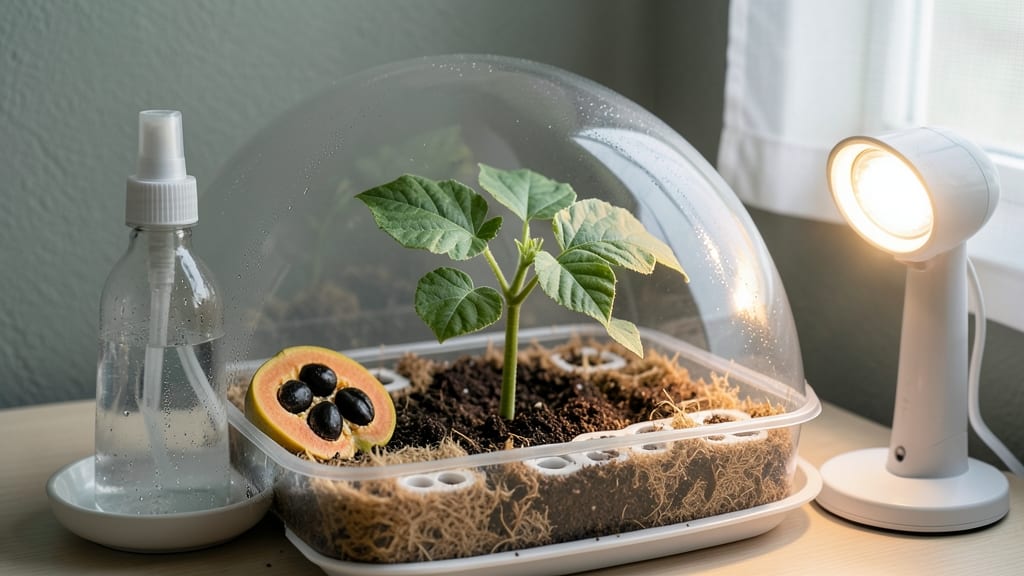
Papaya seed germination happens faster than you’d expect—7 days of patience pays off with tiny green hooks breaking through the soil. 🌱 I've germinated dozens of papaya seeds, and the key isn't some secret trick but matching their tropical needs: warmth, moisture, and a little coaxing to wake them up.
Start with a shallow tray or small pots filled with moistened seed-starting mix—papaya seeds hate soggy soil but need consistent dampness. Place them 1/4-inch deep, cover with plastic wrap to trap humidity, and keep them in a spot where the air stays 80-85°F.
That's right, you might need a heat mat or sunny windowsill—papaya seeds are tropical divas.
By day 5, you'll see the first signs of life: a tiny white root pushing down, then the seedling's first leaves unfurling. The moment you spot those bright green cotyledons, move them to brighter light (but no direct sun yet) and reduce the humidity cover.
These seedlings grow fast—2-3 inches in a week—so be ready to transplant them into individual pots.
The biggest mistake? Letting the soil dry out or keeping them too cool. Papaya seeds are sensitive, but once they break through, they're surprisingly resilient. With the right setup, you'll have sturdy seedlings ready for outdoor planting in 4-6 weeks. Here's how to keep them thriving!
📚 In This Guide
- What you need
- Instructions
- Tips and common mistakes
- Wrapping up and next steps
What you need
- ● Fresh papaya seeds: 10–20 seeds (harvested from a ripe, organic papaya—avoid store-bought seeds if possible, as they’re often treated to prevent germination).
- ● Germination tray or seedling tray: One 10x20-inch tray with drainage holes (or a shallow container with a lid, like a plastic takeout box).
- ● Germination medium: Option 1: 1 roll of paper towels (or 2–3 sheets of coffee filters).
- ● Option 2: 2–3 cups of sterilized potting mix (use a seed-starting mix or a blend of 50% peat moss and 50% perlite).
- ● Spray bottle (8 oz): For gentle watering—avoid soaking the medium.
- ● Plastic wrap or humidity dome: A clear plastic bag or a lid to create a mini greenhouse effect.
- ● Small plate or saucer: To hold the tray and catch excess water.
- ● Pencil or toothpick: For gently pressing seeds into the medium (if using soil).
- ● Heating mat: A seedling heat mat (set to 75–85°F) to speed up germination—papaya seeds love warmth!
- ● Grow lights: A small LED grow light (12–16 hours/day) if your space lacks natural sunlight.
- ● Seedling labels: Tiny flags or toothpicks with labels to track germination dates.
- ○ Fungicide (optional): A light spray of hydrogen peroxide (3%) or a natural fungicide to prevent mold.
- ● Notebook: To log seed-planting dates and sprouting progress!
Step-by-Step instructions for germinating papaya seeds
Here's how to coax those stubborn papaya seeds into sprouting within a week—no fancy equipment needed.
🌱 Step 1: Extract and Prepare the Seeds
Cut open a ripe papaya and scoop out the jelly-like seeds, then rinse them under cool water to remove the mucilaginous coating. This step is critical because the gel slows germination by trapping moisture too tightly around the seed. I like to spread them on a paper towel and let them air-dry for 12-24 hours—just until they feel slightly firm to the touch.
While drying, examine each seed for cracks or soft spots—those won't sprout. Healthy seeds should look plump and firm. Here's the thing: papaya seeds are light-sensitive, so keep them in a dark place during this drying phase. Direct sunlight can trigger premature germination before you're ready to plant.
💧 Step 2: Soak for 24 Hours
Fill a small container with lukewarm water (around 75°F) and add the dried seeds. Let them soak for 24 hours. You'll see the seeds swell noticeably—this is their way of preparing for rapid growth. I use a clear glass so I can watch the seeds plump up, but keep it out of direct sunlight to prevent algae growth.
After soaking, drain the water and give the seeds a quick rinse. The goal is to keep them moist but not soggy. Place them between two damp paper towels in a sealed plastic bag. This creates a humid microclimate that mimics tropical conditions. Store the bag in a warm spot—80-85°F is ideal—but even a sunny windowsill will work if your home stays above 70°F.
☀️ Step 3: Monitor for Sprouting
Check the seeds daily. Within 3-5 days, you'll see tiny white roots emerge—this is your signal to prepare planting containers. The roots grow fastest in warmth, so if your home runs cooler, consider using a seedling heat mat set to 75°F. I've found that keeping the paper towels just barely damp (not dripping) prevents mold while encouraging root growth.
Once roots reach about ½ inch long, it's time to plant. Use small pots or individual cells filled with a light, airy seed-starting mix. Make a tiny hole with your finger, place the seed ½ inch deep with the roots pointing downward, and cover lightly. Press the soil gently around the seed—you want firm but not compacted soil.
🌿 Step 4: Provide Warmth and Humidity
Cover the pots with clear plastic wrap or a humidity dome to retain moisture and warmth. Papaya seedlings need 80°F+ soil temperatures to thrive, so if your home is cooler, place the pots on a heat mat or in a warm spot like above the refrigerator. You'll see the first true leaves appear in 7-10 days—these will look different from the initial seed leaves (cotyledons) and signal that your seedling is ready for brighter light.
Remove the plastic cover once the first true leaves emerge, but keep the soil consistently moist. Overwatering now can cause damping-off, so only water when the top inch of soil feels dry. Here's where it gets fun—watch the seedling grow toward the light. If it starts leaning, rotate the pot daily so it grows straight and sturdy.
Tips & tricks for perfect papaya seed germination
These little-known details make all the difference between seeds that sprout and seeds that disappoint.
Seed Selection: In Step 1, when you're examining seeds for cracks or soft spots, look for ones that are uniformly dark brown and slightly glossy—they're the most likely to germinate. I've found that seeds from fully ripe papayas (those with deep yellow skin and a sweet aroma) have the highest success rate. Avoid seeds from overly firm or green papayas, as they're often underripe and less viable.
Temperature Matters: The 75°F to 85°F range in Steps 2 and 3 is non-negotiable for consistent germination. If your home runs cooler than 70°F, use a seedling heat mat set to 75°F—this mimics tropical conditions where papayas naturally grow. I keep my setup near a sunny window during the day and move it to a warm spot at night, which helps maintain that critical temperature window without needing extra equipment.
Moisture Management: During the 24-hour soak in Step 2, change the water after 12 hours to prevent bacterial growth. After soaking, the paper towels should feel damp like a wrung-out sponge—not dripping wet. I find that using two layers of paper towels creates the perfect moisture balance: enough to keep the seeds hydrated but not so much that they suffocate. This balance is key to preventing mold while encouraging root growth.
Planting Precision: When planting in Step 3, make the hole just slightly larger than the seed—about ½ inch deep—using your finger. Press the soil gently but firmly around the seed to eliminate air pockets, which can prevent proper root contact. I like to use a small spoon to create a tiny well around the seed after planting, then add a light sprinkle of seed-starting mix to keep it in place without burying it deeper.
Pro Tips for Papaya Seed Germination
- These little-known details make all the difference between seeds that sprout and seeds that disappoint.
- Seed Selection: In Step 1, when you're examining seeds for cracks or soft spots, look for ones that are uniformly dark brown and slightly glossy—they're the most likely to germinate.
- Temperature Matters: The 75°F to 85°F range in Steps 2 and 3 is non-negotiable for consistent germination.
Frequently asked questions
Got curious questions about growing papaya from seeds? You’re not alone! Here are some of the most common queries—and their stress-free solutions.
How long does it really take for papaya seeds to germinate?
Papaya seeds typically sprout within 5–14 days under ideal conditions (warmth, moisture, and darkness). Most growers see tiny sprouts in 7–10 days if using the paper towel method. Patience is key—some seeds take longer, especially if stored dry or old.
Can I plant papaya seeds directly in soil without pre-sprouting?
Yes! While pre-sprouting speeds up germination, you can plant seeds ½-inch deep in warm, well-draining soil. Keep the soil consistently moist (not soggy) and cover with plastic wrap to retain humidity. Success rates drop slightly, but it’s worth a try if you’re impatient!
What if my papaya seeds won’t germinate? Troubleshooting tips?
Try these fixes if seeds stay dormant:
- Check warmth: Seeds need 75–85°F (24–29°C). Use a heat mat or place near a sunny window.
- Test moisture: Seeds should stay damp but not waterlogged. Mist them daily if using the towel method.
- Freshness matters: Seeds lose viability after 1–2 months. Source them from ripe, organic papayas.
- Scarify stubborn seeds: Gently nick the seed coat with sandpaper to help water penetrate.
Can I grow papaya from store-bought seeds, or do I need organic?
Store-bought seeds can germinate, but organic or home-saved seeds often yield healthier plants. Commercial seeds may be treated to prevent sprouting (to keep fruit fresh longer). For best results, use seeds from ripe, organic papayas—just rinse and dry them before planting!
What’s the best temperature for papaya seed germination?
Papaya seeds thrive in warmth—aim for 75–85°F (24–29°C). Below 68°F (20°C), germination slows dramatically. Use a seedling heat mat ($10–$15) or place the tray on top of a fridge to boost warmth. Pro tip: Never let soil or towels get cold!
Wrapping up and next steps
Growing papaya from seed is a rewarding journey that brings fresh, tropical flavors right to your kitchen! With the right conditions—warmth, moisture, and patience—you’ll see those first sprouts in just 7 days.
Whether you’re a gardening newbie or a green-thumb pro, this method proves that success isn’t just possible—it’s easy!
Now that you’re armed with tips and tricks, why not take the next step? Try experimenting with different soil mixes or even germinating seeds indoors for a head start. Happy growing—your future papaya harvest is waiting! 🌱✨