
Diseases
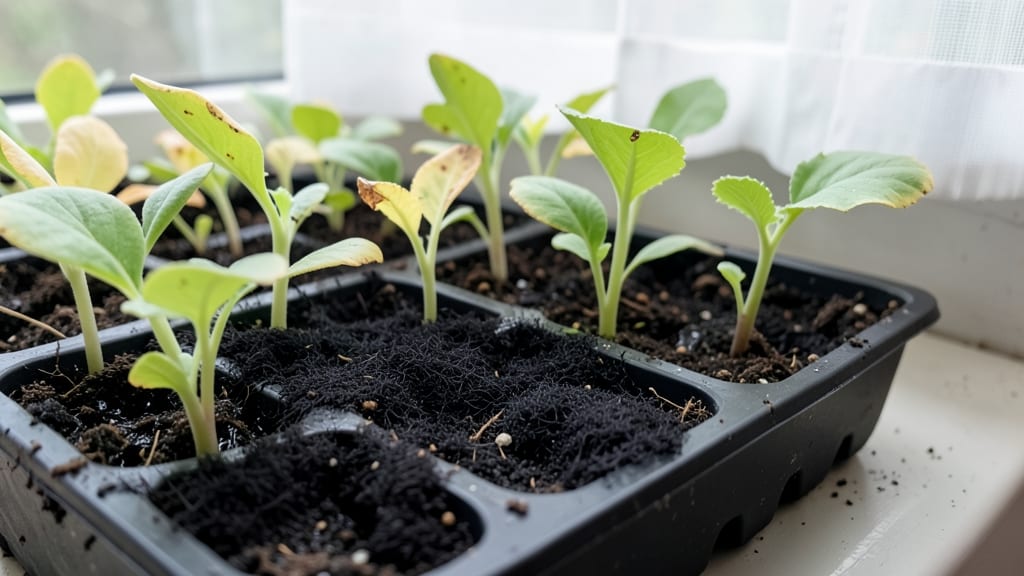
That fuzzy white blanket creeping through your mold on seedlings soil isn’t frost—it’s mold, and it’s stealing their energy. 🌱 I’ve lost entire trays to this silent killer, but a quick fix saves the day every time.
The problem starts with damp soil, trapped humidity, or spores lurking in reused mixes, and spreads faster than you can say "seedling casualties." Most people panic and yank the plants, but the real fix is drying the soil and boosting airflow—no harsh chemicals needed.
A quick sprinkle of cinnamon or a 3% hydrogen peroxide rinse (yes, the same stuff in your medicine cabinet) kills spores in minutes. I’ve saved trays this way, and the seedlings bounce back stronger than ever.
You’ll see new growth within 24-48 hours if you act fast, and those tiny leaves will turn vibrant green again. The key is catching it early—once mold takes hold, it’s a race against time. Here’s how to stop it before it spreads further.
Works for any seedling stage, from just sprouted to true leaves. Let’s get those babies back on track!
Root Causes Of Fungal Growth
Mold thriving in your seedlings’ soil isn’t just a random nuisance—it’s a sign of imbalance in moisture, oxygen, and microbial activity. Understanding these triggers helps you prevent (not just treat) the problem before it stunts your plants.
Below are the most common culprits behind mold on seedlings, explained in clear, actionable terms.
Mold loves water—specifically, excessive moisture that smothers soil particles and cuts off oxygen. Here’s why it happens:
- Poor Drainage: If your seedling trays or pots lack drainage holes, water pools at the bottom, creating a perfect anaerobic (oxygen-free) environment for mold spores like Rhizoctonia or Pythium to multiply. 💡 Test it: Press a finger into the soil 1 inch deep—if water drips out, it’s too soggy.
- Overwatering: Seedlings need consistent moisture, not a swamp. Overwatering (especially with cold water) disrupts soil structure, leaving pockets of stagnant water where mold feasts. Rule of thumb: Water when the top ½ inch of soil feels dry to the touch.
- Humid Microclimates: Greenhouses, closed propagators, or even a humid basement can trap moisture near seedlings. Mold spores float in the air and land on damp soil, germinating within 24–48 hours. 🌡️ Fix: Use a hygrometer to keep humidity below 60%.
Mold spores need still air to settle and colonize. Without airflow, soil stays stagnant, and beneficial microbes that outcompete mold can’t thrive. Key triggers:
- Crowded Seedlings: Plants too close together create a shady, humid pocket where air doesn’t circulate. Mold spreads faster in these conditions. 💡 Solution: Space seedlings 2–3 inches apart and thin weak sprouts immediately.
- Poor Ventilation: Closed containers (like plastic domes or unventilated propagators) trap ethylene gas and excess humidity. Mold-loving fungi like Botrytis thrive here. ⚡ Action: Propagators? Remove lids daily for 10–15 minutes.
- Static Soil Particles: Fine, compacted soil (like fresh potting mix) blocks air pockets. Mold spores land and latch on to moist surfaces with nothing to stop them. 🔄 Fix: Mix in perlite or vermiculite (20% by volume) to improve aeration.
Mold isn’t just about water—it’s also about food. When soil lacks balance, mold becomes the dominant organism, outcompeting your seedlings. Common imbalances:
| Nutrient Issue | Why Mold Wins | Quick Fix |
|---|---|---|
| Too Much Nitrogen | Excess nitrogen (from fresh manure or synthetic fertilizers) feeds mold faster than plants, creating a fungal boom. | Use a balanced fertilizer (10-10-10) or compost tea to slow mold growth. |
| Lack Of Beneficial Microbes | Healthy soil has mycorrhizal fungi and bacteria that suppress mold. Sterile potting mix? No competition for mold. | Add mycorrhizal inoculant or worm castings (10% by volume) to repopulate good microbes. |
| Organic Debris Buildup | Old plant matter, mulch, or uneaten seeds decompose anaerobically, releasing mold-friendly compounds like cellulose. | Sift soil to remove debris or replace the top 1–2 inches with fresh mix. |
Sometimes, mold hitches a ride from outside sources. Here’s how:
- Reused or Dirty Soil: Old potting mix, garden soil, or compost with latent mold spores can reactivate when watered. Even "sterile" store-bought mix can harbor spores if stored damp. 🧹 Prevent: Bake soil at 180°F for 30 minutes to kill spores (or use pasteurized mix).
- Infected Tools or Hands: Pruners, gloves, or even your fingers can transfer mold from one seedling to another. Spores are microscopic—you can’t see them! ⚠️ Solution: Disinfect tools with 10% bleach solution (1 part bleach to 9 parts water) between uses.
- Cross-Contamination from Houseplants: Sick houseplants (with powdery mildew or black spot) can spread spores to seedlings via airflow or shared spaces.
Key Takeaway: Mold on seedlings is rarely a single issue—it’s usually a combo of wet soil + poor airflow + nutrient imbalances. The good news? Fixing one or two of these factors can dramatically reduce mold risk. Next, we’ll cover 5-minute fixes to reverse the damage and protect your seedlings. 🚀
Quick Fixes for Fungal Soil Issues
Mold on seedlings isn’t just unsightly—it can stunt growth, weaken roots, and even kill your plants if left unchecked. The good news? Most cases can be reversed in minutes with the right approach.
Below, we’ve mapped out practical solutions based on the most common causes, from overwatering to poor airflow, plus prevention tips to keep your seedlings thriving.
Symptoms: Dark, fuzzy mold; soggy soil; seedlings wilting despite moisture.
How to Fix It:
- 🌱 Stop Watering Immediately
- Let the top 1–2 inches of soil dry out before watering again. Use your finger to test moisture—if it’s damp past your first knuckle, wait.
- 💨 Improve Drainage Fast
- For pots: Poke holes in the bottom if missing, or place pots on a tray of pebbles to lift them off excess water.
- For garden beds: Mix in coarse sand or perlite (1 part to 3 parts soil) to aerate compacted dirt.
- ⚡ Speed Up Drying with a Fan
- Place a small fan (even a USB-powered one) on low near seedlings for 12–24 hours to evaporate moisture and discourage mold spores.
Prevention Tip: 💡 Water only when the topsoil feels dry—aim for the "thumb test" (stick your finger in; if dry up to the first joint, it’s time).
Symptoms: White, black, or green mold on soil surface; seedlings looking "damp" even when not watered.
How to Fix It:
- 👨🍳 Thin Out Seedlings
- Overcrowded seedlings trap humidity. Snip or transplant weaker sprouts to leave 1–2 inches of space between plants.
- 🌬️ Create a Mini Greenhouse with Ventilation
- If using a humidity dome, prop it open during the day and close only at night. For trays, place them near a window with a breeze or use a small fan on low.
- 🔪 Sterilize Tools & Containers
- Wipe trays, scissors, and pots with 10% hydrogen peroxide (3% strength) or rubbing alcohol to kill lingering spores.
Prevention Tip: ✨ Rotate trays weekly so all seedlings get even airflow—mold loves stagnant spots!
Symptoms: Slow growth despite good care; mold returning after fixes; soil smells musty.
How to Fix It:
- 📊 Test & Balance Soil pH
- Mold thrives in acidic soil (pH <6.0). Test with a $5 soil kit from a garden store. If too acidic:
- Raise pH: Mix in wood ash (1 tbsp per gallon of soil) or crushed eggshells.
- Lower pH: Add sulfur or peat moss (follow package rates).
- Mold thrives in acidic soil (pH <6.0). Test with a $5 soil kit from a garden store. If too acidic:
- 💊 Apply Natural Fungicides
- Hydrogen peroxide spray: Mix 1 tbsp 3% H₂O₂ per quart of water, spray soil (avoid seedlings), and let sit 1 hour before replanting.
- Baking soda solution: 1 tsp baking soda + 1 quart water + few drops of soap (spray lightly).
- Neem oil: 1 tsp neem oil + 1 tsp mild soap per quart of water—spray soil and seedlings (test on a few leaves first).
Prevention Tip: 🌡️ Keep soil temps between 60–75°F—mold spreads faster in heat or cold extremes.
Symptoms: Mold covers >50% of soil; roots look black/mushy; seedlings collapse.
How to Fix It:
- 🗑️ Ditch the Soil (If Possible)
- If seedlings are young, transfer them to fresh, sterile potting mix (avoid garden soil). Use a clean tray to prevent reinfection.
- 🔄 Sanitize the Old Tray
- Soak trays in bleach solution (1 part bleach to 9 parts water) for 10 minutes, then rinse and dry in sunlight.
- 🌱 Start Fresh with Sterile Mix
- Use a seed-starting mix (not compost-heavy) and bake it in the oven at 200°F for 30 minutes to kill spores.
Prevention Tip: 🎯 Always sterilize soil before sowing—microwave 1 cup of soil in a bowl for 2 minutes (test temp first!) or use commercial sterilized mixes.
Final Pro Tip: 🚨 Act fast! Mold doubles in 24–48 hours—the sooner you intervene, the easier the fix. Once seedlings recover, keep them in a bright, breezy spot and monitor soil moisture like a hawk. 🌱
Frequently asked questions
Can I still save seedlings if mold covers more than half the soil?
It depends on how severe it is. If the mold is fuzzy and spreading fast, your best bet is to transfer the seedlings to fresh, sterile potting mix immediately. Remove the top 1 inch of infected soil, sanitize the tray with a 10% bleach solution, and replant in clean containers. For stubborn cases, consider using a hydrogen peroxide spray (3%) on the roots before replanting to kill any lingering spores.
Is it safe to use cinnamon or coffee grounds to stop mold?
Yes! Both are excellent natural fungicides. Sprinkle a thin layer of cinnamon (about ¼ teaspoon per tray) directly on the soil surface—it contains cinnamaldehyde, which kills mold spores. For coffee grounds, use finely ground, used grounds (never fresh) mixed into the top layer of soil. They help absorb excess moisture while adding beneficial microbes. Reapply every 3-5 days until the mold clears.
Will my seedlings recover if I remove the mold but leave them in the same soil?
Possibly, but it’s risky. Mold spores can recolonize within 24-48 hours if conditions (like moisture and poor airflow) aren’t fixed. If you choose to keep them, thoroughly dry the soil, improve drainage, and apply a natural fungicide like neem oil or baking soda spray. Monitor closely—if mold returns, it’s safer to repot in sterile mix. Weak seedlings may struggle to bounce back if the soil isn’t fully addressed.
How do I prevent mold when starting seeds indoors with no natural light?
Use a grow light on a timer (14-16 hours/day) to encourage strong, dry seedlings and avoid weak, leggy growth. Keep humidity below 60% with a small fan on low, and water only when the topsoil is dry. Use seed-starting mix with perlite (never garden soil) and sterilize trays with rubbing alcohol before use. If using a humidity dome, remove it daily for 10-15 minutes to let excess moisture escape.