
Transplanting
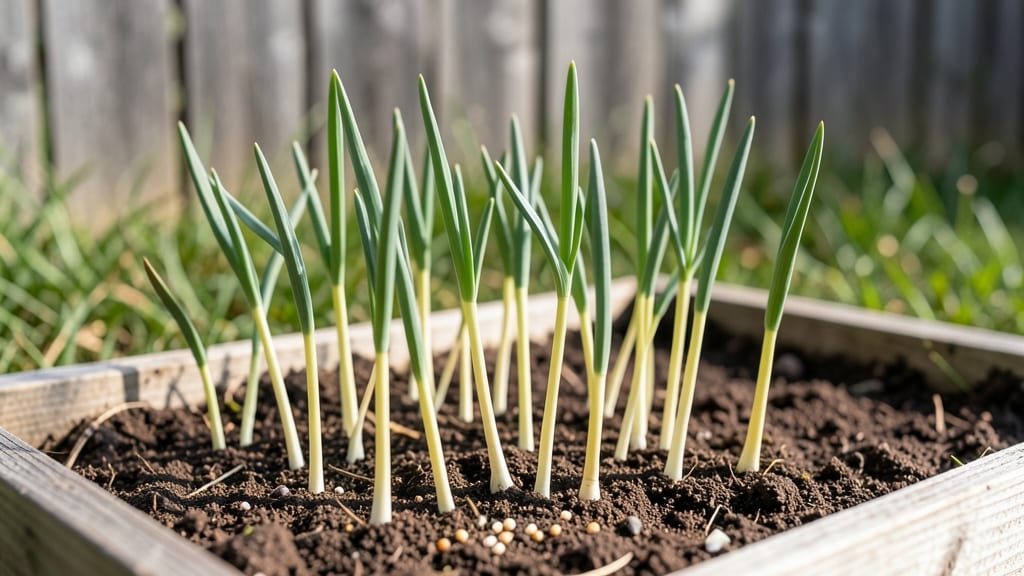
Leggy onion seedlings happen when they stretch too fast for their roots—leaving you with weak stems that flop instead of strong plants. 🌱 I’ve rescued dozens of these spindly seedlings by giving them a little extra support (and a deeper home in the soil), and you can too without losing your harvest.
The problem usually starts with too much shade or overcrowding, making seedlings compete for light. They’ll grow tall and thin, but the good news is they’re not beyond saving—just give them a chance to bulk up. Most leggy seedlings recover beautifully once they’re transplanted properly.
Here’s how to fix them: bury the stems deeper than you think they need (up to 6 inches) and space them 4-6 inches apart. Add a little shade cloth if your garden gets intense afternoon sun, and you’ll see stocky growth within a couple of weeks.
Prevent it next time by starting seeds in full sun and thinning early. Even leggy seedlings can still produce great onions—just give them the right conditions to stand tall. Let’s get those stems sturdy again!
The Root Causes of Weak Stems
Understanding why your onion seedlings stretch like over-caffeinated ballerinas 🎭 is the first step to fixing them. Leggy seedlings aren’t just a cosmetic issue—they’re a cry for help from your plants.
Below, we break down the three primary culprits behind weak, elongated stems, complete with the science behind them and actionable fixes.
Why it happens: Onions (Allium cepa) are light-loving plants—they crave 12–16 hours of sunlight daily to grow strong and compact. When seedlings don’t get enough light, they stretch upward in a desperate bid for photons, a phenomenon called etiolation. This process weakens cell walls, making stems thin, pale, and prone to snapping.
- The science: In low light, seedlings prioritize elongation over thickening because they’re conserving energy.
Chlorophyll production drops, and stems grow rapidly but weakly, with fewer vascular bundles (the plant’s "veins") to support upright growth. - Red flags: Seedlings leaning toward light sources, yellowing leaves, or stems that look like spaghetti noodles instead of sturdy stalks.
Actionable fix: Move seedlings to a sunniest window or under grow lights (LED or fluorescent) 6–8 inches above the plants. If outdoors, ensure they’re in full sun (6+ hours daily) and avoid shading from taller plants or structures.
Why it happens: Onions thrive in cool (50–75°F) but consistent temperatures. When seedlings experience heat spikes (above 80°F) or chilly drafts (below 45°F), their growth patterns go haywire.
- The science: Heat stress triggers ethylene production, a plant hormone that accelerates elongation. Meanwhile, cold slows metabolism, causing stunted root development—which can’t support the top growth.
Both scenarios lead to weak, leggy stems. - Red flags: Seedlings growing too fast (bolting) or stunted with dark green, rubbery stems.
Actionable fix:
- Keep seedlings in a cool (60–65°F) environment—avoid placing them near heaters, radiators, or sunny south-facing windows that overheat.
- Use shade cloth (30–50%) if temps exceed 80°F.
- Hardening off seedlings gradually (acclimating them to outdoor temps) prevents shock when transplanting.
Why it happens: Onions need room to breathe—both literally (space) and figuratively (nutrients). When seedlings are planted too closely or grown in nutrient-poor, compacted soil, they compete aggressively for resources, leading to weak stems.
- The science: Overcrowding forces seedlings to stretch upward for light while their roots struggle to access nitrogen, phosphorus, and potassium—key for stem strength.
Poor drainage or waterlogged soil also deprives roots of oxygen, causing root rot and further weakening the plant’s structure. - Red flags: Seedlings with purple tinges (phosphorus deficiency), yellow lower leaves (nitrogen deficiency), or mushy stems (rot).
Actionable fix:
- Thin seedlings to 1–2 inches apart once they sprout their first true leaves (not just the seed leaves).
- Amend soil with compost or aged manure before planting to improve drainage and nutrient availability.
- Use well-draining containers (like fabric pots) if growing in soil mixes that compact easily.
Pro Tip: 💡 Leggy seedlings can often be saved with a "roughing up" technique—gently burying the stems deeper in soil (up to the first set of leaves) encourages new root growth and stabilizes the plant. Just don’t bury the necks of onion bulbs if they’ve already formed!
Fixing Weak Seedling Stems Naturally
Leggy seedlings are a gardener’s gentle nudge to step in—before they topple over like overgrown matchsticks! 🌱 The good news? With a few strategic tweaks, you can rescue your onions and coax them into sturdy, stocky plants.
Below, we’ll tackle the most common causes of leggy seedlings and match them to practical, no-fuss fixes—plus tips to prevent future floppiness.
Problem: Seedlings reach for the sky because they’re not getting enough light, leading to weak stems.
How to Fix It:
- 🔥 Move Them Closer to Light – If using grow lights, lower them to 2–4 inches above seedlings (they should be bright but not scorching). Natural light? Place them in the sunniest window or under a south-facing skylight.
- 👨🍳 Rotate Daily – Turn trays ¼ turn each day so seedlings grow straight (not lopsided).
- 🥘 Thin Crowded Trays – Overcrowding blocks light. Space seedlings 1 inch apart in trays or transplant to individual pots if needed.
Prevention Tip: 💡 Start with high-quality grow lights (LED or fluorescent) if natural light is weak. A simple seedling heat mat can also boost growth speed without legginess.
Problem: Heat from below (like a heat mat) or inconsistent temps cause rapid, weak growth.
How to Fix It:
- ⏰ Adjust Heat Sources – If using a heat mat, set it to 65–75°F (not scorching). Remove it once seedlings sprout true leaves.
- 🌬️ Improve Airflow – Use a small fan on low setting (2–3 hours/day) to strengthen stems naturally.
- 🍃 Harden Off Gradually – If temps fluctuate, move seedlings outdoors briefly (1–2 hours/day) in shaded areas to toughen them up.
Prevention Tip: ✨ Use a thermometer near seedlings to monitor temps. Avoid placing trays on hot surfaces (like radiators or pavement).
Problem: Weak soil (too dense, waterlogged, or nutrient-poor) can’t support strong stems.
How to Fix It:
- 🔪 Repot into Fresh Mix – If seedlings are root-bound, transplant to individual pots with well-draining soil (50% potting mix + 50% perlite/compost).
- 💪 Fertilize Lightly – Use a balanced, water-soluble fertilizer (5-5-5 or 10-10-10) at half-strength once true leaves appear.
- 🌧️ Check Drainage – Ensure pots have drainage holes and avoid soggy soil (onions hate wet feet!).
Prevention Tip: 🎯 Start with sterile, seed-starting mix (not garden soil) to avoid disease and compaction.
Problem: Delayed or mishandled transplanting shocks seedlings, causing them to stretch for stability.
How to Fix It:
- 🌱 Bury Deeper (But Not Too Much!) – When transplanting, bury seedlings up to their first true leaves—this encourages new root growth and stabilizes the stem.
- 💧 Water Thoroughly After Moving – Gently water the soil (not the leaves) to reduce stress.
- 🌿 Use Support if Needed – For extra leggy seedlings, stake them lightly with toothpicks or small bamboo skewers until they root.
Prevention Tip: 🔥 Time it right! Transplant onions when they’re 4–6 inches tall (not towering). Harden them off for 5–7 days before moving to the garden.
Final Pro Tip: 🌟 Don’t despair if they’re already leggy—onions are resilient! With these fixes, they’ll bounce back stronger. And next season? You’ll be the leggy-seedling whisperer. 😉
Frequently asked questions
Can leggy onion seedlings still produce good onions?
Yes! Leggy seedlings can absolutely still grow into healthy onions, but you’ll need to give them extra support. The key is to transplant them deeper (up to their first true leaves) and ensure they get proper light and nutrients. With the right care, they’ll bulk up and form strong bulbs—just watch for signs of stress during recovery.
How deep should I bury leggy onion seedlings when transplanting?
Bury them up to their first set of true leaves—this encourages new root growth and stabilizes the stem. For very leggy seedlings, you can go up to 2–3 inches deep, but avoid covering the bulb neck if it’s already forming. This technique works wonders for stocky regrowth!
Will pricking out seedlings help prevent legginess?
Pricking out (thinning) seedlings to 1 inch apart in trays helps, but it’s not a complete fix for legginess. The real solution is ensuring they get enough light and space to grow strong. Combine thinning with proper light exposure (grow lights or full sun) for the best results. Overcrowding worsens the problem!
Can I use a fan to strengthen leggy onion seedlings?
A small fan on low setting (2–3 hours/day) improves airflow and naturally strengthens stems by encouraging thicker growth. Just keep it at a safe distance (6+ inches away) to avoid damaging delicate seedlings. This mimics natural wind conditions and helps them stand tall.
What’s the best fertilizer for fixing leggy onion seedlings?
Use a balanced, water-soluble fertilizer (like 5-5-5 or 10-10-10) at half-strength once true leaves appear. Onions need nitrogen for leaf growth but too much can cause more legginess. Follow up with a low-nitrogen option (like 5-10-10) once bulbs start forming to support root development.