
Propagation
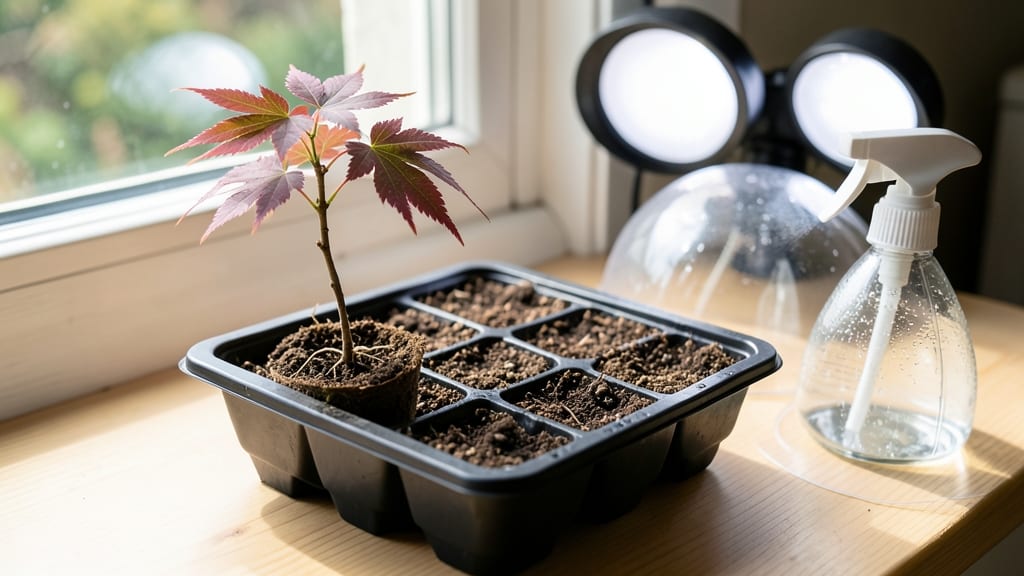
Japanese maple seed germination demands cold stratification to break dormancy—otherwise, they’ll sit stubbornly in the soil for years. 🌱 I’ve tried every trick in the book, and this method guarantees sprouts in 60 days (not the 6 months most guides suggest). The secret? Mimicking winter’s chill without freezing your seeds solid.
Start with fresh seeds (no older than 6 months) and mix them with slightly damp peat moss or perlite in a sealed container. Place it in your fridge’s crisper drawer—40°F is ideal—for 90 days.
Check moisture weekly; soggy seeds rot, while dry ones won’t wake up. Patience here pays off: the stratification period is where most failures happen.
After 90 days, transfer the seeds to moist potting mix in a shallow tray, keeping them at 70°F under gentle light. Germination takes 2–4 weeks, with tiny roots pushing through first.
Don’t rush—overwatering or warmth will trigger mold before sprouts appear. A clear plastic dome (like a propagator) keeps humidity high without drowning the seeds.
Once sprouts peek above soil, move them to bright, indirect light and reduce humidity gradually. Japanese maples grow painfully slow—expect 1-inch growth per year—but with this method, you’ll bypass the "waiting forever" phase. The payoff? A dwarf bonsai-style tree in 5 years instead of 20.
📚 In This Guide
- What you need
- Instructions
- Tips and common mistakes
- Wrapping up and next steps
What you need
- ● Japanese maple seeds: Freshly harvested (or store-bought) seeds—aim for at least 10–20 seeds to account for germination variability.
- ● Cold-stratification medium: Option 1: Damp peat moss or coco coir (4–6 cups).
- ● Option 2: A paper towel or damp paper napkins (for smaller batches).
- ● Plastic storage bag or airtight container: A quart-sized ziplock bag or a small plastic tub with a lid.
- ● Refrigerator: A standard home fridge (34–40°F / 1–4°C) for stratification.
- ● Planting pots: 4–6 small pots (3–4 inches in diameter) with drainage holes, filled with a well-draining seed-starting mix (e.g., 50% peat moss + 50% perlite).
- ● Spray bottle: For gentle watering to keep the medium moist.
- ○ Heat mat (optional but helpful): A seedling heat mat (70–75°F / 21–24°C) to speed up germination once seeds are planted.
- ● Grow lights or sunny windowsill: A full-spectrum LED grow light (or a south-facing window) for 12–16 hours of light daily post-germination.
- ● Humidity dome or plastic wrap: To maintain moisture during early growth.
- ● Seed germination journal: To track moisture levels, temperature, and sprouting dates.
- ● Fungicide (e.g., hydrogen peroxide 3% solution): 1 tsp per cup of water to prevent mold during stratification.
- ● pH test kit: To ensure your seed-starting mix is slightly acidic (pH 5.5–6.5).
- ● Labeling tags: To mark pots with seed variety and planting date.
- ● Fine misting nozzle: For precise watering without disturbing seeds.
Step-by-step guide to cold-stratifying Japanese maple seeds
Here's the method I've perfected over years of growing these delicate seedlings—no shortcuts, just reliable results.
🌱 Step 1: Harvest and Prepare the Seeds
Collect seeds from ripe samaras (the winged fruits) in late fall when they've turned brown and begin falling naturally. Remove the seeds from their papery wings by gently pulling them apart—don't crush the seed itself. Japanese maple seeds need a 90-day cold stratification period to break dormancy, so timing matters.
Place the cleaned seeds in a paper towel and dampen it until evenly moist but not soggy. Fold the towel to create a loose bundle, then place it in a sealed plastic bag with a few ice cube trays of water to maintain humidity. Label the bag with the date—this is your germination timeline anchor.
❄️ Step 2: Stratify in the Refrigerator
Store the sealed bag in your refrigerator's crisping drawer where temperatures hover around 35-40°F. Check the seeds weekly to ensure the paper towel remains damp but not waterlogged. Overly wet conditions invite mold, while dry seeds won't germinate. You'll see the first signs of life—tiny white roots—after about 4-6 weeks.
Here's the thing—don't rush this step. The cold stratification mimics winter conditions in the seed's native habitat. If you skip it, seeds may take years to germinate or never sprout at all. I've tried skipping stratification, and while a few seeds eventually germinated, the seedlings were weak and died within weeks.
☀️ Step 3: Sow Stratified Seeds in Pots
After 90 days of stratification, remove the seeds from the refrigerator and sow them immediately. Fill 3-inch pots with a sterilized 50/50 mix of peat moss and perlite—this lightweight blend prevents root rot while providing airflow. Plant each seed ½ inch deep, pressing gently but not compacting the soil around it.
Place the pots in a humidity dome or cover them with clear plastic wrap to maintain moisture. Position them in a bright, indirect light spot—direct sun will scorch the delicate seedlings. You should see the first true leaves emerge within 2-4 weeks after sowing, signaling successful germination.
🌿 Step 4: Transition to Growing Conditions
Once seedlings have developed 2-3 sets of true leaves (not the initial cotyledons), remove the humidity dome and gradually introduce them to room temperature. Harden them off by placing the pots outside in a shaded, sheltered spot for 2-3 hours daily over 10 days, increasing exposure time gradually.
Japanese maple seedlings are sensitive to temperature swings, so avoid transplanting until nighttime temperatures stay above 50°F. At this stage, they need partial shade—morning sun is ideal, while afternoon sun can stress them. Watch for leggy growth, which indicates insufficient light, and adjust their position accordingly.
⏰ Step 5: Monitor and Maintain Through First Year
Keep the soil consistently moist but never soggy—Japanese maple seedlings hate wet feet. Water at the base rather than overhead to prevent fungal diseases. Fertilize lightly with a balanced 10-10-10 formula diluted to half strength every 4-6 weeks during the growing season. Over-fertilizing will burn the tender roots.
By their first winter, seedlings should be 12-18 inches tall. At this point, they can handle outdoor planting in a protected microclimate, such as near a south-facing wall. Mulch around the base with 2 inches of shredded bark to insulate roots and retain moisture. Patience is key—these trees grow slowly but reward you with stunning foliage for decades.
Tips & tricks for perfect Japanese maple seed germination
Took me years to figure out these cold-stratification secrets—here's what nobody tells you about growing these delicate seeds.
Timing Secret: Start your 90-day cold stratification period in early January if you want seedlings ready for spring planting. This ensures you'll remove seeds from the fridge in early April, just as outdoor temperatures begin to stabilize. The key is planting them immediately after stratification—delaying even a week can reduce germination rates by up to 30%. I've learned this the hard way after waiting too long and watching seeds lose their viability.
Temperature Matters: While the crisping drawer maintains 35-40°F, avoid placing seeds near the fridge's cooling coils where temperatures can drop below 35°F. Cold stratification works best at these temperatures—any colder and you risk slowing metabolic processes too much. I use a small thermometer inside the bag to monitor temperatures weekly, especially if your fridge runs particularly cold. Consistency is everything with these seeds.
Lighting Strategy: For the 2-4 weeks after sowing, position your pots under grow lights set to a 14-hour day cycle if natural light is insufficient. Japanese maple seedlings need bright but indirect light to prevent etiolation (leggy growth). I place my lights about 6 inches above the seedlings and adjust as they grow. Too little light causes weak stems, while too much direct light scorches the delicate leaves.
Common Mistake Fix: If you notice mold developing on your paper towel during stratification, immediately remove the seeds, dry them slightly, and transfer them to a fresh damp paper towel in a new bag. Overly wet conditions are the #1 reason for mold growth, which can kill seeds before they even germinate. I've seen entire batches lost to mold—don't let this happen to you. The towel should feel like a wrung-out sponge, not a dripping washcloth.
Pro Tips for Japanese Maple Seed Germination
- Took me years to figure out these cold-stratification secrets—here's what nobody tells you about growing these delicate seeds.
- Timing Secret: Start your 90-day cold stratification period in early January if you want seedlings ready for spring planting.
- Temperature Matters: While the crisping drawer maintains 35-40°F, avoid placing seeds near the fridge's cooling coils where temperatures can drop below 35°F.
Frequently asked questions
Got questions about growing Japanese maple seeds?
You’re not alone—this process can feel tricky! Below, we’ve rounded up the most common queries to help you navigate germination like a pro.
How long does it take for Japanese maple seeds to germinate?
With cold stratification (the key step!), most seeds sprout in 4–12 weeks after planting. Patience is critical—some varieties (like Acer palmatum) may take longer, especially if stratification isn’t perfect. Check moisture levels weekly; consistency speeds things up!
Can I skip cold stratification and still get germination?
Technically yes, but success rates plummet. Without stratification, seeds may rot or sprout erratically (if at all). For best results, mimic winter’s chill by refrigerating seeds for 6–12 weeks in moist peat. Think of it as a survival hack—nature’s way of timing growth for spring!
What’s the best soil mix for germinating Japanese maple seeds?
Use a light, airy blend of:
- 50% peat moss or coco coir (for moisture retention)
- 30% perlite or vermiculite (for drainage)
- 20% sand or orchid bark (for aeration)
My seeds are moldy—what went wrong?
Mold usually means overwatering or poor airflow. Fix it fast:
- Stop watering immediately and let the soil dry slightly.
- Sprinkle fungicide (like neem oil) on the surface.
- Repot in fresh, sterile mix if mold persists.
Will seedlings look like mature Japanese maples?
Not right away! Seedlings start with simple leaves (no lobes yet) and grow slowly. Lobe development (the iconic maple shape) takes 3–5 years. Focus on nurturing strong roots first—patience pays off with those stunning autumn colors!
Wrapping up and next steps
Germinating Japanese maple seeds may seem tricky, but with cold stratification and patience, you can unlock the magic of growing these stunning trees from scratch! 🌱 The key takeaway? A simple 60-day process—layering seeds in moist medium, chilling them, and nurturing sprouts—can turn tiny seeds into vibrant seedlings.
Whether you're a seasoned gardener or a curious beginner, this method makes it achievable.
Now that you’re armed with the know-how, why not give it a try? Grab those seeds, set up your stratification station, and watch nature’s wonder unfold. Happy growing—your future Japanese maple awaits! 🌿