
Propagation
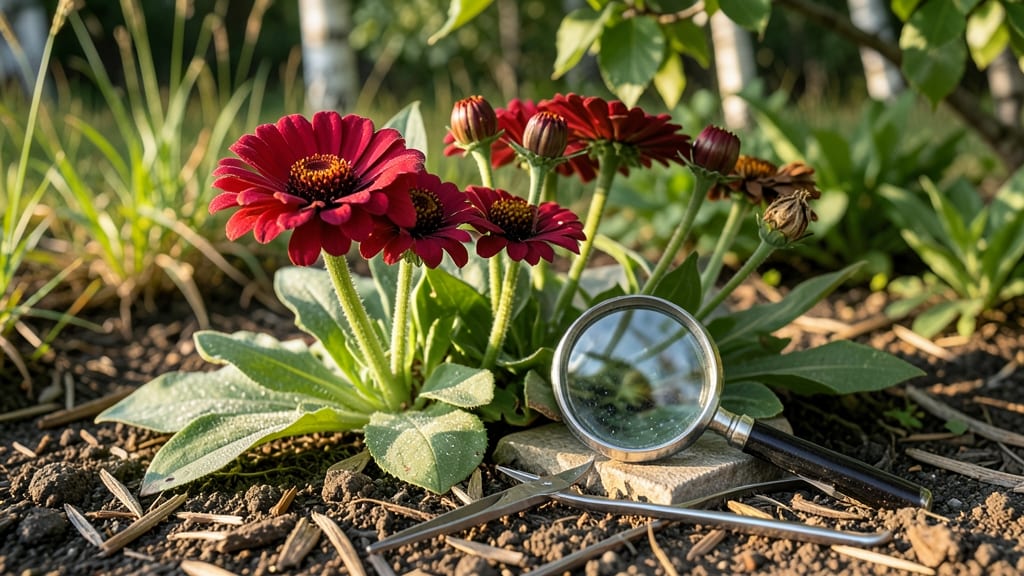
Before tossing them, learn how to tell if zinnia seeds are viable—a quick float test reveals their hidden potential in just minutes. I’ve tossed out perfectly good seeds because they looked fine, only to watch them fail to sprout.
The float test and color check save you from that heartbreak by showing which seeds still hold life.
Start by filling a glass with room-temperature water and dropping your seeds in—sinkers are good, floaters are done. Next, check for dark spots or mold (a red flag) and avoid seeds that feel shriveled or hollow.
Most zinnia seeds stay viable for 2-3 years if stored dry and cool, but this quick test cuts guesswork.
Viable seeds will germinate within 7-14 days under warm conditions, sprouting into sturdy seedlings with vibrant green leaves. Store leftover seeds in a sealed container with silica gel packets to extend their life—your next zinnia patch will thank you.
Common mistakes? Testing seeds too late or ignoring storage conditions. Keep them in a dark, dry place (like a fridge) to preserve viability. Now you’re ready to plant with confidence—no more wasted seed packets!
What Kills Seed Viability
Zinnia seeds may fail to sprout even when stored properly because several hidden factors compromise their ability to germinate. Understanding these causes helps you troubleshoot why your seeds might not be viable—and how to prevent it next time.
🌡️ Extreme Temperature Fluctuations
Zinnia seeds are sensitive to temperature swings, especially during storage. While they thrive in warm, stable conditions (60–75°F or 15–24°C), exposure to:
- Freezing temps: Ice crystals rupture cell membranes, killing the embryo inside the seed. Even brief exposure to below 32°F (0°C) can reduce viability by 30–50%.
- Heat stress: Temperatures above 90°F (32°C) for prolonged periods denature enzymes critical for germination. This is common in poorly ventilated seed storage areas.
- Moisture + heat combo: Sweaty seed packets or damp storage (like a basement) create the perfect storm for mold and fungal growth, which outcompete the seed’s nutrients.
Actionable fix: Store seeds in a cool, dry place (50–60°F or 10–15°C) with a desiccant. Avoid refrigeration unless seeds are dormant (like some perennials)—zinnias prefer room temp.
💧 Moisture Overload or Drought
Zinnia seeds need just enough moisture to activate germination, but too much or too little spells disaster:
- Excess moisture: Seeds absorb water and swell, but if stored in humid conditions (>60% humidity), they can sprout prematurely (a process called pre-germination). This exhausts their energy reserves before planting, leaving them weak or dead.
- Dehydration: Seeds lose viability when moisture drops below 5–10%. Overly dry seeds become brittle, and their embryos desiccate. This is why old seeds often fail to germinate—even if they look intact.
- Mold contamination: Fungal spores thrive in damp seeds, blocking oxygen and suffocating the embryo. A musty smell or fuzzy growth on seeds is a red flag.
Actionable fix:
- Use airtight, moisture-proof containers (like Mylar bags with oxygen absorbers).
- Add a dampness indicator (like silica gel or a hygrometer) to monitor humidity.
- For long-term storage, reduce seed moisture to 5–7% by drying them in a warm, dark place for 1–2 days before sealing.
🕰️ Seed Age and Natural Lifespan
Zinnia seeds aren’t immortal—most lose viability within 2–5 years, depending on storage conditions. Here’s how age affects them:
| Seed Age | Germination Rate Drop | Visible Signs |
|---|---|---|
| 0–1 year | 90–100% | Plump, glossy, uniform color |
| 2–3 years | 50–80% | Slightly shriveled, duller color |
| 4–5 years | 10–30% | Hard, brittle, or cracked seed coats |
| 6+ years | 0–5% | Powdery, discolored, or moldy |
Why it happens: Over time, seed oils oxidize, proteins degrade, and membranes lose integrity. Even if the seed looks fine, the embryo’s DNA may degrade, making it unable to trigger germination.
Actionable fix:
- Label seeds with purchase dates and test viability annually using the float test (sink = viable; float = dead).
- Prioritize fresh seeds (from the current or previous year) for best results.
- If storing long-term, freeze seeds at 0°F (-18°C) for up to 10 years (though zinnias are annuals, so this is overkill unless you’re saving heirlooms).
🦠 Pests and Pathogens
Tiny invaders can silently sabotage your seeds before you even plant them:
- Seed-eating insects: Weevils, beetles, and moth larvae burrow into seed packets, consuming the embryo. Look for tiny holes or frass (insect droppings) in stored seeds.
- Fungal/bacterial infections: Pathogens like Aspergillus or Rhizopus thrive in damp seeds, producing toxins that kill the embryo. Infected seeds may develop black or green mold.
- Rodent damage: Mice and rats gnaw through seed packets, contaminating seeds with urine, saliva, and feces—all of which introduce harmful bacteria.
Actionable fix:
- Store seeds in metal or thick plastic containers (rodents can’t chew through them).
- Freeze seeds for 48 hours to kill insect eggs before storage.
- Inspect seeds for signs of pests (e.g., chewed edges, webbing) before planting.
⚡ Improper Handling During Harvesting
Even if seeds are stored perfectly, poor harvesting techniques can doom them:
- Overripe or underripe seeds: Zinnia seeds harvested too early (green and soft) won’t mature properly, while seeds left too long on the plant may shatter or attract pests.
- Moisture trapped in seed heads: If you harvest seeds on a damp day, residual moisture accelerates mold growth during storage.
- Physical damage: Crushing or bruising seeds during threshing (removing seeds from flower heads) can rupture the seed coat, exposing the embryo to decay.
Actionable fix:
- Harvest seeds when flower heads turn brown and dry (usually 4–6 weeks after blooming).
- Let seeds dry completely (1–2 weeks) in a well-ventilated, dry place before storing.
- Use a clean, dry surface (like a paper towel) to gently separate seeds from chaff.
Revive your zinnia seeds now
Testing zinnia seed viability doesn’t have to be a guessing game—once you’ve identified the issue, you can take actionable steps to maximize germination success. Below are practical solutions tailored to common problems, complete with quick fixes and prevention tips to keep your seeds thriving.
If your seeds pass the float test (sinking = potentially viable) but still refuse to sprout, the issue might be dormancy, improper moisture, or temperature stress.
How to Revive Them 1. 🌱 Break Dormancy with Scarification
- What it is: A process that mimics natural wear-and-tear to help seeds wake up.
- How to do it: Lightly sandpaper the seed coat or nick it with a sharp knife (be gentle—don’t cut too deep!).
This lets water penetrate faster. - Pro tip: 💡 Soak seeds in warm water for 12–24 hours before planting if scarification isn’t an option.
- 💧 Adjust Moisture Levels
- Problem: Overwatering can suffocate seeds, while underwatering dries them out.
- Solution: Use a spray bottle to mist the soil lightly, keeping it consistently damp (not soggy). Cover the tray with plastic wrap to retain humidity—remove it once sprouts appear.
- 🌡️ Optimize Temperature
- Ideal range: Zinnia seeds germinate best between 65–75°F (18–24°C).
- Quick fix: Place the seed tray on a heat mat or in a sunny windowsill. If your home is too cold, try a propagator or a clear plastic dome to trap warmth.
- ⏰ Give Them Time (and Light)
- Wait it out: Zinnia seeds can take 7–14 days to germinate. Avoid disturbing them—patience is key!
- Light trick: Once sprouts emerge, move them to a bright, indirect light source (like a grow light) to prevent leggy seedlings.
Not all floating seeds are doomed! Some may have air pockets or lightweight husks that keep them buoyant without killing viability.
How to Test Further
- 🔍 The Paper Towel Trick - Fold a damp paper towel, place 5–10 suspect seeds inside, and roll it up.
Seal it in a plastic bag and store it in a warm, dark place. - Check in 3–5 days: If even one seed sprouts, the rest are likely viable—plant them immediately!
- 🌿 Plant Them Anyway (Low-Risk Strategy)
- Why it works: Some seeds (especially older ones) may not float-test well but still germinate in ideal soil conditions.
- How: Sow them twice as deep as usual (¼ inch) and keep the soil moist. Thin out weak sprouts later.
Seeds lose viability over time, but proper storage and pre-treatment can extend their lifespan.
How to Maximize Germination
- 🧊 Cold Stratification (For Stubborn Seeds)
- Best for: Seeds stored for 2+ years.
- Method: Mix seeds with damp sand in a sealed container, then refrigerate for 7–14 days. Plant immediately after.
- 🌿 Use a Seed Germinator
- What it is: A small, controlled environment with consistent warmth and humidity.
- Why it helps: Mimics natural conditions, boosting weak seeds’ chances.
- ✨ Try a Hormone Treatment (For Last Resort)
- Option 1: Soak seeds in hydrogen peroxide (3%) for 10 minutes to disinfect and soften the seed coat.
- Option 2: Use a commercial rooting hormone (like Dip ‘N Grow) to jumpstart growth.
- 📅 Store Seeds Properly: Keep them in a cool (35–40°F), dry place (like a sealed jar in the fridge).
Avoid humidity—moisture = mold risk! - 🗓️ Label and Rotate Stock: Use the oldest seeds first (FIFO method) and write the harvest date on seed packets. - 🌱 Test a Sample Batch: Before planting a whole tray, test 5–10 seeds using the float or paper towel method to gauge viability. - 🌿 Choose Fresh Seed Sources: Buy from reputable suppliers or harvest seeds from healthy, mature zinnias (let flowers fully dry on the plant before collecting).
If none of these methods work after 3–4 weeks, your seeds may have expired. Don’t waste time or resources—buy fresh seeds for your next planting session. Zinnias are prolific, and new seeds will give you vibrant blooms in no time!
Frequently asked questions
Why do some zinnia seeds float while others sink in the water test?
Seeds that float typically lack the density of viable ones—they may be hollow, empty, or have absorbed too much moisture during storage. Sinking seeds usually contain a healthy embryo and are more likely to germinate. However, some seeds with air pockets or lightweight husks may float but still be viable, so always test a few with the paper towel method to confirm.
Can I still use zinnia seeds that smell musty or have mold?
No, discard any seeds showing signs of mold, musty odors, or discoloration. Mold indicates fungal growth that can kill the seed's embryo or harm your plants. Always store seeds in a dry, airtight container with a desiccant like silica gel to prevent moisture-related spoilage.
How long can I store zinnia seeds before they lose viability?
Under ideal conditions (cool, dry, dark storage), most zinnia seeds remain viable for 2-3 years. After 4 years, germination rates drop significantly, and seeds older than 5 years rarely sprout. Label your seed packets with the harvest date to track freshness and prioritize using older seeds first.
What's the best way to test zinnia seed viability if I don't have time for the float test?
Try the paper towel method: Place 5-10 seeds between damp paper towels in a sealed plastic bag, then store them in a warm, dark place. Check for sprouts in 3-5 days. If at least half sprout, your seeds are likely viable. This method works well for quick results without special equipment.
Will freezing zinnia seeds extend their shelf life?
Freezing (0°F/-18°C) can preserve zinnia seeds for up to 10 years, but it's overkill for annual flowers like zinnias. For most gardeners, cool (35-40°F/2-4°C) and dry storage in the fridge works perfectly. Freezing is better suited for heirloom or rare varieties you want to save long-term.