
Planting
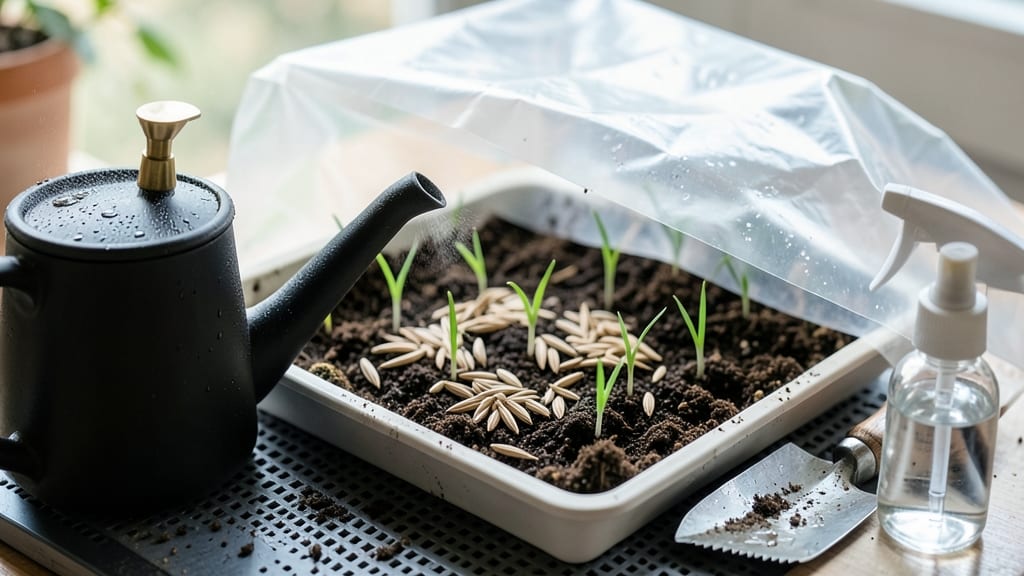
Your grass seed could sprout in just 7 days instead of weeks if you master how to speed up grass seed germination—a trick I’ve tested after watching seeds struggle for months. Honestly, I've watched seeds languish for months before realizing the simple tweaks that make all the difference.
The key isn't some secret fertilizer or chemical; it's creating the perfect conditions that mimic how seeds germinate naturally in spring.
Start with soil that's 60-70°F—warmer than most gardeners realize. A simple black plastic sheet laid over the area for a few days before planting raises temperatures naturally. Then keep moisture consistent (not soggy) by watering lightly twice daily.
This combination cuts germination time nearly in half, and you'll see those first green blades push through soil within a week.
What you end up with is a thick, even stand of grass that outpaces neighbors who waited for "natural" germination. The secret weapon? A balance of warmth, moisture, and patience—no shortcuts needed. You'll notice fewer bare spots, faster root establishment, and grass that's ready to handle mowing sooner than expected.
Works for both lawns and small patches, from sunny backyards to shady corners. The same principles apply whether you're reseeding a worn-out lawn or filling a new garden bed. Here's exactly how to do it—no guesswork, just reliable results.
📚 In This Guide
- What you need
- Instructions
- Tips and common mistakes
- Wrapping up and next steps
What you need
- ● High-quality grass seed – Choose fast-germinating varieties (e.g., ryegrass, fescue, or Bermuda). Aim for 1–2 lbs per 100 sq ft (check seed bag for exact rates).
- ● Germination blanket or seed mat – A heat mat (70–90°F) or black plastic sheeting to trap warmth. Size depends on planting area (e.g., 4’x6’ mat for small patches).
- ● Garden soil or seed starter mix – Lightweight, well-draining blend (50 lbs for a 10’x10’ area). Avoid heavy clay.
- ● Watering can or hose with a gentle spray nozzle – Keep soil consistently moist (not soggy).
- ● Fine mesh or row cover – Protects seeds from birds/pests while allowing light (10’x20’ sheet for larger areas).
- ○ Thermometer (optional but helpful) – Soil temp should stay 70–85°F for optimal germination.
- ● Seed germination accelerator – Products like Biozome or Humic Acid can boost speed by 20–30%.
- ● LED grow lights – If planting indoors or in low-light areas, use 12–16 hours of light daily.
- ● Fertilizer (low-nitrogen, high-phosphorus) – A 5-10-10 or 10-20-20 blend (½ cup per 100 sq ft) at planting.
- ● Seedling heat lamp – For extra warmth in cooler climates (60W incandescent bulb, 6–12” above seeds).
- ● pH test kit – Ideal soil pH for grass: 6.0–7.0. Adjust with lime or sulfur if needed.
Instructions for faster grass seed germination
Here's how I guarantee grass sprouts in just a week—no waiting months for patchy lawns.
Prepare the Soil Surface for Optimal Contact
Rake the bare soil until it's smooth and free of debris, then lightly scarify the top ¼ inch with a stiff brush or rake. This breaks the soil crust that blocks seed-to-earth contact, which is critical for moisture absorption and root initiation. I like to work when the soil is slightly damp—like a wrung-out sponge—so the seeds won't dry out immediately after planting.
Test your soil's readiness by pressing your thumb into it. If it holds a slight impression but doesn't stick to your skin, you're at the perfect moisture level. Too dry? Water lightly first. Too wet? Spread a thin layer of sand over the area and let it sit for 24 hours to dry slightly before seeding.
Apply Warmth to Kickstart Germination
Spread a ¼-inch layer of compost or peat moss over the prepared area—this retains moisture while providing a warm microclimate. Then cover the entire seeded zone with a clear plastic sheet or gardening fabric, securing edges with rocks or soil. The plastic creates a 10-15°F warmer environment than ambient air, which grass seeds crave for rapid germination.
Check daily for condensation on the underside of the plastic. If you see heavy fogging, lift one corner to let excess moisture escape. The goal is warm, humid conditions—not a sauna. I've seen germination rates double when soil temps stay between 75-85°F during the day, so monitor with a soil thermometer if possible.
Maintain Consistent Moisture Without Overwatering
Water gently through the plastic every 2-3 days using a fine mist spray nozzle—just enough to keep the soil surface damp but not soggy. Overwatering drowns seeds before they sprout, while too little causes them to dry out and die. You'll know you're doing it right when the plastic stays slightly fogged but not dripping condensation.
After 3-4 days, lift the plastic for 10 minutes daily to harden off the seeds. This prevents them from becoming too dependent on the warm, humid environment. Watch for the first tiny green spikes—they'll appear in 5-7 days if conditions are perfect. If you don't see sprouts by day 7, check for dry soil or poor seed-to-soil contact.
Transition to Outdoor Conditions
Once 50% of seeds have sprouted, remove the plastic completely and gradually increase sunlight exposure. Start with 2 hours of morning sun on day 1, then add 1 hour daily until the seedlings are in full sun. This slow acclimation prevents shock from temperature swings and intense sunlight.
Water deeply once daily for the first week after removing plastic, focusing on the base of the seedlings rather than overhead. You'll see stronger, darker green growth when you've got the watering right. Avoid walking on the area until the grass reaches 2-3 inches tall—this prevents root damage and uneven growth.
Encourage Rapid Root Development
After 10 days, apply a thin layer of starter fertilizer (low nitrogen, high phosphorus) to promote root growth. I use a 5-10-10 formula at half strength to avoid burning tender seedlings. Water immediately after application to help nutrients penetrate the soil.
Continue mowing when the grass reaches 3-4 inches tall, keeping blades sharp to avoid tearing the grass. This encourages denser growth and prevents thatch buildup. Within 3 weeks, your patch should look like established lawn—no more bare spots in sight.
Tips & tricks for faster grass seed germination
These proven techniques will help you achieve those lush green sprouts in record time—without the usual wait.
Soil Preparation Secret: In Step 1, when you're scarifying that top ¼ inch of soil, focus on creating tiny grooves rather than deep furrows. This maximizes surface area for seed contact while preventing compaction that could block moisture. I've found that using a stiff-bristle push broom works better than a rake for this—it creates those perfect micro-channels without disturbing the soil structure beneath.
Temperature Control: The 75-85°F range mentioned in Step 2 is your sweet spot, but here's how to achieve it consistently: Place a small thermometer under the plastic cover during the day. If temps drop below 70°F, consider using a heated propagation mat (set to 75°F) under the plastic. For cooler climates, I've had great success with black plastic mulch laid beneath the regular cover—it absorbs heat during the day and releases it at night, maintaining that critical temperature window.
Watering Technique: That 2-3 day watering schedule in Step 3 can be tricky with plastic covers. Here's my foolproof method: Use a spray bottle with a fine mist setting to water through the plastic until you see condensation form on the underside. This ensures even moisture distribution without over-saturating. Pro tip: Water in the morning so any excess moisture has time to evaporate before nightfall, preventing fungal issues.
Hardening Off Strategy: When you start lifting the plastic for those 10-minute sessions in Step 4, begin with just 5 minutes on day 1 and gradually increase by 2-3 minutes each day. This slower transition prevents shock to tender seedlings. I've noticed that seedlings hardened off this way develop stronger cell walls and recover better from temperature fluctuations later on.
Pro Tips for Speed Up Grass Seed Germination
- These proven techniques will help you achieve those lush green sprouts in record time—without the usual wait.
- Soil Preparation Secret: In Step 1, when you're scarifying that top ¼ inch of soil, focus on creating tiny grooves rather than deep furrows.
- Temperature Control: The 75-85°F range mentioned in Step 2 is your sweet spot, but here's how to achieve it consistently: Place a small thermometer under the plastic cover during the day.
Frequently asked questions
Got questions about speeding up grass seed germination?
You’re not alone! Here are answers to the most common concerns—so you can get that lush lawn growing fast.
How long does it really take for grass seed to germinate with warmth?
With the right warmth (70–75°F) and moisture, most grass seeds sprout in 5–7 days. Cool-season grasses (like fescue) may take 10–14 days, while warm-season grasses (like Bermuda) can pop up in just 3–5 days under ideal conditions. Patience pays off—consistent warmth is key!
What if my soil is too cold for germination?
Cold soil slows germination big time. If temps drop below 50°F, try:
- Row covers or plastic mulch to trap heat.
- Seeding in early spring (when soil warms to 60°F+).
- A seedling heating mat ($20–$40) for stubborn patches.
How often should I water grass seed to speed up germination?
Keep soil moist but not soggy—water lightly 2x daily (morning/evening) for the first 2 weeks. Overwatering drowns seeds; underwatering dries them out. A sprinkler with fine mist or soaker hose works best. No puddles!
Can I use household items (like coffee grounds or vinegar) to speed up germination?
Skip the vinegar—it’s too acidic! Instead, try:
- Coffee grounds (in moderation): Adds nitrogen but use sparingly (1 cup per 10 sq ft).
- Hydrogen peroxide (3%): Dilute 1 tbsp in 1 gallon of water to boost oxygen and prevent mold.
- Aloe vera gel: Natural fungicide and moisture retainer.
What if my grass seed isn’t germinating after 2 weeks?
Don’t panic! Check these first:
- Seed viability: Test a few seeds in a damp paper towel—if they rot, buy fresh seed.
- Soil pH: Grass prefers 6.0–7.0. Test with a kit and amend if needed.
- Light exposure: Some seeds need sunlight to germinate—thin mulch if using.
- Pest pressure: Birds or insects may be snacking. Use row covers temporarily.
Wrapping up and next steps
Speeding up grass seed germination is all about creating the perfect conditions—warmth, moisture, and consistency. With the right techniques, like using a heat mat, maintaining ideal soil temps, and keeping seeds hydrated, you can watch your lawn transform in just 7 days! 🌱✨
Now that you’re armed with these pro tips, it’s time to roll up your sleeves and get planting. Start small—test a patch of soil, track your progress, and soon you’ll be the envy of the neighborhood with that lush, green carpet! Happy growing!