
Lawn
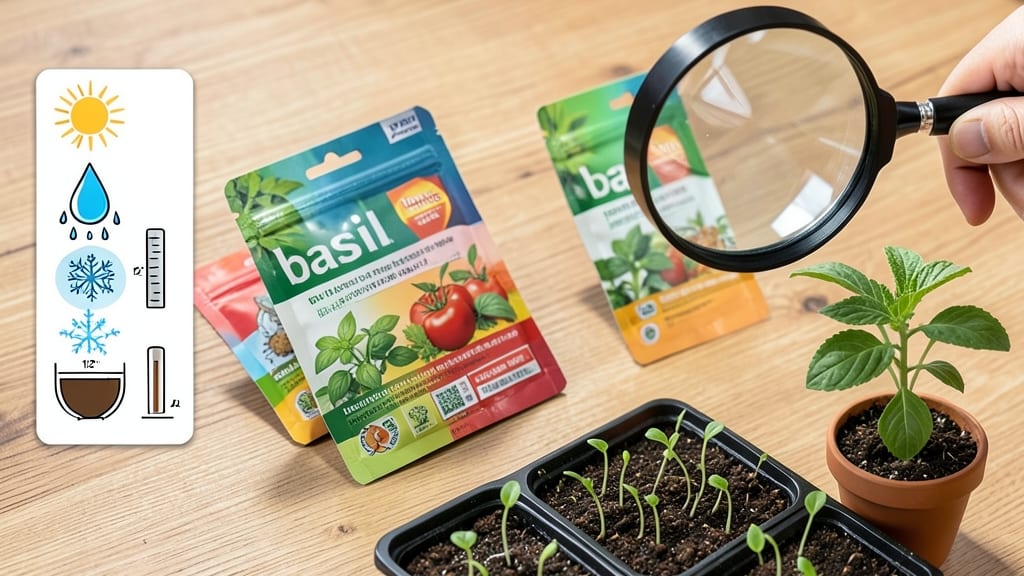
How to read a seed packet holds the secret to growing exactly what you want—if you know where to look. 🌱 Those tiny labels packed with numbers and abbreviations are your gardening roadmap, telling you when, where, and how to plant for success. I learned this the hard way after planting tomatoes in the wrong zone and watching them struggle through a cold spring.
The key details start with your planting zone—check the USDA map to match your location with the packet’s zone range. Then look for days to maturity, which tells you when to start seeds indoors or when to expect harvests.
Sunlight requirements (like "full sun" or "partial shade") and soil preferences are also right there, waiting to be decoded.
Once you master these basics, you’ll pick the right varieties for your climate, avoid common mistakes like planting too early, and grow plants that thrive—not just survive. Imagine snapping fresh peas from your garden in 55 days instead of wondering why your plants look sad all season.
This skill works for every seed packet, every season, and every garden—whether you’re a city balcony gardener or a backyard farmer. Let’s crack the code together so you can grow with confidence from day one.
📚 In This Guide
- What you need
- Instructions
- Tips and common mistakes
- Wrapping up and next steps
What you need
- ● The seed packet itself – Choose one with clear, legible text (or a magnifying glass if needed!).
- ● A notebook or digital device – For jotting down key details like planting dates, zones, and harvest times.
- ● A ruler or measuring tape – To check spacing requirements for rows or individual plants.
- ● Access to a planting zone map – Use the USDA Plant Hardiness Zone Map (or a local gardening guide if you’re outside the U.S.).
- ● A calendar or gardening planner – To track frost dates, planting windows, and harvest timelines.
- ● Highlighters or sticky notes – Mark important details like sunlight needs or soil pH preferences.
- ● A soil pH test kit – If your seeds require specific soil conditions (e.g., acidic for blueberries).
- ● Garden gloves – For handling seeds or soil comfortably.
- ● A seedling heat mat or grow lights – If you’re starting indoors and need extra warmth or light.
- ● A gardening app – Like Gardenate or PlantNet for real-time zone lookups and reminders.
How to read a seed packet: decode planting zones, days to harvest, and grower tips
Here's how to turn that tiny packet into a growing roadmap—no gardening degree required.
📜 Step 1: Check the Planting Zone and Date
The USDA Plant Hardiness Zone tells you when to start seeds indoors or when to plant directly outside. Look for a number like Zone 5-9—this means your seeds can handle your area's coldest temperatures. If you're unsure, use the [USDA Zone Map](https://planthardiness.ars.usda.gov/) to find your zone by ZIP code.
Next, check the last frost date range. For example, if your zone is 6 and the packet says "plant after last frost," wait until April 15-May 1 in most Zone 6 areas. Starting too early risks frost damage—you'll see blackened leaves or stunted growth if you're not careful.
🌱 Step 2: Understand Seed Starting and Spacing
The depth (like "plant ¼ inch deep") tells you how far to press seeds into soil. Planting too deep can delay germination, while planting too shallow risks drying out. Use your finger to make a tiny hole—it should be about twice the seed's width deep.
Spacing (e.g., "thin to 18 inches apart") refers to how much room each plant needs at maturity. Crowding leads to weak stems and disease. If the packet says "sow seeds 1 inch apart," use a toothpick to mark rows—it keeps things neat and prevents overcrowding.
☀️ Step 3: Decode Light and Soil Needs
Look for terms like "full sun" (6+ hours daily) or "partial shade" (3-6 hours). A south-facing window usually provides enough light, but if your seedlings stretch toward the glass (a sign of leggy growth), move them closer to the light or use a grow bulb.
Soil preferences are often listed as "well-draining" or "moist but not soggy." If the packet says "add compost," mix in 1 part compost to 3 parts potting soil—this improves drainage and nutrients without overwhelming tender roots.
⏰ Step 4: Plan for Days to Harvest and Success Rates
The "days to harvest" number (like "50 days") counts from when you plant the seed—not when you transplant. If it says "70 days," start counting from your first planting date, not when you move seedlings outside.
Germination rates (e.g., "85%") tell you how many seeds will sprout. If a packet says "80%," plant 10-15% more seeds than you need to account for failures. For example, if you want 10 plants, sow 12 seeds—it’s better to thin than to wonder why only 8 popped up.
💡 Step 5: Read the Fine Print for Extra Tips
Some packets include special instructions, like "soak seeds overnight" (for hard-coated varieties) or "direct-sow only" (meaning don’t start indoors). Ignoring these can lead to poor germination—soaked seeds like lupines won’t sprout without that step.
Watch for pest or disease notes, too. If the packet warns about powdery mildew, plant in a spot with good airflow or choose a resistant variety. A little prep now saves headaches later—trust me, I’ve lost entire batches of basil to fungal issues!
Tips & tricks for mastering seed packet secrets
Those tiny seed packets hold more gardening wisdom than you might think—here's how to unlock their full potential without the guesswork.
Zone Confidence: Your USDA Plant Hardiness Zone isn't just a number—it's your frost-free deadline. If your packet says "Zone 5-9" and you're in Zone 7, you can plant earlier than Zone 5 gardeners. But here's the catch: check your last frost date range (like April 15-May 1 for Zone 6) rather than just the zone number. Some years frost comes late, and you don't want to risk those delicate seedlings. I always check the [National Weather Service's frost probability maps](https://www.weather.gov/) for my exact area.
Depth Precision: That "¼ inch deep" planting recommendation isn't arbitrary—it's based on seed size. For tiny seeds like lettuce, use a toothpick to make holes just twice the seed's width deep. Too shallow and they dry out; too deep and they struggle to break through. Pro tip: If your packet doesn't specify depth, use this rule: small seeds (like carrots) = 1/8 inch deep, medium seeds (like beans) = 1/2 inch deep, large seeds (like squash) = 1 inch deep.
Light Reality Check: When packets say "full sun" (6+ hours), they mean direct sunlight, not just bright light. Test your garden spots by placing a white plate where you plan to plant—if it's sunny for 6+ hours, that's your spot. For indoor seedlings, a south-facing window gives the most light, but if your seedlings stretch toward the glass (called "leggy growth"), they need more light. I keep mine under a grow bulb 12 inches away for 14 hours a day until they're strong enough for outdoor conditions.
Germination Insurance: That 80% germination rate? That means 2 out of 10 seeds might not sprout. To guarantee your 10 plants, sow 12 seeds. But here's what nobody tells you—some seeds (like tomatoes) germinate faster if you soak them overnight in warm water. Check the packet for "soak seeds overnight" instructions, especially for hard-coated seeds like lupines. I always soak my heirloom tomato seeds for 8 hours before planting, and it cuts my waiting time in half.
Pro Tips for Read A Seed Packet
- Those tiny seed packets hold more gardening wisdom than you might think—here's how to unlock their full potential wit...
- Zone Confidence: Your USDA Plant Hardiness Zone isn't just a number—it's your frost-free deadline. If your packet say...
- Depth Precision: That "¼ inch deep" planting recommendation isn't arbitrary—it's based on seed size. For tiny seeds l...
Frequently asked questions
What does “days to harvest” really mean?
The “days to harvest” number on a seed packet is an estimate based on ideal growing conditions (like sunlight, soil, and temperature). For example, if it says “50 days,” count from when the plant first sprouts, not when you plant the seed. Pro tip: Factors like weather or soil quality can shorten or lengthen this time—so stay patient and check your plants regularly!
What if I’m in a different planting zone than the one listed?
Seed packets often list recommended zones (like Zone 5-9), but don’t stress if yours is outside this range! Many seeds grow in adjacent zones—just adjust your planting time. For example, cool-season crops (like spinach) may thrive in a higher zone if planted in early spring or fall. Check your local frost dates and use online zone maps for guidance.
Can I plant seeds too late in the season?
Yes, but timing is key! Fast-maturing crops (like radishes or bush beans) can handle late plantings if they’ll reach harvest before the first frost. Slow growers (like tomatoes) need a long, frost-free season. Rule of thumb: Calculate backward from your average first frost date (found in almanacs or weather apps) and subtract the “days to harvest” to avoid disappointment.
What if my seeds don’t germinate? How do I troubleshoot?
Seeds may fail to sprout due to old age, improper planting depth, or temperature/soil issues. First, check the expiration date on the packet—most seeds last 1-5 years. Then, verify depth (usually 2-3x the seed’s width) and moisture (soil should feel like a damp sponge). Try this: Place a few seeds between damp paper towels in a warm, dark spot to test viability before replanting.
Are heirloom and hybrid seeds different when reading packets?
Yes! Heirloom seeds (open-pollinated) produce plants true to type, so you can save seeds year after year. Hybrid seeds (marked “F1”) may not reproduce identically, but they often offer disease resistance or faster growth. Look for terms like:
- “Save seeds” = Heirloom or open-pollinated.
- “Hybrid” or “F1” = Crossbred for specific traits.
- “Organic” = Grown without synthetic pesticides.
Wrapping up and next steps
Mastering how to read a seed packet unlocks a world of gardening success—whether you're a beginner or a seasoned green thumb! 🌱 By understanding planting zones, days to harvest, and care instructions, you’ll confidently grow thriving plants tailored to your climate.
Now that you’re equipped with these tips, it’s time to grab those seeds and get planting!
Ready to take the next step? Start small with a few packets, experiment with different varieties, and watch your garden flourish. Happy growing! 🌿