
Lawn
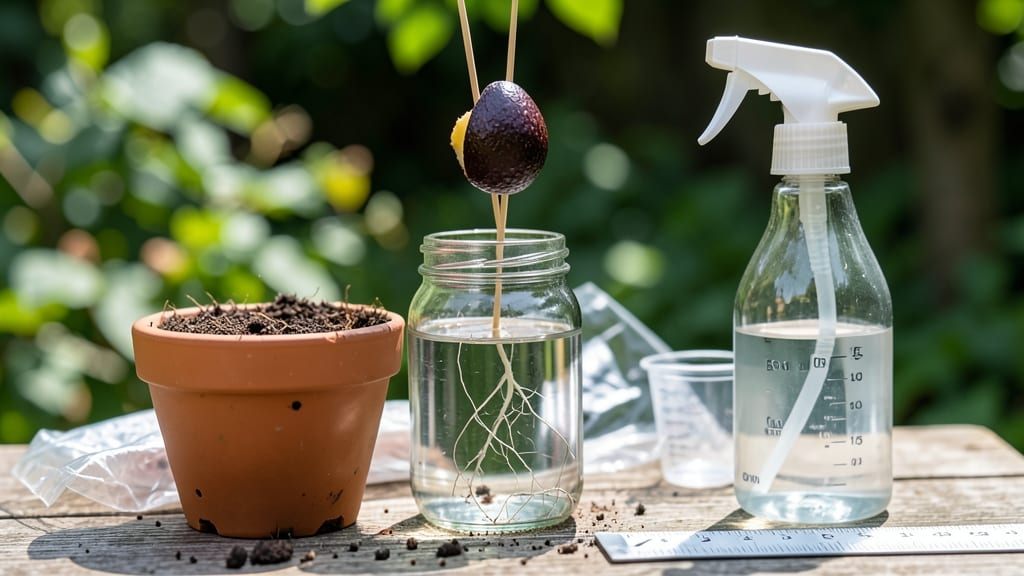
Preparing an avocado seed for planting starts with a simple twist-free viability check that saves you weeks of frustration. 🌱 I’ve turned pit after pit into a thriving houseplant—here’s how to test yours without damaging the seed or your patience.
The key lies in the brown pit’s hidden potential, waiting just beneath the surface.
First, clean the seed thoroughly under running water to remove any remaining fruit flesh—this prevents mold and rot. Then, insert three toothpicks evenly around the middle, leaving the bottom half exposed.
The goal? Balance the seed so the flat side faces down, ready for its first drink of water. A shallow dish or glass jar works perfectly for this step.
Place the seed in warm water (around 70°F) with the flat side down, ensuring the top half stays dry. Within 2-4 weeks, you’ll see roots sprouting from the bottom and a tiny shoot emerging from the top.
Keep the water fresh daily, and avoid letting the seed sit in stagnant water—this is where most beginners go wrong.
Once roots reach 2-3 inches, it’s time to plant in a well-draining mix of potting soil and perlite. The seedling thrives in bright, indirect light, and you’ll need to keep the soil moist but not soggy.
Patience pays off—some seeds take months to show signs of life, but the reward is a lush, 6-foot-tall avocado tree in your home.
📚 In This Guide
- What you need
- Instructions
- Tips and common mistakes
- Wrapping up and next steps
What you need
- ● Avocado seed: 1 fresh, firm seed (preferably from a ripe avocado with no cracks or mold).
- ● Toothpicks: 3 wooden toothpicks (or skewers/chopsticks as alternatives).
- ● Glass or jar: A clean, clear glass (16–24 oz) with a narrow neck (e.g., a mason jar or large drinking glass).
- ● Water: Room-temperature tap water (enough to cover 1–2 inches of the seed’s bottom).
- ● Paper towels: 1–2 sheets (to dry the seed before planting).
- ● Small pot or container: 6–8 inches in diameter with drainage holes (for transplanting).
- ● Potting soil: Well-draining, peat-based mix (or a blend of cactus/succulent soil).
- ○ Spray bottle: For misting soil (optional but helpful for humidity).
- ● Rooting hormone: To boost germination (gel or powder form).
- ● Plastic wrap: To create a mini greenhouse effect.
- ● Grow lights: If natural light is limited (12–16 hours/day).
- ● Humidity dome: Clear plastic cover for the pot.
- ● Labeled plant markers: To track growth progress.
Step-by-step guide to preparing an avocado seed for planting
Here's the foolproof method I use to test and prep seeds—no guesswork, just reliable germination.
🪴 Step 1: Extract the Seed and Remove Excess Flesh
Start with a ripe avocado and carefully twist the seed free from the pit. You'll notice a dark brown, rubbery cap on one end—this is the root end. Use a spoon to scrape away any remaining fruit flesh clinging to the seed, but leave the skin intact. This skin will protect the seed during the viability test and eventual germination.
I always rinse the seed under cool water to remove any lingering pulp. Pat it dry with a paper towel, then let it air-dry for 10-15 minutes while you prepare the next step. The seed should feel slightly damp but not wet—this prevents mold later. If the skin feels sticky, wipe it gently with a dry cloth.
⏰ Step 2: Perform the Viability Test (The Twist-Free Method)
Insert 3-4 toothpicks evenly around the seed's middle, spacing them about ½ inch apart. The toothpicks should rest just below the widest part of the seed, not piercing the root end. This creates a stable cradle for suspending the seed over water without damaging it.
Place the seed in a glass or jar with 1-2 inches of water, ensuring the bottom ⅓ of the seed stays submerged. You'll see condensation form on the seed's skin within 24 hours—this confirms it's alive and ready to sprout. If no condensation appears after 3 days, the seed is likely nonviable, and you can start fresh with a new one.
💧 Step 3: Maintain Water Levels and Monitor for Sprouting
Keep the water level consistent at 1-2 inches—never let the seed dry out, but avoid submerging more than ⅓ of its length. I top off the water every 2-3 days or when it drops below 1 inch. Use room-temperature water to avoid shocking the seed. You’ll notice tiny white roots emerging from the submerged end within 2-4 weeks.
Once roots reach 2-3 inches, it’s time to transition to soil. The seed will feel noticeably heavier as the root system develops. Here’s the thing—don’t rush this step. A seed with 1-inch roots won’t survive transplanting, but a 3-inch root ball gives your sapling a fighting chance.
🌱 Step 4: Transition to Soil for Germination
Fill a 4-inch pot with well-draining potting mix, leaving 1 inch of space at the top. Gently remove the seed from the water using the toothpicks, then plant it so the root end is buried 1 inch deep and the top ⅔ of the seed remains exposed. Press the soil lightly around the seed to secure it without compacting.
Water the soil until it’s evenly moist but not soggy. Place the pot in bright, indirect light—a south-facing window works well. You’ll see the first true leaves (not the seed leaves) emerge within 2-4 weeks. This is your signal that the seed has successfully transitioned from water to soil.
☀️ Step 5: Care for Your Young Sapling
Once the sapling reaches 6-8 inches tall, it’s ready for a larger 6-inch pot with fresh potting mix. Keep the soil consistently moist but never waterlogged—avocado seedlings hate soggy roots. Rotate the pot ¼ turn weekly to encourage even growth toward the light source.
Real talk: Your first avocado tree won’t bear fruit for 5-10 years, but that doesn’t mean the wait isn’t rewarding. Watching those first leaves unfurl is the best part—it’s proof you’ve done everything right. And if you’re lucky, you might get a tiny, inedible avocado someday as a bonus!
Tips & tricks for perfect avocado seed preparation
These simple tricks will help you avoid common pitfalls and maximize your seed's germination potential.
Seed Selection Tip: Choose avocados that are firm but slightly soft to the touch when you press gently—they're the ripest and most likely to produce viable seeds. I've found Hass avocados work best because their seeds tend to be larger and more robust. Avoid seeds that feel hollow when tapped lightly, as they're often nonviable.
Toothpick Placement: When inserting the 3-4 toothpicks in Step 2, aim for perfect symmetry—this prevents the seed from tipping over in the water. I like to place them at the widest part of the seed, just below the equator, where the seed naturally balances. If your seed wobbles, adjust the toothpicks until it sits level in the water.
Water Quality Matters: Use filtered or room-temperature tap water for your viability test. Chlorine or fluoride in tap water can stress the seed, while cold water shocks the delicate root system. I always let tap water sit out for 24 hours before using it to allow chlorine to dissipate naturally. The water should feel lukewarm to the touch—like bathwater.
Transplant Timing: Wait until your roots reach at least 2-3 inches before transplanting to soil, as specified in Step 3. I test root strength by gently lifting the seed from the water—if it feels noticeably heavier and the roots don't break easily, it's ready. Rushing this step often leads to transplant shock, where the seedling fails to establish itself properly in soil.
Pro Tips for Prepare An Avocado Seed For Planting
- These simple tricks will help you avoid common pitfalls and maximize your seed's germination potential.
- Seed Selection Tip: Choose avocados that are firm but slightly soft to the touch when you press gently—they're the ripest and most likely to produce viable seeds.
- Toothpick Placement: When inserting the 3-4 toothpicks in Step 2, aim for perfect symmetry—this prevents the seed from tipping over in the water.
Frequently asked questions
Got questions about growing an avocado tree from a seed? Here are some of the most common ones—and their answers!
How long does it take for an avocado seed to germinate?
Germination can take anywhere from 2 to 6 weeks, depending on temperature, humidity, and moisture levels. Keep the seed in a warm, damp environment (like a jar with water) to speed up the process. Once roots appear, you’ll know it’s ready for planting!
What’s the best temperature for germinating an avocado seed?
Ideal temperatures range between 65–75°F (18–24°C). Avoid extreme heat or cold—consistency is key! If your home is too chilly, place the jar near a sunny window or use a seedling heat mat for faster growth.
Can I plant the seed directly in soil without the water method?
Yes, but success rates drop. The water method helps monitor root growth. If you skip it, bury the seed 2 inches deep in moist soil, keeping it warm and humid. However, the twist-and-water technique gives you better control over early development.
Why isn’t my avocado seed sprouting after weeks of waiting?
Several factors could slow germination: old seeds (use fresh ones), low humidity, or poor drainage. Try soaking the seed overnight in warm water, then replant. If no roots appear in 8 weeks, the seed may not be viable—try another!
How do I care for an avocado seedling once it’s planted?
Keep the soil moist but not soggy, place it in bright, indirect light, and avoid drafts. Fertilize lightly (every 2–3 months) with a balanced, diluted fertilizer. Patience is key—avocado trees grow slowly but can live for decades with proper care!
Wrapping up and next steps
Preparing an avocado seed for planting is a simple yet rewarding process that can bring life to your garden with just a little patience! By following the steps—from the viability check to proper drying and planting—you’re setting the stage for a thriving avocado tree.
Remember, even if not all seeds sprout, every attempt is a step toward green thumbs and learning. 🌱
Now that you’re armed with the knowledge, why not give it a try? Grab that avocado pit, follow the guide, and watch the magic of germination unfold. Happy planting—and here’s to your future avocado harvest! 🌿✨