
Lawn
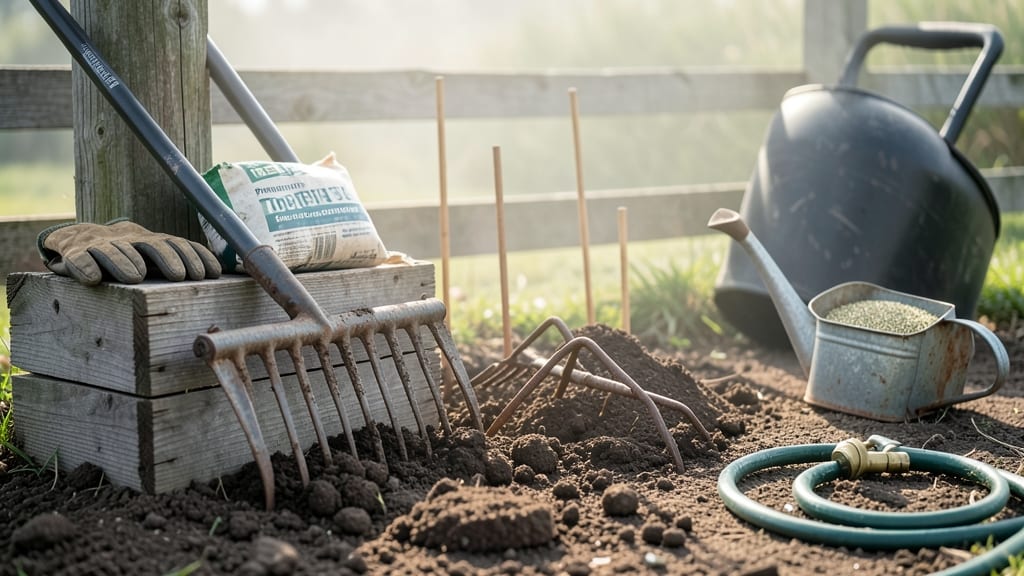
Planting grass seed on hard dirt feels like trying to grow flowers in concrete—until you know the tricks. 🌱 The secret isn’t brute force; it’s loosening that compacted soil so seeds can root properly.
I’ve turned stubborn clay into lush lawns by breaking up the hardpan first, and you can too. Start with a rake or garden fork to scratch up the surface, then add 2-3 inches of topsoil mixed with compost. This creates the perfect crumbly bed where seeds can settle.
Skip the heavy tilling—it can bring buried weeds to the surface and create a mess. Within 10-14 days, you’ll see green shoots pushing through, and by 3-4 weeks, you’ll have a thick, even lawn.
The key is keeping the soil moist (not soggy) during germination—just like nurturing seedlings in a container. Works for any yard size, from small patches to full lawns. Here’s how to prep it right the first time.
📚 In This Guide
- What you need
- Instructions
- Tips and common mistakes
- Wrapping up and next steps
What you need
- ● Grass seed: Choose a high-quality seed blend suited to your climate (e.g., Kentucky bluegrass, fescue, or ryegrass). Calculate 5–10 lbs per 1,000 sq ft for full coverage.
- ● Garden rake: A sturdy bow rake (8–12 teeth, 24–36 inches long) for breaking up clumps and leveling soil.
- ● Shovel or spade: A heavy-duty shovel (12–14 inches wide) for digging deeper into compacted areas.
- ● Hoe or broadfork: A stiff, flat-bladed hoe (16–24 inches) or broadfork to loosen soil without flipping it (ideal for hardpan).
- ○ Soil aerator (optional but helpful): A manual core aerator (with ¼–½ inch tines) for deep compaction.
- ● Compost or topsoil: 2–4 inches of organic matter (compost, peat moss, or screened topsoil) to improve soil structure.
- ● Water source: A hose with a sprinkler head or garden sprayer for consistent moisture.
- ○ Lawn roller (optional): A lightweight (10–20 lb) roller to press seed into soil gently.
- ● Gloves and knee pads: Heavy-duty work gloves and knee pads for comfort and protection.
- ● Starter fertilizer: A low-nitrogen (5–10%) phosphorus-heavy fertilizer (e.g., 10-20-10) to boost root growth. Apply ½ lb per 100 sq ft.
- ● Soil test kit: To check pH and nutrient levels (ideal pH: 6.0–7.5 for most grasses).
- ● Mulching fabric: Biodegradable erosion control blanket to hold seed in place on slopes.
- ● Weed barrier cloth: If your area has persistent weeds, lay down landscape fabric before seeding.
- ● String line or spray paint: To mark rows or measure areas accurately.
Step-by-Step instructions for planting grass seed on hard dirt
Here's how I break down the process to ensure your grass seed takes hold quickly and grows thick.
🌱 Step 1: Prepare the Soil with a Broadfork or Tiller
Start by renting or borrowing a broadfork or tiller—these tools break up compacted soil without turning it over completely. I like to work in sections about 3 feet wide so I don’t lose track of where I’ve already loosened the ground. Push the broadfork 8-12 inches deep and wiggle it side to side to create vertical fractures in the soil. This lets roots penetrate without smothering the seed.
If you’re working with very hardpan (that iron-hard layer just below the surface), you might need to rent a sod cutter first to remove the top layer of sod. This is the moment that matters: the deeper you loosen the soil, the faster your grass will establish. You’ll see the difference immediately—the soil will crumble in your hands instead of staying in solid clumps.
💧 Step 2: Level and Rake the Soil Surface
Once the soil is loosened, use a rake to level the surface. I drag the rake in one direction first to remove large clods, then cross-rake to create a fine, even texture. The goal is to eliminate low spots where water pools and high spots where seed might end up too deep. Aim for a surface that’s smooth enough to roll a garden hose across without catching.
This step prevents uneven germination and ensures consistent moisture. If you skip it, you’ll end up with patchy grass where some areas get too much water and others too little. A quick check: run your hand over the soil—it should feel uniformly firm but not rocky.
☀️ Step 3: Spread a Thin Layer of Compost or Starter Fertilizer
Now’s the time to add a ¼-inch layer of compost or a slow-release starter fertilizer across the entire area. I like to use a broadcast spreader for even coverage—just walk in straight lines about 2 feet apart and overlap slightly. This gives your grass seed the nutrients it needs right from the start without overwhelming it.
Lightly rake the compost into the top ½ inch of soil so it blends in but doesn’t bury the seed. You’ll see the soil turn a richer brown color, which means it’s ready for planting. Avoid heavy-handed fertilizers at this stage—they can burn tender grass seedlings.
🌱 Step 4: Plant Grass Seed Evenly and Lightly Cover
Use a spreader to distribute the grass seed evenly across the prepared soil. I aim for about 10-12 pounds per 1,000 square feet for most cool-season grasses. Walk slowly and overlap your passes to avoid streaks. After spreading, lightly rake the seed into the soil with a stiff-bristled rake—just enough to cover it with a ¼-inch layer of soil.
This ensures good seed-to-soil contact for germination while keeping it from drying out or being washed away. You’ll notice the seed disappears into the soil, but don’t worry—it’s exactly where it needs to be. Press down lightly with your feet or a roller to settle everything in place.
💧 Step 5: Water Gently and Consistently for Germination
Immediately after planting, water the area lightly but thoroughly to moisten the soil 2-3 inches deep. Use a sprinkler with a fine mist setting or a gentle hose attachment to avoid dislodging the seed. I set my sprinkler to run for 10-15 minutes twice daily—once in the morning and once in the evening—until the grass reaches 2-3 inches tall.
Keep the soil consistently moist but never soggy. You’ll know you’re doing it right when the top inch of soil feels damp like a wrung-out sponge. Overwatering can drown seeds, while underwatering leaves them dry and crusty. After about 2-3 weeks, you’ll start seeing the first green sprouts—this is your reward for patience.
Tips & tricks for planting grass seed on hard dirt
These simple tricks will help your grass seed take root faster and grow thicker—no matter how tough your soil.
Soil Prep Secret: In Step 1, when using a broadfork, focus on creating vertical fractures rather than turning the soil. This preserves the soil's natural structure while breaking up compaction. I find working in 3-foot sections helps me stay organized—mark your progress with small stakes if needed. For extra-hard soil, renting a sod cutter first makes the broadfork job much easier. The goal is soil that crumbles in your hands, not stays in clumps.
Leveling Like a Pro: After tilling in Step 2, I drag a level board across the soil to check for high/low spots before raking. This ensures water will distribute evenly during germination. A quick trick: walk across the area in socks—if your feet catch on bumps, you still have work to do. The smoother the surface, the more uniform your grass growth will be.
Watering Wisdom: For Step 5, those 10-15 minute watering sessions are critical for consistent moisture. I set a timer and move the sprinkler every 5 minutes to check for dry spots. The top inch should feel like a wrung-out sponge—not dripping wet, not bone dry. Morning and evening watering prevents evaporation while keeping seeds hydrated. You'll know you're doing it right when you see tiny green sprouts appear in about 2-3 weeks.
Pro Tips for Plant Grass Seed On Hard Dirt
- These simple tricks will help your grass seed take root faster and grow thicker—no matter how tough your soil.
- Soil Prep Secret: In Step 1, when using a broadfork, focus on creating vertical fractures rather than turning the soil.
- Leveling Like a Pro: After tilling in Step 2, I drag a level board across the soil to check for high/low spots before raking.
Frequently asked questions
Got questions about tackling hard dirt and getting that lush lawn? You’re not alone—here are some of the most common queries (and answers!) to help you crush your grass-seeding project like a pro.
How do I know if my dirt is too hard to plant grass seed?
If you can’t easily push a screwdriver or shovel into the soil more than 2–3 inches deep, or if it feels like concrete when dry, your dirt is likely too compacted. Test it: Dig a small hole—if the sides crumble easily, you’re golden. If not, it’s time to loosen it up!
Can I plant grass seed directly on hard dirt without tilling or aerating?
Technically yes, but your success rate will be dismally low. Grass seed needs soil contact and moisture to germinate—hardpacked dirt blocks both. For best results, break it up at least 3–4 inches deep. Think of it like trying to grow a plant in a rock: not happening!
What’s the best time of year to plant grass seed on hard ground?
Timing matters! For cool-season grasses (like Kentucky bluegrass or fescue), aim for early fall or spring (4–6 weeks before first frost). Warm-season grasses (like Bermuda or Zoysia) thrive in late spring or early summer. Avoid extreme heat or cold—seedlings need consistent moisture to sprout.
How long does it take for grass seed to grow on hard dirt?
Germination depends on grass type, soil prep, and weather—but here’s the general timeline:
- Cool-season grasses: 7–21 days
- Warm-season grasses: 10–30 days
What if my grass seed isn’t germinating after planting?
Don’t panic! First, check for:
- Moisture: Keep soil damp (not soggy) until seedlings appear.
- Sunlight: Most grasses need 4–6 hours of sun daily.
- Soil contact: Seed buried ¼-inch deep germinates best.
- Temperature: Too hot/cold? Adjust planting time.
Are there alternatives to tilling hard dirt for planting grass?
Yes! If tilling feels like overkill, try:
- Hand aeration: Use a manual core aerator or garden fork to poke holes.
- Topdressing: Mix compost or sand into the top 1–2 inches of soil.
- Sod instead of seed: Instant grass (but requires perfect soil prep too!).
Wrapping up and next steps
Planting grass seed on hard dirt is totally doable—you’ve got this! 🌱 By breaking up compacted soil, amending it with organic matter, and keeping it consistently moist, you’re setting the stage for a lush, healthy lawn.
Remember, patience is key; germination takes time, but your efforts will pay off with vibrant green grass.
Now that you’re ready to roll up your sleeves, take the next step—mark your calendar for regular watering and maintenance. Before you know it, you’ll be enjoying a thriving lawn that’s the envy of the neighborhood! 🌿