
Transplanting
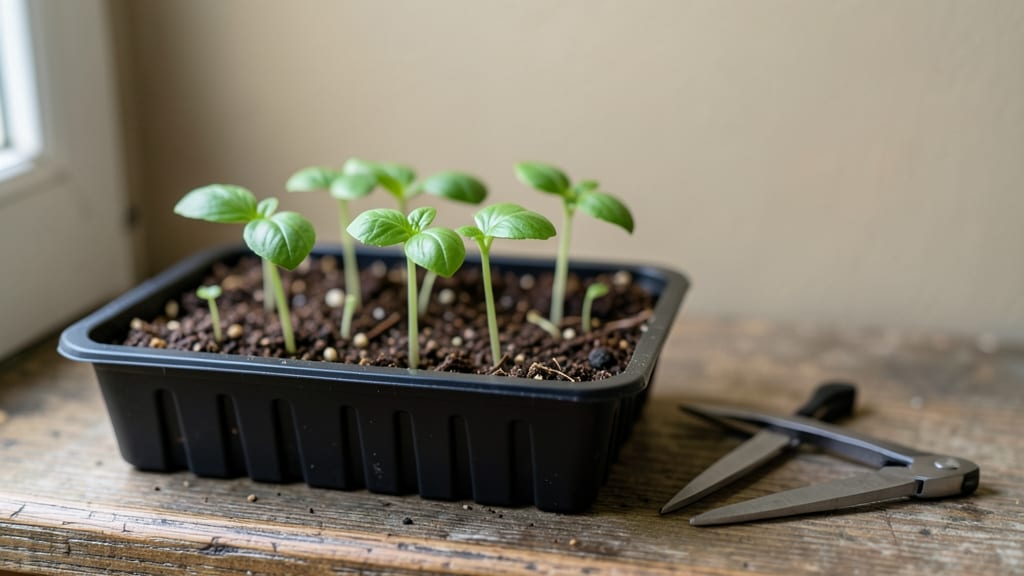
Learn how to identify basil seedlings by their cotyledons—those tiny, heart-shaped leaves reveal whether your seedlings are thriving before true leaves even appear. 🌱 I’ve pulled up more weeds than seedlings by ignoring this simple trick, and it only takes 10 seconds to check.
True basil cotyledons are a vibrant dark green with a slightly rounded, almost shield-like shape. They sit opposite each other on the stem, not clustered like weeds.
If yours look pale, jagged, or grow in a messy pattern, it’s probably not basil—time to pull and replant. I’ve saved entire trays this way.
Once you spot the right shape, watch for the next clue: the second set of leaves. Basil’s true leaves are oval with serrated edges, growing in pairs along the stem.
This is when seedlings start looking like the fragrant herb you planted, not some random weed. The earlier you identify them, the sooner you can transplant without stress.
This method works for any basil variety—Genovese, Thai, or purple—so you’ll never waste time on impostors. Grab a magnifying glass if needed, and you’ll be picking out seedlings like a pro. The payoff? A kitchen full of fresh basil by summer.
📚 In This Guide
- What you need
- Instructions
- Tips and common mistakes
- Wrapping up and next steps
What you need
- ● Basil seedlings: 5–10 young plants (age 1–2 weeks post-germination) for accurate cotyledon observation.
- ● Magnifying glass: 1x (3x–5x magnification) to inspect cotyledon details up close.
- ● Grow lights or natural sunlight: Bright, indirect light source (6–8 hours/day) for clear visibility.
- ● Small notepad or smartphone: For sketching or photographing cotyledon shapes/colors.
- ○ Humidity dome or plastic wrap: Optional but helpful for maintaining moisture if seedlings are delicate.
- ● Potting mix: 1–2 small containers (4–6 inches wide) filled with sterile, well-draining soil (e.g., seed-starting mix).
- ● Spray bottle with water: For gentle hydration without disturbing seedlings.
- ● Grow trays with clear lids: To create a mini greenhouse effect for humidity control.
- ● Labeling tags: For tracking seedling varieties if testing multiple types.
- ● Calipers or ruler: To measure cotyledon size (0.5–1.5 inches typical for basil).
- ● Reference guide or app: Like iNaturalist or a seed packet photo library for comparison.
How to spot basil seedlings: cotyledon shape and color guide
Here's how to tell your new basil sprouts from weeds or other seedlings—no guesswork.
🌱 Step 1: Wait for the First True Leaves to Appear
The cotyledons—those first tiny leaves—aren't actually basil yet. They're just the plant's baby food leaves, and they look similar across many plants. I always tell people to wait until the second set of leaves emerges, which is when you can confirm it's basil. These true leaves will be oval-shaped with serrated edges, unlike the smooth cotyledons.
Cotyledons usually appear 5-10 days after planting, but don't rush to identify them. Basil's true leaves take another 10-14 days to show up. If you see only the first pair of leaves, hold off on celebrating—those could belong to almost any seedling.
🌿 Step 2: Observe Cotyledon Shape and Color
Basil cotyledons are round and smooth-edged, almost like tiny heart shapes. They're also darker green than many other seedlings' first leaves. If you're comparing them to tomato or pepper seedlings, basil's cotyledons will look more rounded and less pointed.
Here's the thing—if the first leaves are lance-shaped or jagged, it's probably not basil. Basil's cotyledons are uniform in shape and color, with no irregular edges. Think of them as the plant's first uniform "hello" to the world.
☀️ Step 3: Compare Light Exposure and Growth Rate
Basil seedlings grow fast once they get light, so timing matters. If your seedlings have cotyledons that appear within 7-10 days and then develop true leaves in another 2 weeks, that's classic basil behavior. Other herbs like parsley or cilantro take longer to show true leaves.
Watch for leggy growth—if the stem stretches tall and thin before the true leaves appear, your seedlings need more light. Basil cotyledons should stay close to the soil until the true leaves form. If they're already reaching upward, move them closer to your light source.
✂️ Step 4: Thin Seedlings at the Right Stage
Once you've confirmed basil's true leaves, thin your seedlings to 1 per cell if you're using seed trays. Use clean scissors to snip at soil level, not to pull—this prevents disturbing the roots of the plants you're keeping. I always do this 2-3 days after true leaves appear.
If you're growing in a single pot, thin to 2-3 seedlings per 4-inch pot. Basil doesn't like crowded roots, so give them space. After thinning, water gently to help the remaining seedlings establish themselves. You'll see stronger growth within a week.
💧 Step 5: Confirm with Leaf Texture
The final test is leaf texture. Basil's true leaves feel slightly fuzzy to the touch, especially on the underside. Run your finger over the leaves—if they're smooth, it might not be basil. This fuzzy texture is a dead giveaway.
Real talk: if you're still unsure, let them grow a little longer. Basil's scent is another clue—once the leaves are 1-2 inches long, crush a few between your fingers. That fresh, slightly spicy aroma? That's basil for sure.
Tips & tricks for identifying basil seedlings
Took me a while to figure these out, so here goes—these little details make all the difference when you're trying to spot basil seedlings.
Timing is Everything: Those first cotyledons show up between 5-10 days after planting, but don't get excited yet. The real magic happens when the second set of leaves appears 10-14 days later. I've seen people misidentify seedlings because they jumped the gun on those first leaves—always wait for the true leaves with their serrated edges before celebrating.
Light Matters More Than You Think: Basil seedlings grow fast when they get enough light, but they'll stretch and become leggy if you're not careful. Keep them close to the soil until those true leaves appear—if you notice them reaching upward before the second set of leaves, move them closer to your light source immediately. A sunny windowsill or grow light can make all the difference.
Texture Tells the Story: Run your finger over those true leaves—if they feel slightly fuzzy on the underside, you've got basil. Smooth leaves mean it's probably something else. This is my go-to test when I'm still unsure. The fuzzy texture is like nature's way of saying, "Yes, this is the real deal."
Thinning at the Right Time: Once you've confirmed those true leaves, thin your seedlings to 1 per cell in seed trays or 2-3 per 4-inch pot. I always use clean scissors to snip at soil level—never pull—because disturbing the roots of the plants you're keeping can set them back. Do this 2-3 days after those true leaves appear, and you'll see stronger growth within a week.
Pro Tips for Identify Basil Seedlings Cotyledons
- Took me a while to figure these out, so here goes—these little details make all the difference when you're trying to spot basil seedlings.
- Timing is Everything: Those first cotyledons show up between 5-10 days after planting, but don't get excited yet.
- Light Matters More Than You Think: Basil seedlings grow fast when they get enough light, but they'll stretch and become leggy if you're not careful.
Frequently asked questions
Got questions about spotting basil seedlings and their cotyledons? You’re not alone! Here are some common concerns—and quick answers to help you grow like a pro.
What do basil cotyledons look like compared to other seedlings?
Basil cotyledons are round, smooth-edged, and dark green (almost purple-tinged when young). They resemble tiny, plump leaves, while weeds or other seedlings often have jagged edges, serrated leaves, or lighter colors. Think of them as baby basil’s first "hello"—simple and symmetrical!
How long do I wait to see true basil leaves after the cotyledons?
True basil leaves (the lobed, aromatic ones) usually appear 10–14 days after germination. Cotyledons drop or shrink as true leaves emerge. If you’re still seeing only round leaves after 3 weeks, check for overcrowding or poor light—basil needs space to stretch!
Can I accidentally pull out my basil seedlings by mistaking cotyledons for weeds?
Basil cotyledons are tiny and delicate, so they can resemble weeds like purslane or chickweed. Pro tip: Wait until true leaves appear (or use a seedling tray with clear dividers) to avoid oops moments. When in doubt, sniff—basil’s scent is unmistakable!
What if my cotyledons look yellow or wilted?
Yellowing or wilting cotyledons often signal overwatering, underwatering, or cold stress. Keep soil moist but not soggy (think damp sponge) and ensure temps stay above 50°F (10°C). If only cotyledons are affected, the seedling may recover—just monitor closely!
Are there other herbs with similar cotyledons to basil?
Yes! Cilantro and parsley cotyledons are also round but lighter green and slightly lobed. Basil’s cotyledons stay smooth and darker. For extra certainty, check the seed packet or grow a few seeds in separate pots to compare. When in doubt, let them grow—true leaves reveal all!
Wrapping up and next steps
Mastering the art of spotting basil cotyledons is your first step toward a thriving herb garden! 🌱 By focusing on their round, smooth shape and deep green or purple hue, you’ll confidently distinguish them from other seedlings.
With this knowledge, you’re ready to nurture your plants with care and precision.
Now that you’re an expert, take the next step—transplant your identified seedlings into pots or your garden bed! Ensure they get plenty of sunlight and well-draining soil, and watch your basil grow into a lush, aromatic plant. Happy gardening! 🌿