
Propagation
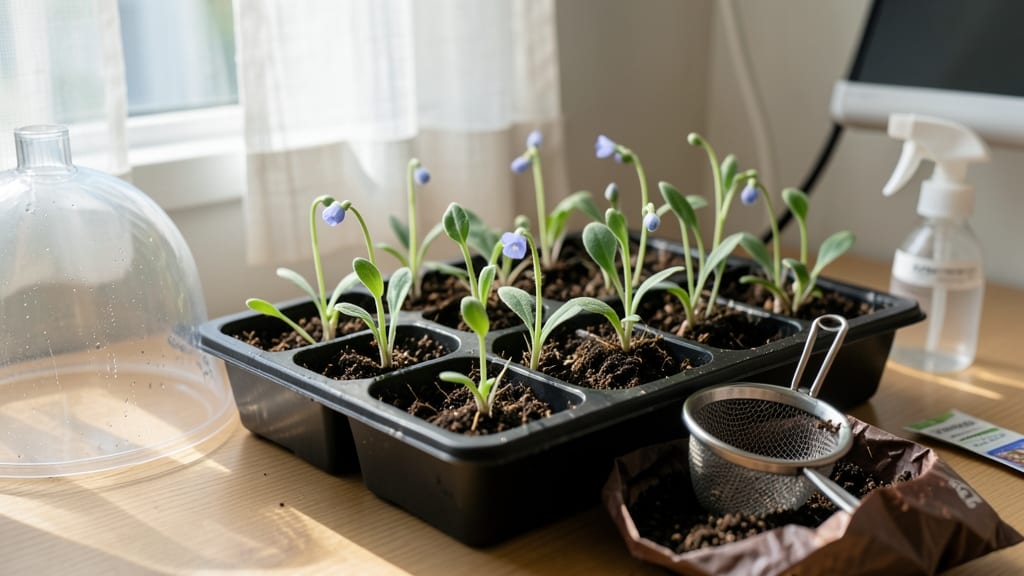
Growing forget-me-nots from seed indoors gives you fast germination—and the humidity dome trick cuts that wait time in half. 🌱 I’ve struggled with these finicky seeds for years, but once I mastered this method, my seedlings popped up in 7 days instead of the usual 3 weeks.
The secret lies in mimicking their natural mountain meadow habitat with just the right moisture and warmth. You’ll need a shallow tray, moistened seed-starting mix, and a clear plastic dome or plastic wrap to trap humidity. Forget-me-not seeds are tiny, so scatter them lightly over the soil—don’t press them in.
Keep the tray in a warm spot (around 65-70°F) until sprouts appear, then move to bright, indirect light to prevent leggy seedlings. The key is patience: these little blue blooms are worth the wait.
By the time you’re ready to transplant, you’ll have vibrant green seedlings with tiny leaves, ready to handle cooler outdoor temperatures. The first flush of blue flowers arrives just 8-10 weeks after sowing, and they’ll self-seed for years if you let them.
No more buying flats of forget-me-nots—you’ll have your own supply. This method works for both true forget-me-nots (Myosotis) and the larger-flowered alpine varieties. Just adjust the dome size to fit your tray, and keep the soil consistently moist but never soggy. Here’s to those first delicate blooms in your garden!
📚 In This Guide
- What you need
- Instructions
- Tips and common mistakes
- Wrapping up and next steps
What you need
- ● Forget-Me-Not seeds: 1–2 packets (100–200 seeds total). Choose Myosotis sylvatica for classic blue blooms or Myosotis alpestris for dwarf varieties.
- ○ Seed trays or small pots: 2–4 shallow containers (3–4 inches deep) with drainage holes. Optional: Biodegradable peat pots for easy transplanting.
- ● Seed-starting mix: 2–3 cups of sterile, well-draining mix (e.g., 50% peat moss + 50% perlite or vermiculite). Avoid garden soil—it’s too dense!
- ● Humidity dome or plastic wrap: A clear plastic lid, plastic bag, or DIY dome (e.g., a cut-off plastic bottle) to trap moisture.
- ● Spray bottle: With water (room temperature) for gentle misting.
- ● Grow lights or sunny windowsill: A south-facing window (6+ hours of light) or a LED grow light (12–16 hours/day, 6–12 inches above seeds).
- ○ Heat mat (optional but helpful): A small seedling mat (70–75°F) to speed up germination.
- ● Tweezers or pencil: For gently pressing seeds into the soil.
- ● Seedling labels: To track varieties (e.g., toothpicks + masking tape).
- ● Fertilizer: A balanced liquid fertilizer (5-5-5 or 10-10-10) diluted to half-strength for first feeding (after 4–6 weeks).
- ● Fan: A small clip-on fan for airflow (prevents damping-off disease).
- ● Thermometer/hygrometer: To monitor soil temp (ideal: 65–75°F) and humidity (aim for 70–80%).
- ● Compost or worm castings: 1 tbsp mixed into soil for extra nutrients.
Step-by-step instructions for growing forget-me-nots indoors
Here's how to coax those delicate blue blooms indoors—with a trick that speeds germination from weeks to days.
🌱 Step 1: Prepare Containers and Germination Mix
Fill your 4-inch containers with a light, sterile seed-starting mix—never garden soil, which stays too compacted. Forget-me-nots need air around their tiny roots to prevent rot. I press the mix gently into the bottom of each pot, then add a thin layer of perlite or vermiculite (about 1/8 inch) to improve drainage. This prevents soggy soil, which forget-me-nots hate.
Moisten the mix until it feels like a damp sponge—squeeze it gently, and it should hold together but not drip. Forget-me-not seeds are so fine they barely register, so I use a fine-mist spray bottle to avoid washing them away. The goal is even moisture without saturation. I like to work in a shallow tray to catch any overspray, keeping everything tidy.
🌱 Step 2: Sow Seeds and Create the Humidity Dome
Sprinkle seeds evenly across the soil surface—no need to bury them. Forget-me-nots germinate best when exposed to light, so I simply press them into the top layer with my fingertip. For 4 containers, I use about 10-15 seeds per pot since germination rates can be spotty. Cover the tray with a clear plastic dome or wrap plastic wrap tightly around it to trap humidity.
Place the covered containers in a warm spot, ideally 65-70°F. A seedling heat mat underneath speeds things up, but even a sunny windowsill works. The dome keeps moisture high, which forget-me-nots crave. Check daily for condensation—if the inside fogs up, you’ve got perfect conditions. Germination should appear in 10-14 days, but don’t be surprised if some take longer.
☀️ Step 3: Provide Light and Thin Seedlings
As soon as you see first true leaves (not the tiny seed leaves), remove the dome immediately. Forget-me-nots are prone to damping-off if kept too damp. Move them to a bright spot with indirect light—direct sun can scorch their delicate leaves. A south-facing window or grow light works best. You’ll notice leggy growth if they stretch toward light; rotate the pots weekly to keep them even.
When seedlings reach 1 inch tall, thin them to the strongest 2-3 per container. Use scissors to snip weak ones at soil level—pulling risks disturbing roots. Forget-me-nots grow slowly, so be patient. Water gently from the bottom by placing pots in a tray of water for 10 minutes, then let excess drain. This prevents fungal issues that plague forget-me-nots.
🪴 Step 4: Harden Off and Transplant Outdoors
Two weeks before your last frost, start hardening off seedlings. Place them outside in a sheltered spot for 1 hour the first day, gradually increasing time over 7-10 days. Forget-me-nots love cool weather, so don’t rush this step—sudden temperature drops stress them. Watch for wilted leaves after exposure; if they recover within a few hours, they’re ready for longer outdoor time.
Transplant to the garden after all danger of frost has passed. Space plants 6-8 inches apart in partial shade with well-draining soil. Forget-me-nots thrive in moist, humus-rich beds. Water deeply after planting to settle roots, then keep soil consistently moist but never soggy. With patience, you’ll have blooms in 8-10 weeks—worth every step!
Tips & tricks for growing forget-me-nots indoors
Here's what nobody tells you about coaxing these delicate blooms to thrive indoors.
Container Size Matters: Those 4-inch containers aren't just for looks—they give roots room to establish without competing for space. Forget-me-nots are small plants, but their roots need air circulation. If you're tempted to use larger pots, resist! The extra soil stays damp too long, inviting rot. I've seen forget-me-nots thrive in 4-inch pots for years, while larger containers often lead to leggy, weak seedlings.
Light Exposure is Critical: Forget-me-nots need indirect light, but don't skimp on brightness. A south-facing window works, but if your space is dim, supplement with a grow light. I notice seedlings stretch toward light when they're not getting enough—this is called etiolation. Rotate your pots weekly so all sides get equal light exposure. The goal is compact, sturdy plants, not tall, spindly ones that flop over.
Temperature Consistency: Maintaining that 65-70°F range is easier said than done, especially in drafty homes. If your space runs cooler, consider a small seedling heat mat—it makes all the difference. I've watched forget-me-nots germinate in just 7 days with consistent warmth, while cooler spots can double that time. The warmth also helps prevent the dreaded damping-off fungus that can wipe out seedlings overnight.
Thinning Technique: When thinning those 1-inch seedlings to 2-3 per pot, use sharp scissors instead of pulling. The roots are delicate, and tugging can damage what's left. I snip at soil level, leaving no stubs—this prevents fungal entry points. Remember, you're not just making space; you're giving the remaining plants room to flourish. The strongest seedlings will reward you with bigger blooms and better growth.
Pro Tips for Grow Forget Me Nots From Seed Indoors
- Here's what nobody tells you about coaxing these delicate blooms to thrive indoors.
- Container Size Matters: Those 4-inch containers aren't just for looks—they give roots room to establish without competing for space.
- Light Exposure is Critical: Forget-me-nots need indirect light, but don't skimp on brightness.
Frequently asked questions
How long does it take for forget-me-not seeds to germinate indoors?
With the humidity dome trick, you’ll typically see sprouts in 10–21 days. Keep seeds consistently moist (not soggy) and maintain warmth (around 65–70°F). Patience is key—some varieties may take longer, especially if stored improperly. Check our germination tips for extra speed!
Can I grow forget-me-nots from seed without a humidity dome?
Yes, but germination rates drop significantly. Use plastic wrap or a clear lid to mimic the dome effect, or place seeds in a shallow tray with a sprinkle of water (keep them damp). For best results, mist seeds daily and ensure good airflow once sprouted to prevent mold.
When should I transplant forget-me-not seedlings outdoors?
Wait until nighttime temps stay above 50°F (10°C) and seedlings have 2–3 sets of true leaves (usually 6–8 weeks after sowing). Harden off seedlings by gradually exposing them to outdoor conditions over 7–10 days to avoid shock. Choose a partially shaded spot for transplanting.
Why are my forget-me-not seedlings wilting or turning yellow?
Overwatering or poor drainage are common culprits. Ensure pots have drainage holes and use well-draining soil. Yellow leaves may also signal nutrient deficiency—fertilize lightly with a balanced 10-10-10 mix once seedlings are established. Review our care guide for fixes!
Are there faster-growing forget-me-not varieties for indoor starts?
Look for ‘Lilliput’ or ‘Bocca di Leone’ varieties—they germinate reliably indoors. Avoid wild-collected seeds, as they’re often slower. For speed, soak seeds in warm water for 24 hours before planting to kickstart germination.
Wrapping up and next steps
Growing forget-me-nots from seed indoors is a rewarding journey—especially with the humidity dome trick to speed up germination! 🌱 With patience, the right tools, and a little TLC, you’ll soon enjoy their delicate blue blooms brightening your space.
Once your seedlings sprout and thrive, consider transplanting them outdoors (if your climate allows) or sharing them with fellow plant lovers.
Ready to dive in? Grab your seeds, set up your humidity dome, and watch your tiny garden grow! 💙